
The Ultimate Guide to Premium Angelfish for Sale: Your Gateway to Marine Excellence 🐠
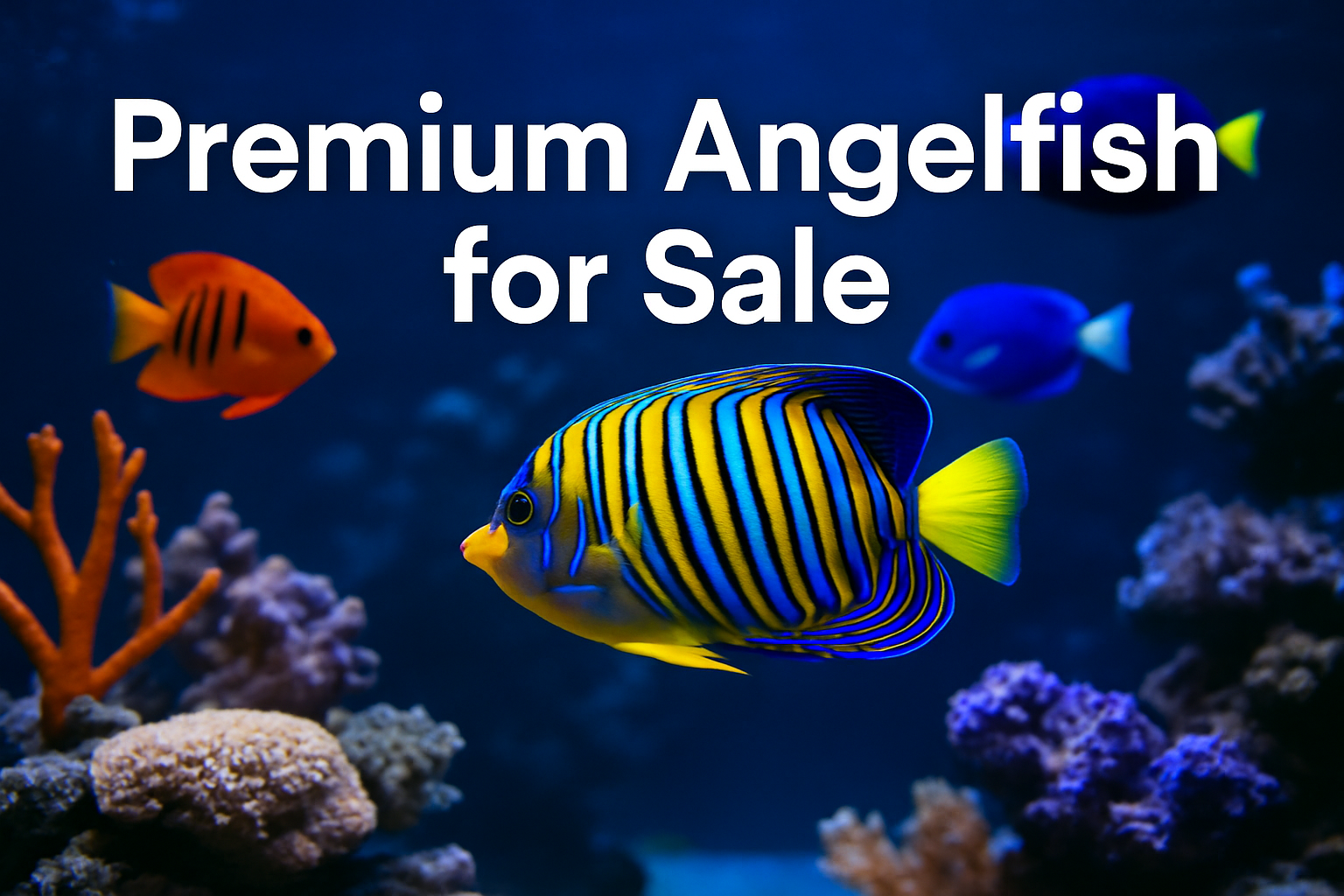
Picture this: you’re standing in front of a magnificent marine aquarium, watching as a regal Emperor angelfish glides gracefully through crystal-clear water, its vibrant blue and yellow stripes catching the light like living art. This moment of pure aquatic beauty is exactly what awaits you when you discover the world of premium angelfish for sale from trusted marine specialists. As someone who has spent over two decades in the marine aquarium industry, I can tell you that finding the right source for your saltwater angelfish can make the difference between a thriving underwater paradise and a disappointing experience.
Key Takeaways
• Quality sourcing matters: Premium angelfish from reputable dealers like SaltWaterFishShop.com ensure healthier, more vibrant fish with better survival rates
• Species diversity: From Emperor angelfish to French angelfish, understanding different species helps you choose the perfect match for your tank setup
• Proper preparation is essential: Success with angelfish requires understanding their specific care requirements, tank conditions, and compatibility needs
• Online purchasing advantages: Buying from established online retailers offers wider selection, expert support, and professional shipping methods
• Long-term investment: Quality angelfish can live 10-15 years with proper care, making initial investment in premium specimens worthwhile
Why Choose Premium Angelfish for Sale from Established Dealers
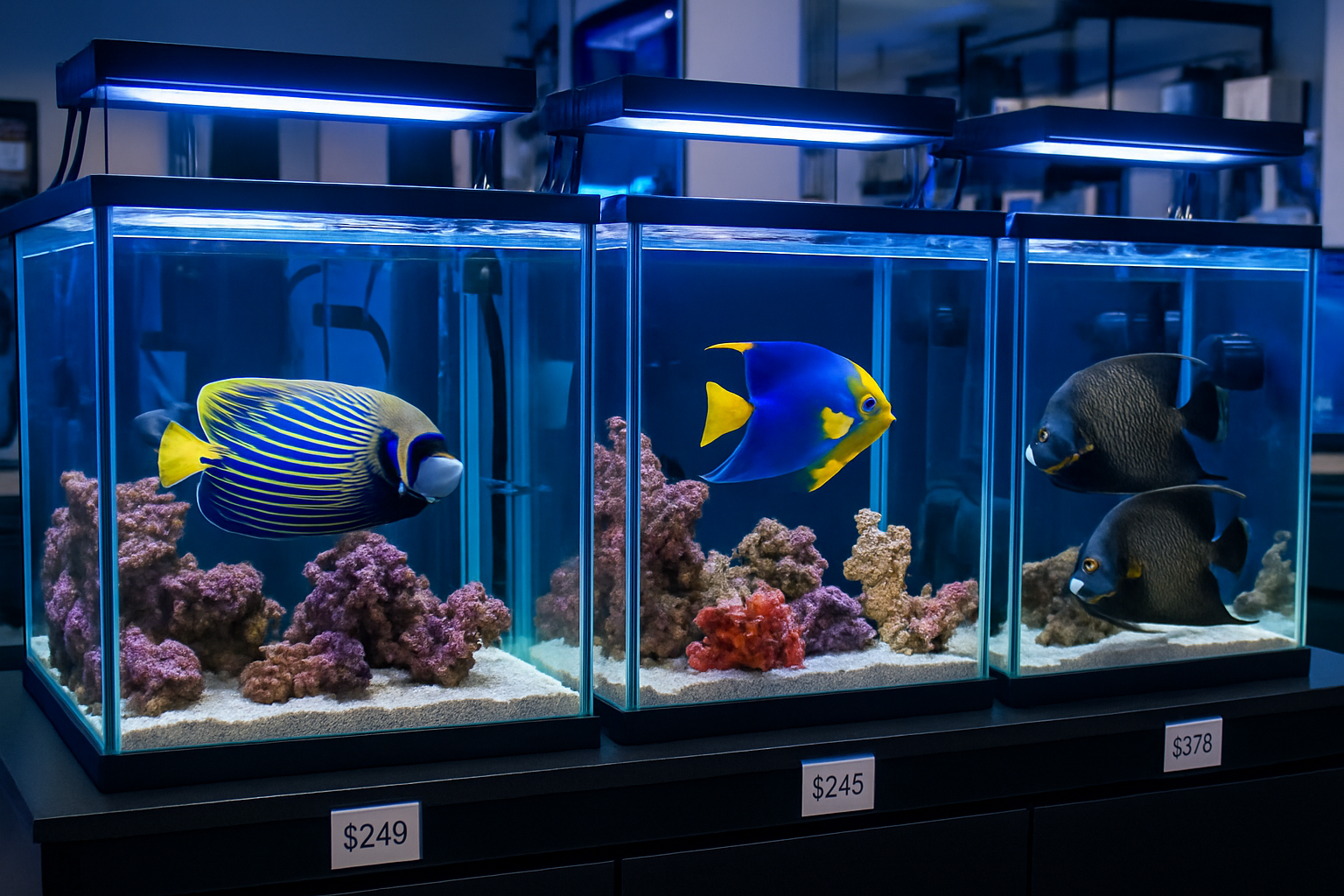
When searching for angelfish for sale, the source you choose can dramatically impact your aquarium’s success. Since 2000, SaltWaterFishShop.com has established itself as the premier destination for marine enthusiasts seeking exceptional quality saltwater fish. What sets premium dealers apart isn’t just their fish selection—it’s their commitment to fish health, proper quarantine procedures, and customer education.
The SaltWaterFishShop.com Advantage
As the #1 saltwater fish store online, SaltWaterFishShop.com has revolutionized how aquarists access premium marine life. Their success stems from several key factors:
🔬 Advanced Quarantine Protocols
Every angelfish undergoes rigorous health screening before being offered for sale. This process includes:
- 14-day minimum quarantine period
- Parasite and disease screening
- Feeding response verification
- Behavioral assessment
📦 Professional Shipping Excellence
Understanding that live fish shipping requires expertise, they’ve perfected their delivery methods to ensure your angelfish arrives healthy and stress-free.
💡 Expert Guidance and Support
Their team doesn’t just sell fish—they provide comprehensive angelfish care guidance to ensure your long-term success.
Popular Angelfish Species Available
| Species | Size Range | Difficulty Level | Price Range | Best For |
|---|---|---|---|---|
| Emperor Angelfish | 12-15 inches | Intermediate | $80-150 | Large reef tanks |
| Queen Angelfish | 14-18 inches | Advanced | $100-200 | Species tanks |
| French Angelfish | 12-16 inches | Intermediate | $60-120 | Community tanks |
| Gray Angelfish | 16-20 inches | Advanced | $120-250 | Expert keepers |
| Rock Beauty | 8-10 inches | Expert | $150-300 | Specialized setups |
Understanding Saltwater Angelfish: Species Guide and Selection Tips
Choosing the right saltwater angelfish requires understanding the unique characteristics of each species. Unlike their freshwater cousins, marine angelfish are complex creatures with specific environmental needs and fascinating behavioral patterns.
Large Angelfish Species
Emperor Angelfish (Pomacanthus imperator)
The crown jewel of many marine aquariums, Emperor angelfish showcase stunning blue bodies with bright yellow stripes. These magnificent creatures require:
- Minimum 180-gallon tank
- Excellent water quality
- Varied diet including sponges and algae
- Stable tank mates
Queen Angelfish (Holacanthus ciliaris)
Known for their electric blue and yellow coloration with distinctive crown marking, Queen angelfish are true showstoppers. They need:
- 200+ gallon aquarium
- High-quality filtration
- Regular feeding schedule
- Careful introduction to established tanks
Medium-Sized Angelfish Options
French Angelfish (Pomacanthus paru)
These elegant black fish with yellow striping are popular among intermediate aquarists. Key requirements include:
- 125-gallon minimum tank size
- Rocky hiding places
- Mixed diet of meaty foods and vegetation
- Gradual acclimation process
Gray Angelfish (Pomacanthus arcuatus)
Distinguished by their subtle gray coloration and graceful swimming style, these fish offer understated beauty:
- 150+ gallon tank recommended
- Peaceful tank mates
- Consistent water parameters
- Patient feeding approach
Dwarf Angelfish Varieties
For aquarists with smaller setups, dwarf angelfish provide angelfish beauty in compact packages:
Coral Beauty (Centropyge bispinosa)
- 70-gallon minimum
- Reef-safe with caution
- Hardy and adaptable
- Excellent beginner choice
Flame Angelfish (Centropyge loricula)
- 55-gallon minimum
- Striking red-orange coloration
- Moderate care requirements
- Popular community fish
“The key to success with angelfish isn’t just buying the most beautiful specimen—it’s choosing the right species for your specific setup and experience level.” – Marine Aquarium Expert
Setting Up the Perfect Environment for Your New Angelfish
Creating an ideal habitat for your angelfish for sale purchase requires careful planning and attention to detail. Success begins long before your fish arrives, with proper angelfish tank conditions being absolutely critical.
Essential Tank Requirements
Tank Size Considerations
The “bigger is better” rule definitely applies to angelfish keeping:
- Large species: 180-300 gallons minimum
- Medium species: 125-180 gallons
- Dwarf species: 55-125 gallons
Water Parameter Specifications
Maintaining stable angelfish water conditions is non-negotiable:
| Parameter | Ideal Range | Critical Notes |
|---|---|---|
| Temperature | 76-82°F | Stability more important than exact temp |
| Salinity | 1.020-1.025 | Gradual changes only |
| pH | 8.1-8.4 | Monitor regularly |
| Ammonia | 0 ppm | Any detection requires immediate action |
| Nitrite | 0 ppm | Toxic to all marine life |
| Nitrate | <20 ppm | Regular water changes essential |
Filtration and Equipment Setup
Advanced Filtration Systems
Angelfish produce significant bioload, requiring robust angelfish water filtration:
- Protein Skimmer: Essential for removing organic compounds
- Biological Filtration: Live rock provides natural bacterial colonies
- Mechanical Filtration: Removes particulate matter
- Chemical Filtration: Activated carbon for water clarity
Lighting Requirements
While angelfish don’t require intense lighting, proper illumination:
- Enhances natural coloration
- Supports live rock and coral growth
- Provides day/night cycles
- Reduces stress through consistent schedules
Aquascaping for Angelfish Success
Creating Natural Territories
Angelfish appreciate well-structured environments with:
- Hiding spots: Caves and overhangs reduce stress
- Swimming space: Open areas for natural movement
- Territorial boundaries: Rock formations create natural divisions
- Feeding zones: Designated areas for meal times
Live Rock Benefits
Quality live rock provides:
- Natural biological filtration
- Grazing surfaces for algae consumption
- Territorial markers
- pH buffering capacity
Feeding and Nutrition: Keeping Your Angelfish Healthy
Proper nutrition forms the foundation of successful angelfish keeping. Understanding angelfish diet requirements and implementing effective angelfish feeding strategies ensures your investment in premium angelfish for sale pays dividends for years to come.
Understanding Angelfish Nutritional Needs
Natural Diet Composition
In the wild, angelfish are omnivores with diverse feeding habits:
- Sponges: Primary food source for many species
- Algae: Important vegetable matter
- Small crustaceans: Protein-rich options
- Coral polyps: Occasional treats (species-dependent)
- Marine worms: High-protein supplements
Captive Diet Requirements
Successful aquarium feeding requires replicating this diversity:
| Food Type | Frequency | Benefits | Examples |
|---|---|---|---|
| High-quality pellets | Daily | Balanced nutrition | Marine angelfish pellets |
| Frozen foods | 3-4x weekly | Natural proteins | Mysis shrimp, brine shrimp |
| Fresh vegetables | 2-3x weekly | Fiber and vitamins | Nori, spinach, peas |
| Live foods | Weekly | Natural behavior | Live brine shrimp |
| Specialized treats | Occasional | Enrichment | Sponge-based foods |
Feeding Strategies for Different Life Stages
Juvenile Angelfish (Under 6 months)
Young angelfish require frequent, small meals:
- Feed 3-4 times daily
- Focus on high-protein foods
- Ensure food size matches mouth size
- Monitor growth rates carefully
Adult Angelfish (6+ months)
Mature fish benefit from structured feeding:
- Feed 1-2 times daily
- Vary diet regularly
- Include vegetable matter
- Monitor body condition
Senior Angelfish (5+ years)
Older fish may need dietary adjustments:
- Easier-to-digest foods
- More frequent, smaller meals
- Enhanced nutrition for immune support
- Regular health monitoring
Common Feeding Mistakes to Avoid
❌ Overfeeding Problems
- Leads to poor water quality
- Causes obesity and health issues
- Increases aggression
- Wastes money on uneaten food
❌ Limited Diet Variety
- Nutritional deficiencies
- Reduced coloration
- Weakened immune system
- Behavioral problems
❌ Inconsistent Feeding Schedule
- Increased stress levels
- Aggressive behavior
- Digestive issues
- Poor growth rates
“A well-fed angelfish is a healthy angelfish. The extra effort you put into varied, quality nutrition will be reflected in your fish’s vibrant colors and active behavior.” – Aquarium Nutritionist
Compatible Tank Mates and Community Planning
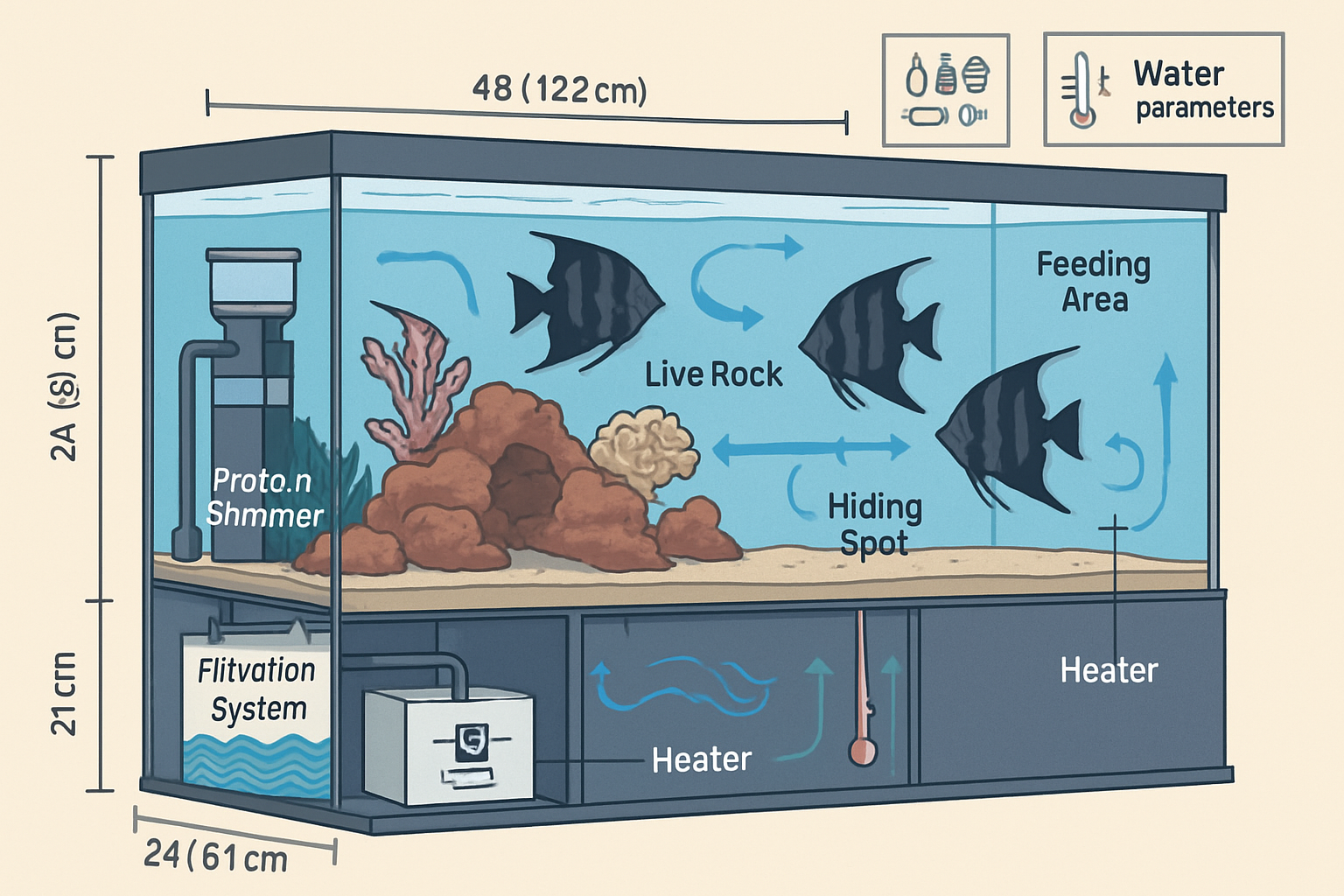
Successfully integrating your new saltwater angelfish into a community aquarium requires careful consideration of angelfish tankmates and understanding species compatibility. The right tank mates can enhance your aquarium’s beauty while wrong choices can lead to stress, aggression, and even fish loss.
Ideal Angelfish Companions
Large, Peaceful Fish
These species work well with most angelfish:
Tangs and Surgeonfish
- Yellow tangs
- Purple tangs
- Sailfin tangs
- Provide algae control
- Similar size and temperament
Wrasses
- Six-line wrasse
- Fairy wrasses
- Cleaner wrasses
- Active swimmers
- Generally peaceful
Groupers (for large tanks)
- Miniata grouper
- Coral grouper
- Require 300+ gallon systems
- Impressive tank centerpieces
Excellent Community Fish Options
Peaceful Reef Fish
Perfect for mixed communities:
- Clownfish for sale: Hardy, colorful, and generally peaceful
- Cardinal fish for sale: Schooling fish that add movement
- Blennies for sale: Personality-filled bottom dwellers
- Gobies: Small, peaceful, and interesting behaviors
Mid-Water Swimmers
- Anthias species
- Chromis species
- Peaceful basslets
- Dottybacks (carefully selected)
Fish to Avoid with Angelfish
❌ Aggressive Species
- Triggerfish (most species)
- Large pufferfish
- Aggressive groupers
- Lionfish (predatory)
❌ Very Small Fish
- Neon gobies
- Small wrasses
- Juvenile fish under 2 inches
- Anything that fits in angelfish mouth
❌ Territorial Conflicts
- Multiple angelfish (unless very large tank)
- Similar-shaped fish
- Other grazing fish in small tanks
- Competing algae eaters
Creating Harmony in Your Aquarium
Introduction Strategies
Successful integration requires planning:
- Quarantine new arrivals: Prevent disease introduction
- Rearrange decorations: Eliminates established territories
- Add multiple fish simultaneously: Reduces single-fish targeting
- Monitor closely: Watch for signs of stress or aggression
- Have backup plans: Separate housing if needed
Tank Size Considerations for Communities
| Tank Size | Recommended Fish Count | Angelfish Species | Community Options |
|---|---|---|---|
| 75-100 gallons | 1 angelfish + 3-5 others | Dwarf species only | Small peaceful fish |
| 125-180 gallons | 1 angelfish + 5-8 others | Medium angelfish | Moderate community |
| 200+ gallons | 1-2 angelfish + 8-12 others | Large species | Full community |
Health, Disease Prevention, and Long-term Care
Maintaining optimal health for your angelfish for sale investment requires proactive care and understanding of common health challenges. With proper attention, these magnificent fish can provide 10-15 years of aquarium enjoyment, making your initial investment incredibly worthwhile.
Common Angelfish Health Issues
Marine Ich (Cryptocaryon irritans)
The most common saltwater fish disease:
- Symptoms: White spots, scratching, rapid breathing
- Treatment: Copper-based medications, UV sterilization
- Prevention: Proper quarantine, stable water conditions
- Timeline: 2-3 week treatment cycle
Marine Velvet (Amyloodinium ocellatum)
More serious than ich, requires immediate attention:
- Symptoms: Gold/rust-colored dusting, lethargy
- Treatment: Copper treatment, hospital tank
- Prevention: Quarantine all new additions
- Urgency: Can be fatal within days
Bacterial Infections
Often secondary to stress or injury:
- Symptoms: Fin rot, cloudy eyes, lesions
- Treatment: Antibiotics, improved water quality
- Prevention: Excellent filtration, regular maintenance
- Recovery: 1-2 weeks with proper treatment
Preventive Care Strategies
Quarantine Protocols
Every new fish should undergo quarantine:
- Duration: Minimum 2-3 weeks
- Setup: Separate tank with basic filtration
- Monitoring: Daily observation for symptoms
- Treatment: Prophylactic medications if needed
Water Quality Maintenance
Consistent water conditions prevent most health issues:
| Parameter | Testing Frequency | Action Required |
|---|---|---|
| Ammonia/Nitrite | Weekly | Immediate water change if detected |
| Nitrate | Weekly | Water change when >20ppm |
| pH | Bi-weekly | Adjust gradually if needed |
| Salinity | Weekly | Maintain stable levels |
| Temperature | Daily | Verify heater function |
Stress Reduction Techniques
Minimizing stress boosts immune system function:
- Consistent feeding schedule: Reduces anxiety
- Stable lighting cycles: 8-10 hours daily
- Adequate hiding places: Provides security
- Compatible tank mates: Eliminates aggression
- Regular maintenance routine: Prevents parameter swings
Recognizing Early Warning Signs
Behavioral Changes
Watch for these indicators:
- Appetite loss: First sign of many problems
- Unusual swimming patterns: May indicate illness
- Increased aggression: Often stress-related
- Hiding behavior: Possible health issues
- Rapid breathing: Water quality or disease concerns
Physical Symptoms
Visual inspection reveals:
- Color changes: Fading or darkening
- Fin damage: Tears, rot, or clamping
- Body lesions: Cuts, spots, or growths
- Eye cloudiness: Bacterial or water quality issues
- Bloating: Dietary or internal problems
“Prevention is always better than treatment. The time you invest in maintaining excellent water quality and observing your fish daily will save you heartache and money in the long run.” – Marine Fish Veterinarian
Long-term Care Considerations
Aging Angelfish Needs
As your fish mature, their requirements may change:
- Diet adjustments: Easier-to-digest foods
- Reduced activity: Normal aging process
- Enhanced nutrition: Support immune system
- Regular monitoring: Increased health vigilance
Equipment Maintenance Schedule
Reliable equipment ensures consistent care:
- Daily: Temperature check, feeding, observation
- Weekly: Water testing, equipment inspection
- Monthly: Filter media replacement, deep cleaning
- Quarterly: Complete system evaluation
- Annually: Equipment replacement planning
Purchasing Your Perfect Angelfish: What to Look For
When you’re ready to add a premium angelfish for sale to your collection, knowing what to look for ensures you select a healthy, vibrant specimen that will thrive in your aquarium. Whether shopping online or visiting a local store, these guidelines will help you make an informed decision.
Visual Health Assessment
Signs of a Healthy Angelfish
Before making your purchase, evaluate these key indicators:
🔍 Physical Appearance
- Clear, bright eyes: No cloudiness or swelling
- Vibrant coloration: Species-appropriate colors
- Intact fins: No tears, rot, or clamping
- Smooth swimming: Graceful, effortless movement
- Appropriate body condition: Not too thin or bloated
- Clean gills: Steady, rhythmic breathing
🔍 Behavioral Indicators
- Active swimming: Engaged with environment
- Feeding response: Shows interest in food
- Alertness: Responds to movement and stimuli
- Territorial behavior: Normal defensive postures
- Social interaction: Appropriate responses to tank mates
Online vs. Local Purchase Considerations
Advantages of Online Purchasing
Shopping from established retailers like SaltWaterFishShop.com offers several benefits:
📦 Professional Shipping
- Temperature-controlled transport
- Oxygen-rich shipping bags
- Insulated packaging systems
- Tracking and delivery confirmation
- Live arrival guarantees
🎯 Wider Selection
- Access to rare species
- Seasonal availability
- Size options
- Color variations
- Breeding pairs
💰 Competitive Pricing
- Direct from source pricing
- Free shipping options
- Bulk purchase discounts
- Loyalty program benefits
Local Fish Store Benefits
- Personal inspection before purchase
- Immediate availability
- Local support and advice
- Established relationships
- Emergency assistance
Price Ranges and Value Considerations
Understanding Angelfish Pricing
Costs vary significantly based on several factors:
| Price Factor | Impact Level | Typical Range |
|---|---|---|
| Species rarity | High | $30-500+ |
| Size/age | Medium | 20-40% variation |
| Color quality | Medium | 15-30% premium |
| Breeding source | Low-Medium | 10-25% difference |
| Seasonal availability | Low | 5-15% fluctuation |
Value Assessment Tips
- Compare total costs: Include shipping and supplies
- Evaluate seller reputation: Read reviews and testimonials
- Consider long-term value: Healthy fish live longer
- Factor in support: Expert advice has value
- Assess guarantees: Live arrival and health warranties
Timing Your Purchase
Optimal Purchasing Seasons
- Spring: Widest selection, active breeding season
- Fall: Good availability, stable shipping weather
- Avoid extreme weather: Summer heat, winter cold
- Holiday considerations: Shipping delays possible
Tank Readiness Checklist
Before ordering your angelfish:
- ✅ Tank cycled for 4-6 weeks minimum
- ✅ All equipment functioning properly
- ✅ Water parameters stable and tested
- ✅ Quarantine tank prepared (if using)
- ✅ Food and supplies on hand
- ✅ Schedule cleared for acclimation day
The Future of Marine Aquarium Keeping in 2025
As we move through 2025, the marine aquarium hobby continues evolving with exciting technological advances and growing environmental consciousness. Understanding these trends helps you make informed decisions about your angelfish for sale purchases and long-term aquarium planning.
Technological Innovations
Smart Aquarium Systems
Modern technology is revolutionizing fish keeping:
- Automated monitoring: Real-time water parameter tracking
- Smartphone integration: Remote tank management
- AI-powered feeding: Optimized nutrition delivery
- Predictive maintenance: Equipment failure prevention
- Energy efficiency: LED lighting and efficient pumps
Advanced Filtration Technologies
New filtration methods improve fish health:
- Biological enhancement: Probiotic bacterial cultures
- Ozone integration: Advanced water sterilization
- Automated water changes: Consistent parameter maintenance
- Smart dosing systems: Precise supplement delivery
Sustainable Practices
Captive Breeding Programs
The industry increasingly focuses on sustainability:
- Reduced wild collection: Protecting natural reefs
- Improved breeding techniques: Higher success rates
- Genetic diversity: Maintaining healthy bloodlines
- Local production: Reduced shipping stress
Environmental Responsibility
Modern aquarists prioritize conservation:
- Energy-efficient equipment: Lower environmental impact
- Sustainable sourcing: Supporting responsible collection
- Waste reduction: Recycling and proper disposal
- Education initiatives: Promoting conservation awareness
Market Trends and Opportunities
Growing Popularity
Marine aquarium keeping continues expanding:
- Increased accessibility: Better equipment and information
- Educational resources: Online learning opportunities
- Community growth: Social media and forums
- Professional services: Maintenance and consultation
Emerging Species
New species regularly enter the trade:
- Captive-bred varieties: Unique color morphs
- Rare species: Previously unavailable fish
- Hybrid developments: Designer angelfish varieties
- Regional specialties: Location-specific collections
Conclusion: Your Journey to Angelfish Excellence
Investing in premium angelfish for sale represents more than just adding beautiful fish to your aquarium—it’s embarking on a rewarding journey that combines artistry, science, and natural wonder. Throughout this comprehensive guide, we’ve explored every aspect of successful angelfish ownership, from species selection and tank setup to long-term care and health management.
The key to success lies in choosing the right source for your marine fish purchases. Established retailers like SaltWaterFishShop.com have earned their reputation through decades of excellence, providing not just healthy fish but the expertise and support that ensures your long-term success. Their commitment to quality, from rigorous quarantine procedures to professional shipping methods, sets the foundation for your aquarium’s success.
Remember that successful angelfish keeping requires patience, dedication, and continuous learning. The time you invest in proper preparation—cycling your tank, understanding water chemistry, and planning your community—pays dividends in the form of healthy, vibrant fish that will provide years of enjoyment.
Your Next Steps
- Assess your current setup: Ensure your aquarium meets the requirements outlined in this guide
- Research specific species: Use the detailed information provided to choose the right angelfish for your experience level
- Prepare your quarantine system: Set up proper isolation facilities for new arrivals
- Connect with experts: Leverage the knowledge available through established retailers and online communities
- Plan for the long term: Consider the 10-15 year commitment these magnificent fish represent
The marine aquarium hobby offers endless opportunities for learning and growth. Whether you’re adding your first angelfish or expanding an existing collection, the principles outlined in this guide will serve you well. Focus on quality over quantity, invest in proper equipment and care, and most importantly, enjoy the incredible beauty and fascinating behaviors these remarkable fish bring to your aquatic world.
Your perfect angelfish awaits—take the first step toward creating the marine aquarium of your dreams today.