
The mesmerizing world of marine angelfish continues to captivate saltwater aquarium enthusiasts worldwide, and 2026 brings exciting new insights into keeping these stunning creatures. With their vibrant colors, graceful swimming patterns, and unique personalities, angelfish remain among the most sought-after species for marine aquariums. This comprehensive Saltwater Hobbyist guide to Angelfish Species 2026 explores everything from beginner-friendly species to advanced care techniques that will help aquarists create thriving underwater ecosystems. 🐠
Whether you're a newcomer to the saltwater hobby or an experienced reef keeper looking to expand your knowledge, understanding the diverse world of marine angelfish species is essential for aquarium success. The latest research and breeding developments in 2026 have revolutionized how we approach angelfish care, making these magnificent fish more accessible than ever before.
Key Takeaways
• Species Selection Matters: Choose angelfish species based on your experience level, tank size, and compatibility with existing marine life
• Tank Requirements Vary: Different angelfish species require specific tank sizes ranging from 30 gallons to 300+ gallons for optimal health
• Feeding Strategies: Modern angelfish nutrition in 2026 emphasizes varied diets including specialized marine pellets, frozen foods, and live supplements
• Reef Compatibility: Not all angelfish species are reef-safe; understanding which species work with corals is crucial for mixed reef systems
• Water Quality Standards: Maintaining pristine water conditions with proper filtration and regular monitoring is essential for angelfish longevity
Understanding Marine Angelfish: The Foundation of Your Saltwater Hobbyist Guide to Angelfish Species 2026
Marine angelfish belong to the family Pomacanthidae and are among the most recognizable fish in the aquarium trade. These magnificent creatures inhabit coral reefs throughout tropical oceans, displaying remarkable diversity in size, coloration, and behavior patterns.
Physical Characteristics and Identification
Angelfish possess several distinctive features that set them apart from other marine species:
- Compressed body shape with distinctive triangular profiles
- Prominent spines on the gill covers (operculum)
- Vibrant coloration that often changes dramatically from juvenile to adult stages
- Flowing fins that create graceful swimming movements
- Size variations ranging from 3 inches to over 24 inches in length
Natural Habitat and Behavior
In their natural environment, angelfish demonstrate complex social behaviors and feeding patterns:
Territorial Nature: Most angelfish species establish and defend territories, especially during breeding seasons. Understanding this behavior helps aquarists create appropriate tank environments.
Feeding Habits: Wild angelfish are omnivores, consuming algae, small invertebrates, sponges, and coral polyps. This diverse diet must be replicated in captivity for optimal health.
Social Structure: Some species form pairs or small groups, while others prefer solitary lifestyles. Recognizing these preferences is crucial for successful aquarium management.
Beginner-Friendly Angelfish Species: Your Starting Point in the Saltwater Hobbyist Guide to Angelfish Species 2026
Starting your angelfish journey with appropriate species ensures success and builds confidence for future marine keeping endeavors. These beginner-friendly options offer stunning beauty while remaining relatively forgiving for new aquarists.
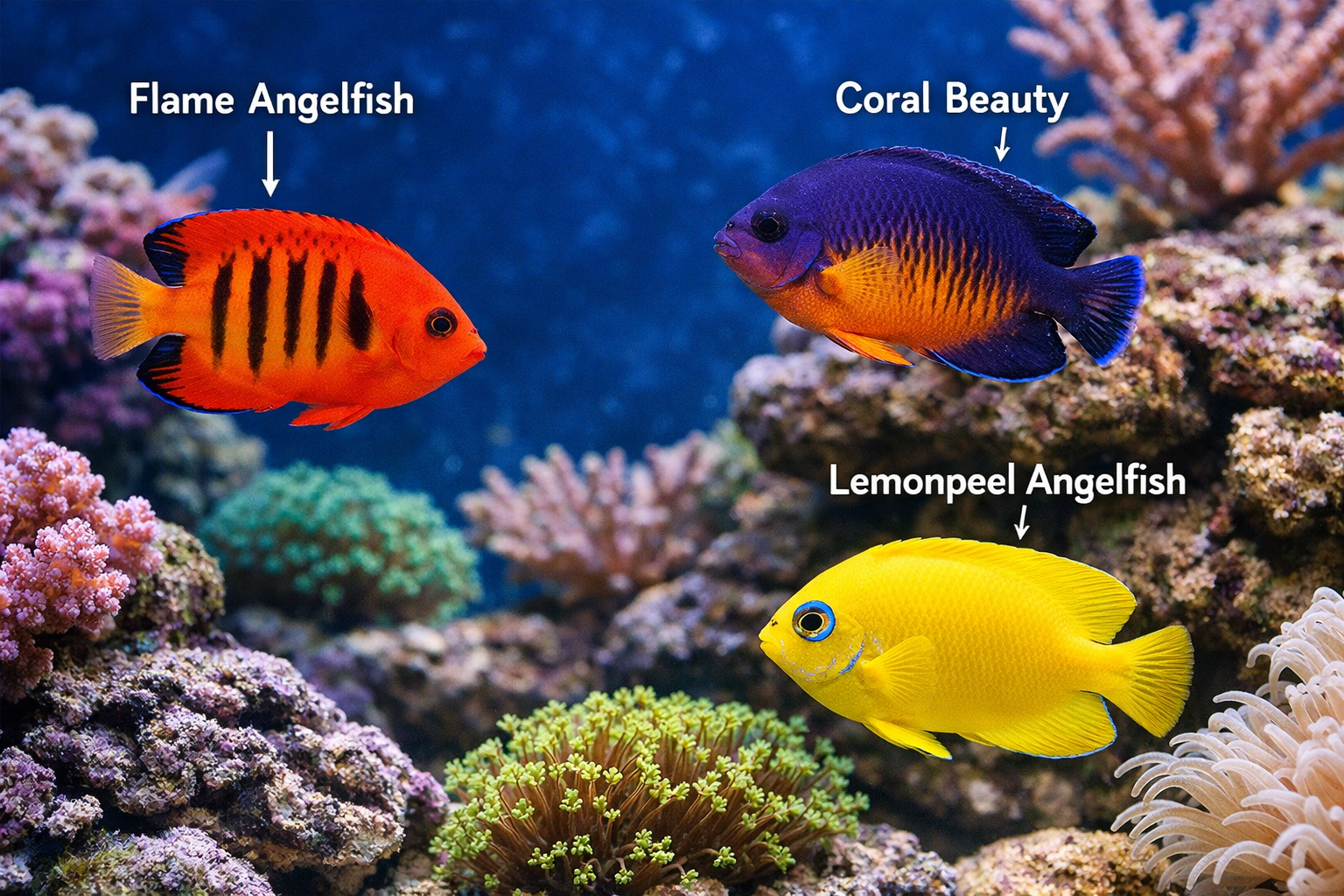
Flame Angelfish (Centropyge loricula)
The Flame Angelfish stands out as one of the most popular choices for intermediate beginners. Its brilliant orange-red coloration with black vertical bars creates a stunning focal point in any marine aquarium.
Care Requirements:
- Minimum tank size: 70 gallons
- Temperature: 72-78°F
- pH: 8.1-8.4
- Salinity: 1.020-1.025
Feeding: Flame Angelfish thrive on a varied diet including high-quality marine pellets, frozen mysis shrimp, and marine algae. Feed 2-3 times daily in small portions.
Compatibility: Generally reef-safe with caution, though they may nip at soft corals and clam mantles. Excellent community fish when properly introduced.
Coral Beauty Angelfish (Centropyge bispinosa)
The Coral Beauty offers incredible value with its purple and orange coloration patterns that vary significantly between individuals. This hardy species adapts well to aquarium life and demonstrates excellent disease resistance.
Key Features:
- Size: 4 inches maximum
- Temperament: Semi-aggressive
- Reef compatibility: Moderate (may nip corals)
- Lifespan: 5-7 years in captivity
Lemonpeel Angelfish (Centropyge flavissima)
Bright yellow coloration makes the Lemonpeel Angelfish an eye-catching addition to marine aquariums. This species demonstrates excellent hardiness and adapts quickly to aquarium conditions.
Special Considerations:
- Requires hiding places among live rock
- Benefits from regular algae supplementation
- May become territorial with similar-colored fish
- Excellent beginner species with proper care
Advanced Angelfish Species: Mastering the Saltwater Hobbyist Guide to Angelfish Species 2026
Experienced aquarists seeking greater challenges often gravitate toward larger, more demanding angelfish species. These magnificent creatures require extensive knowledge, larger systems, and dedicated care protocols.
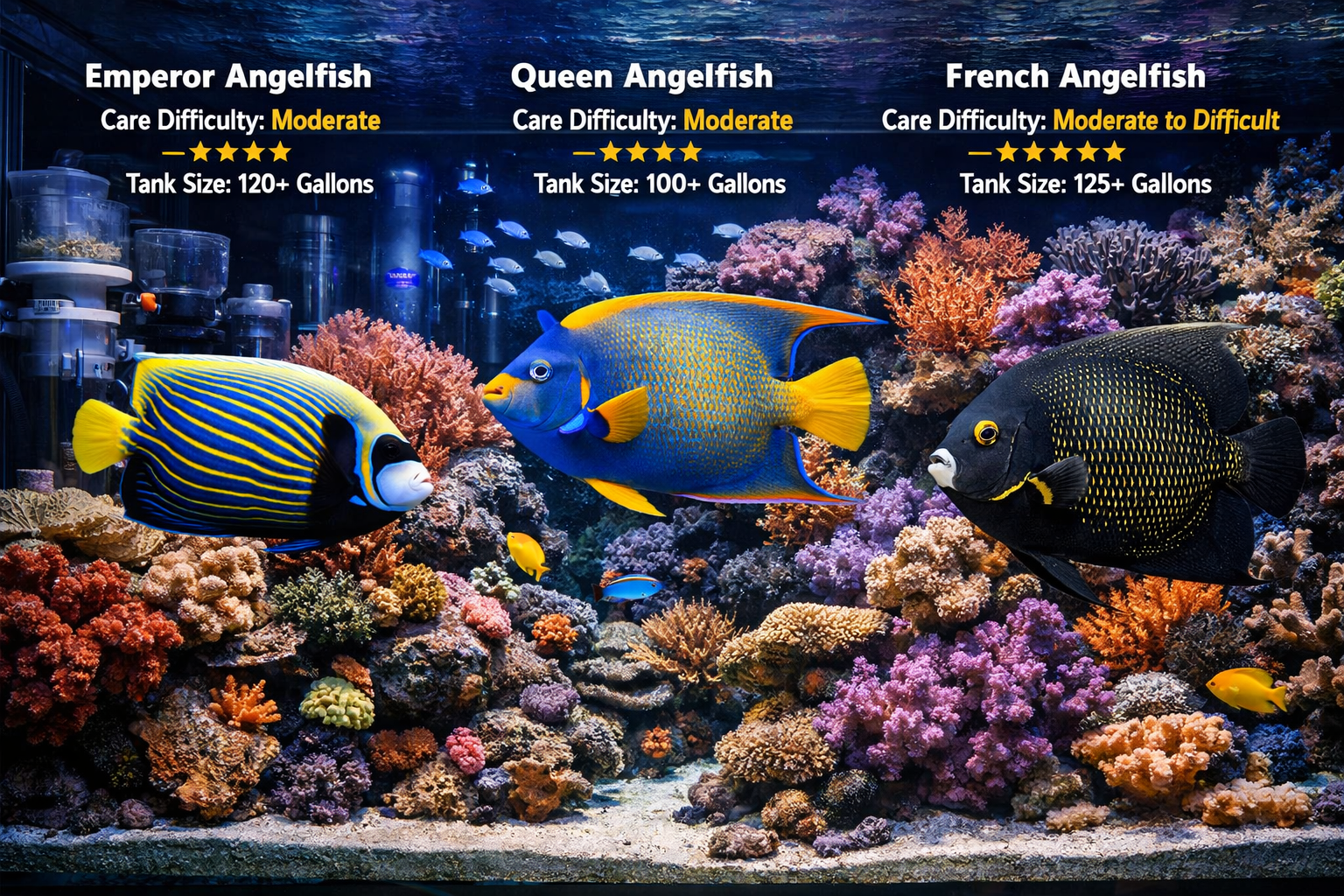
Emperor Angelfish (Pomacanthus imperator)
The Emperor Angelfish represents the pinnacle of marine angelfish keeping. Adults display stunning blue bodies with yellow stripes and distinctive facial patterns that make them true centerpiece fish.
Advanced Care Requirements:
| Parameter | Requirement |
|---|---|
| Minimum Tank Size | 220 gallons |
| Adult Size | 15 inches |
| Water Flow | Moderate to strong |
| Lighting | Moderate |
| Experience Level | Advanced |
Juvenile vs. Adult Coloration: Emperor Angelfish undergo dramatic color changes as they mature. Juveniles display dark blue bodies with white and blue circular stripes, while adults develop the characteristic imperial coloration.
Queen Angelfish (Holacanthus ciliaris)
Queen Angelfish showcase some of the most intricate patterns in the marine world. Their yellow bodies adorned with blue highlights and distinctive "crown" markings create breathtaking displays in large aquarium systems.
Specialized Requirements:
- Territory: Requires extensive swimming space
- Diet: Needs sponge-based foods and marine algae
- Tank mates: Best kept with non-aggressive species
- Water quality: Extremely sensitive to parameter fluctuations
French Angelfish (Pomacanthus paru)
The French Angelfish appeals to advanced keepers with its elegant black coloration highlighted by yellow scale edges. These intelligent fish develop strong personalities and often recognize their caretakers.
Behavioral Characteristics:
- Forms strong pair bonds in nature
- Demonstrates high intelligence and curiosity
- Requires mental stimulation through varied environments
- May rearrange tank decorations to suit preferences
Tank Setup and Environmental Requirements
Creating optimal environments for angelfish requires careful attention to multiple factors that directly impact fish health and behavior. Modern aquarium technology in 2026 offers unprecedented control over water parameters and environmental conditions.
Water Quality Parameters
Maintaining pristine water quality forms the foundation of successful angelfish keeping:
Essential Parameters:
- Temperature: 74-78°F (consistent within 1-2 degrees)
- pH: 8.0-8.4 (stable readings crucial)
- Salinity: 1.023-1.025 specific gravity
- Ammonia: 0 ppm (undetectable)
- Nitrite: 0 ppm (undetectable)
- Nitrate: <10 ppm (lower is better)
Filtration Systems
Angelfish produce significant bioload, requiring robust filtration systems:
Recommended Filtration:
- Protein Skimmer: Rated for 1.5-2x tank volume
- Live Rock: 1-2 pounds per gallon for biological filtration
- Mechanical Filtration: Regular cleaning essential
- Chemical Filtration: Activated carbon and specialized media
Aquascaping for Angelfish
Proper aquascaping provides territory establishment opportunities while maintaining swimming space:
Design Elements:
- Caves and Overhangs: Multiple hiding spots reduce stress
- Swimming Channels: Open areas for natural movement patterns
- Territorial Boundaries: Rock formations create natural divisions
- Feeding Stations: Designated areas for consistent feeding
Feeding and Nutrition Strategies
Angelfish nutrition has evolved significantly with advances in marine aquaculture and nutritional research. Understanding species-specific dietary requirements ensures optimal health and coloration.
Nutritional Requirements by Species Size
Different angelfish species have varying nutritional needs based on their size and natural feeding behaviors:
Small Species (Centropyge genus):
- Higher plant matter percentage (40-50%)
- Frequent small feedings (3-4 times daily)
- Specialized dwarf angelfish pellets
- Marine algae supplements
Large Species (Pomacanthus/Holacanthus genus):
- Increased protein requirements (60-70%)
- Larger food particles
- Sponge-based specialty foods
- Less frequent, larger meals (2-3 times daily)
Modern Feeding Techniques
2026 Feeding Innovations:
🍽️ Automated Feeding Systems: Programmable feeders ensure consistent nutrition delivery
🥬 Live Algae Cultivation: Home algae reactors provide fresh marine vegetation
🦐 Enriched Frozen Foods: Vitamin-fortified options improve immune system function
💊 Targeted Supplements: Species-specific vitamin and mineral additions
Feeding Schedule Recommendations
Daily Feeding Protocol:
- Morning: High-quality marine pellets or flakes
- Midday: Frozen foods (mysis shrimp, brine shrimp, marine cuisine)
- Evening: Algae-based foods or nori sheets
- Weekly: Live or frozen treats (bloodworms, enriched brine shrimp)
Compatibility and Tank Mates
Successful angelfish communities require careful consideration of species compatibility, territorial requirements, and behavioral patterns. Understanding these relationships prevents conflicts and promotes harmonious aquarium environments.
Ideal Tank Mates for Angelfish
Compatible Species Groups:
Peaceful Community Fish:
- Tangs and Surgeonfish (adequate space required)
- Wrasses (non-aggressive species)
- Gobies and Blennies
- Peaceful Butterflyfish
- Cardinals and Chromis
Compatible Invertebrates:
- Cleaner Shrimp
- Hermit Crabs
- Snails (various species)
- Sea Urchins (with caution)
Species to Avoid
Incompatible Tank Mates:
- ❌ Aggressive Triggerfish
- ❌ Large Groupers
- ❌ Moray Eels
- ❌ Aggressive Angelfish species (territorial conflicts)
- ❌ Small, tempting prey fish
Reef Compatibility Considerations
Angelfish and coral compatibility remains a complex topic with species-specific considerations:
Reef-Safe Options:
- Most Genicanthus species
- Some Centropyge species (with monitoring)
- Carefully selected individuals
Reef Risks:
- Large angelfish may consume coral polyps
- Soft corals particularly vulnerable
- Clam mantles often targeted
- Individual behavior varies significantly
Health Management and Disease Prevention
Proactive health management prevents common angelfish diseases and ensures long-term success. Modern veterinary advances and diagnostic tools in 2026 provide unprecedented disease prevention capabilities.
Common Angelfish Health Issues
Ich (Cryptocaryon irritans):
- Symptoms: White spots, scratching behavior, rapid breathing
- Treatment: Copper-based medications or hyposalinity
- Prevention: Quarantine new additions, maintain water quality
Marine Velvet (Amyloodinium ocellatum):
- Symptoms: Dusty appearance, lethargy, loss of appetite
- Treatment: Copper sulfate in quarantine system
- Prevention: UV sterilization, proper quarantine protocols
Bacterial Infections:
- Symptoms: Fin rot, cloudy eyes, unusual behavior
- Treatment: Antibiotic therapy (veterinary guidance recommended)
- Prevention: Excellent water quality, stress reduction
Quarantine Protocols
Essential Quarantine Setup:
- Separate 20-40 gallon system
- Hospital-grade filtration
- Copper monitoring equipment
- Observation period: 4-6 weeks minimum
Quarantine Benefits:
- Disease prevention
- Behavioral observation
- Feeding establishment
- Stress acclimation
Preventive Care Measures
Daily Health Monitoring:
- Feeding response observation
- Swimming pattern assessment
- Physical appearance checks
- Behavioral pattern recognition
Weekly Health Protocols:
- Water parameter testing
- Equipment maintenance
- Feeding variety rotation
- Stress indicator evaluation
Breeding and Reproduction
Angelfish breeding represents an advanced aspect of marine aquaculture that has seen significant developments in 2026. While challenging, successful breeding programs contribute to conservation efforts and reduce wild collection pressure.
Breeding Readiness Indicators
Physical Maturity Signs:
- Full adult coloration development
- Appropriate size for species
- Healthy body condition
- Active, alert behavior
Behavioral Changes:
- Territory establishment
- Pair formation activities
- Increased aggression toward other fish
- Nest preparation behaviors
Breeding System Requirements
Specialized Equipment:
- Large breeding tanks (200+ gallons for large species)
- Precise water parameter control
- Spawning substrate options
- Larval rearing systems
Environmental Triggers:
- Gradual temperature increases
- Extended photoperiods
- High-quality nutrition programs
- Reduced stress environments
Larval Care Challenges
Angelfish larvae present significant rearing challenges:
Critical Factors:
- Microscopic food requirements
- Water quality sensitivity
- High mortality rates
- Specialized equipment needs
Success Strategies:
- Rotifer and copepod cultures
- Green water techniques
- Gradual weaning protocols
- Professional guidance recommended
Conclusion
This comprehensive Saltwater Hobbyist guide to Angelfish Species 2026 provides the essential knowledge needed to successfully keep these magnificent marine creatures. From beginner-friendly Centropyge species to challenging large angelfish, understanding species-specific requirements ensures aquarium success and fish welfare.
The key to angelfish success lies in matching species selection to experience level, providing appropriate tank conditions, and maintaining excellent water quality. Modern aquarium technology and improved understanding of marine fish nutrition have made angelfish keeping more accessible while emphasizing the importance of proper preparation and ongoing care.
Next Steps for Angelfish Success:
- Assess Your Experience Level: Choose species appropriate for your current knowledge and capabilities
- Plan Your System: Design tank setup based on selected species requirements
- Establish Quarantine Protocols: Prepare proper quarantine systems before acquiring fish
- Connect with Community: Join local aquarium clubs and online forums for ongoing support
- Continue Learning: Stay updated with latest research and care techniques
The rewarding experience of keeping healthy, vibrant angelfish in your marine aquarium awaits those who invest time in proper preparation and ongoing education. With dedication and proper care, these stunning fish will provide years of enjoyment while contributing to marine conservation efforts through responsible aquaculture practices.
SEO Meta Information: