
Picture this: you're gazing into a pristine aquarium where elegant, striped fish glide gracefully through crystal-clear water, their flowing fins catching the light like underwater silk scarves. The Singapore angelfish has captivated aquarium enthusiasts worldwide with its stunning beauty and relatively peaceful temperament, making it one of the most sought-after freshwater species for both beginner and experienced fishkeepers.
The Singapore angelfish represents a fascinating blend of natural beauty and aquarium adaptability that has made it a cornerstone species in the freshwater aquarium trade. These magnificent creatures offer aquarists the perfect combination of visual appeal, manageable care requirements, and engaging behavior patterns that transform any tank into a living work of art.
Key Takeaways
• Singapore angelfish are peaceful, elegant freshwater fish perfect for community aquariums with proper tank mates
• These fish require specific water conditions including temperatures between 76-82°F and slightly acidic to neutral pH levels
• A minimum tank size of 20 gallons is recommended, though larger tanks (40+ gallons) provide optimal swimming space
• Singapore angelfish are omnivores requiring a varied diet of high-quality flakes, pellets, and occasional live or frozen foods
• Breeding is possible in home aquariums with proper conditions and dedicated breeding pairs
Understanding Singapore Angelfish: Origins and Characteristics
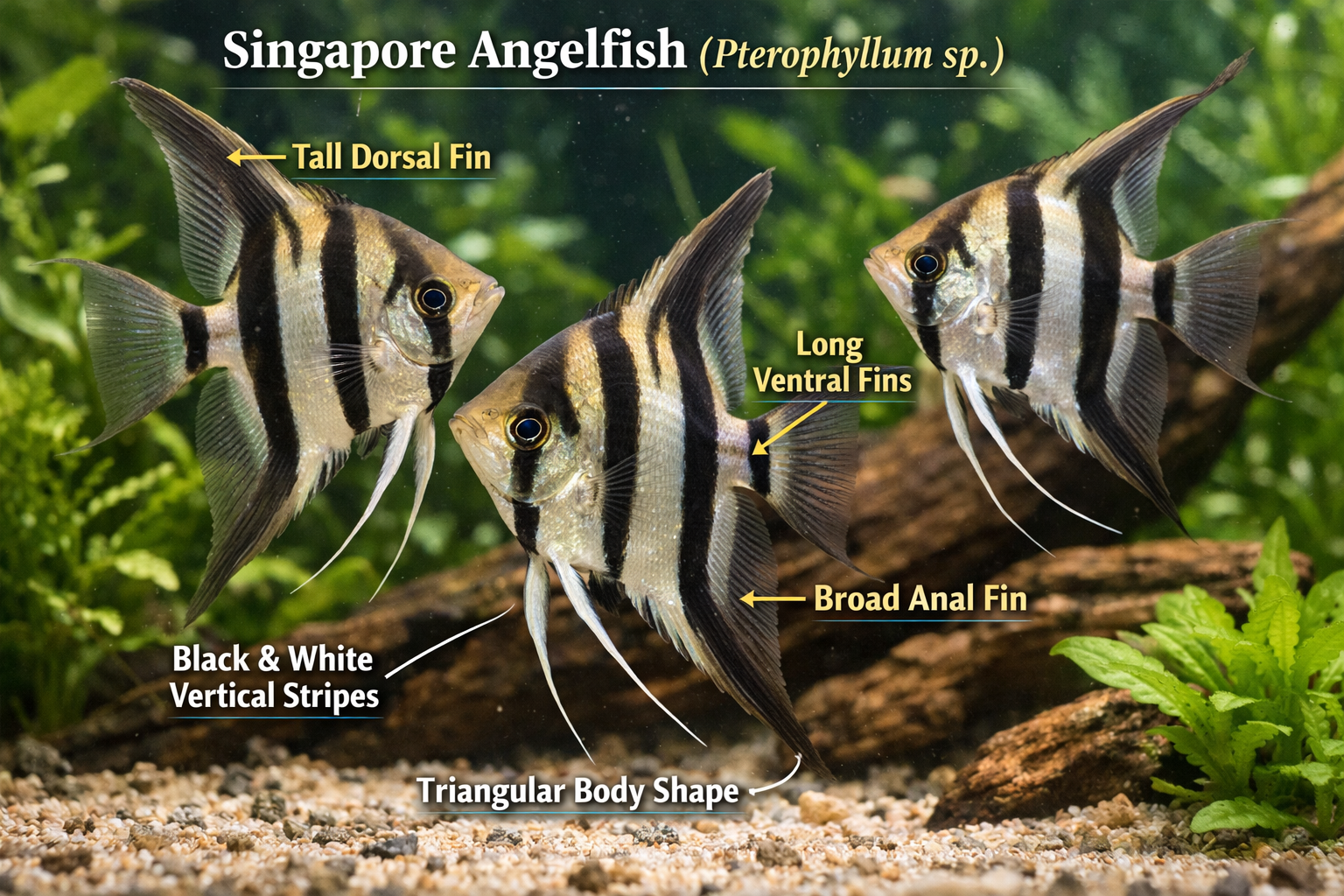
The Singapore angelfish belongs to the cichlid family and has become synonymous with aquarium elegance. Originally popularized through Singapore's extensive aquarium trade networks, these fish have earned their reputation as one of the most beautiful and manageable angelfish varieties available to home aquarists.
Physical Characteristics 🐠
Singapore angelfish display several distinctive features that set them apart from other angelfish varieties:
- Body Shape: Triangular, laterally compressed body typical of angelfish
- Size: Adult fish typically reach 6 inches in length and up to 8 inches in height
- Coloration: Classic silver base with bold black vertical stripes
- Fins: Long, flowing dorsal and anal fins that create their signature angel-like silhouette
- Eyes: Large, prominent eyes that give them an alert, intelligent appearance
Behavioral Traits
These remarkable fish exhibit fascinating behavioral patterns that make them excellent aquarium subjects:
Social Structure: Singapore angelfish are generally peaceful but can establish territorial boundaries, especially during breeding periods. They often form loose groups in larger aquariums while maintaining individual personalities.
Swimming Patterns: Their graceful swimming style involves slow, deliberate movements punctuated by quick bursts when feeding or investigating their environment.
Intelligence: These fish demonstrate problem-solving abilities and can recognize their caregivers, often swimming to the front of the tank during feeding times.
Singapore Angelfish Care Requirements and Tank Setup
Creating the perfect environment for Singapore angelfish requires attention to several critical factors that directly impact their health, behavior, and longevity. Understanding these requirements ensures your fish thrive in their aquatic home.
Tank Size and Dimensions
| Tank Size | Number of Fish | Recommended Setup |
|---|---|---|
| 20 gallons | 1-2 juvenile | Minimum for young fish |
| 40 gallons | 2-3 adult | Ideal for small group |
| 55+ gallons | 4-6 adult | Optimal community setup |
Height Considerations: Singapore angelfish require tall tanks due to their vertical body structure. A minimum height of 18 inches is recommended, with 24+ inches being ideal for adult fish.
Water Parameters 💧
Maintaining proper water conditions is crucial for Singapore angelfish health:
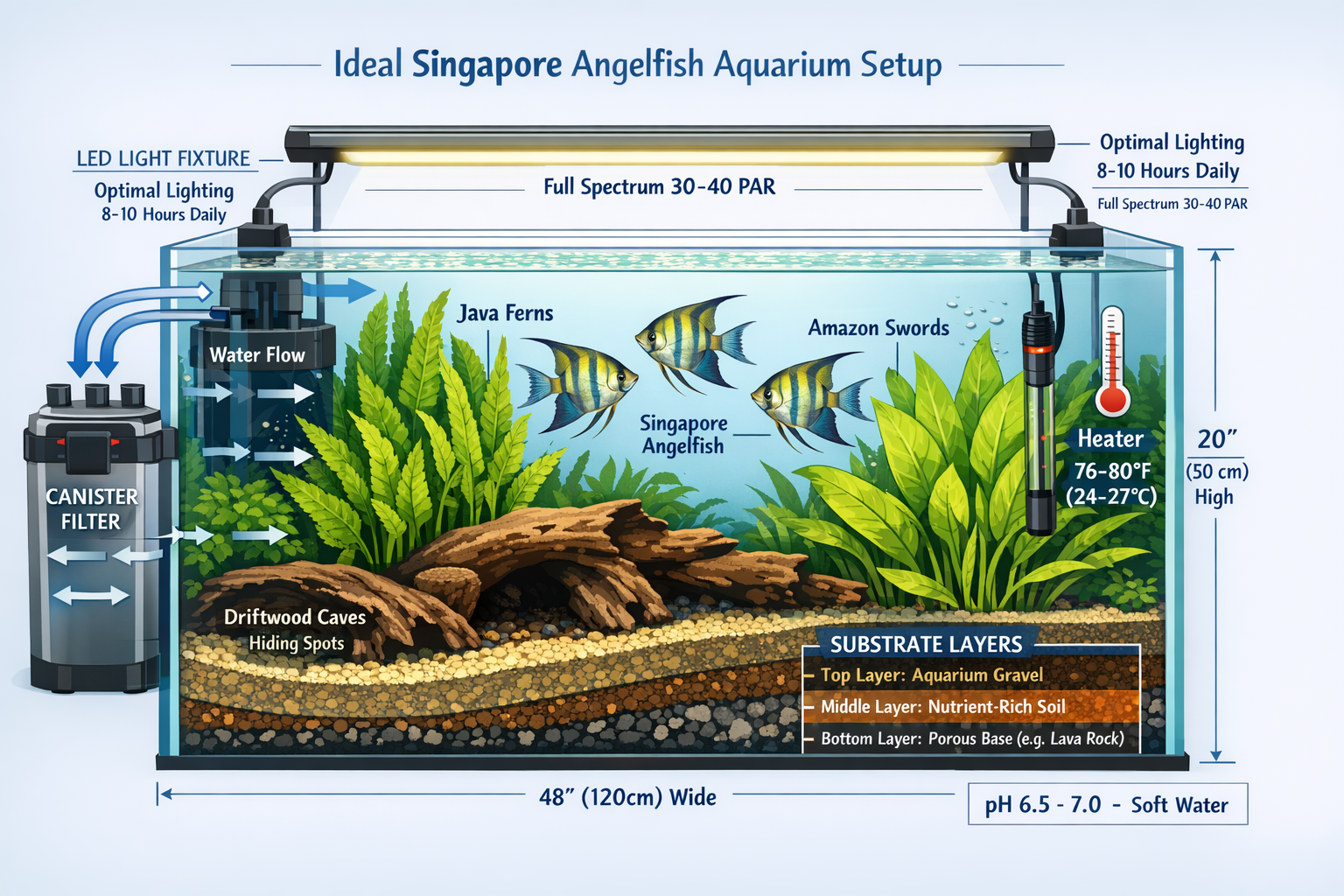
- Temperature: 76-82°F (24-28°C)
- pH Level: 6.0-7.5 (slightly acidic to neutral)
- Hardness: 5-15 dGH (soft to moderately hard)
- Ammonia: 0 ppm
- Nitrite: 0 ppm
- Nitrate: Less than 20 ppm
Filtration and Equipment
Filtration System: A high-quality filtration system capable of processing 4-6 times the tank volume per hour ensures optimal water quality. Canister filters or hang-on-back filters work well for most setups.
Heating: Consistent temperature maintenance requires a reliable heater rated for your tank size. Consider using two smaller heaters in larger tanks for even heat distribution.
Lighting: Moderate lighting (6-8 hours daily) supports plant growth while showcasing the fish's natural colors without causing stress.
Substrate and Decorations
Substrate Options:
- Fine gravel or sand substrate
- Dark-colored substrates enhance fish coloration
- Depth of 2-3 inches for planted setups
Decoration Guidelines:
- Driftwood pieces provide natural hiding spots
- Live plants like Amazon swords and Java ferns create a natural environment
- Avoid sharp decorations that could damage delicate fins
Feeding and Nutrition for Singapore Angelfish
Proper nutrition plays a vital role in maintaining the health, coloration, and vitality of Singapore angelfish. These omnivorous fish require a varied diet that mimics their natural feeding patterns while providing essential nutrients for optimal growth and development.
Dietary Requirements
Singapore angelfish thrive on a diverse diet consisting of:
Primary Foods (60-70% of diet):
- High-quality cichlid pellets
- Tropical fish flakes (premium brands)
- Freeze-dried bloodworms
- Spirulina-based foods for color enhancement
Supplementary Foods (20-30% of diet):
- Frozen brine shrimp
- Frozen bloodworms
- Frozen daphnia
- Blanched vegetables (spinach, peas)
Occasional Treats (10% of diet):
- Live brine shrimp
- Live blackworms
- Frozen mysis shrimp
Feeding Schedule and Portions
Adult Feeding Schedule:
- Frequency: 2-3 times daily
- Portion Size: What fish can consume in 2-3 minutes
- Variety: Rotate different food types throughout the week
Juvenile Feeding Schedule:
- Frequency: 3-4 times daily
- Portion Size: Smaller, more frequent meals
- Focus: High-protein foods for growth
"Consistent feeding schedules help establish routine and reduce stress in Singapore angelfish, leading to better coloration and more natural behaviors." – Marine Biology Research Institute
Nutritional Considerations
Protein Requirements: Adult Singapore angelfish require 35-40% protein content in their diet, while juveniles benefit from 45-50% protein for proper development.
Color Enhancement: Foods containing carotenoids and spirulina help maintain vibrant coloration and overall fish health.
Digestive Health: Incorporating fiber-rich foods like blanched vegetables supports digestive function and prevents common health issues.
Compatible Tank Mates and Community Setup
Creating a harmonious community aquarium with Singapore angelfish requires careful selection of compatible species that share similar water requirements and temperament characteristics. The key lies in choosing fish that won't compete aggressively for territory while complementing the angelfish's peaceful nature.
Ideal Tank Mate Categories
Peaceful Community Fish ✅:
- Corydoras Catfish: Bottom-dwelling cleaners that stay out of angelfish territory
- Gouramis: Similar size and temperament (avoid dwarf varieties)
- Larger Tetras: Cardinal tetras, Congo tetras (schools of 6+)
- Rainbowfish: Active swimmers that occupy different water levels
- Peaceful Barbs: Cherry barbs, rosy barbs in appropriate numbers
Bottom Dwellers:
- Bristlenose Plecos: Excellent algae eaters with peaceful disposition
- Kuhli Loaches: Nocturnal, non-competitive bottom dwellers
- Clown Loaches: Larger tanks only, similar water requirements
Fish to Avoid ❌
Aggressive Species:
- Cichlids with territorial tendencies
- Large predatory fish
- Fin-nipping species
Size Incompatibilities:
- Very small fish (neon tetras) that might be eaten
- Extremely large fish that could intimidate angelfish
Water Requirement Conflicts:
- Fish requiring significantly different pH or temperature ranges
- Species needing high water flow (angelfish prefer gentle currents)
Community Tank Planning
Tank Size Considerations:
- 75-gallon minimum for diverse community setups
- 100+ gallons for optimal community diversity
- Vertical space remains crucial for angelfish comfort
Stocking Guidelines:
- Start with angelfish as primary residents
- Add tank mates gradually over several weeks
- Monitor interactions closely during introduction periods
- Maintain appropriate bioload ratios
Breeding Singapore Angelfish: A Complete Guide
Breeding Singapore angelfish in home aquariums represents one of the most rewarding experiences in fishkeeping. These fish exhibit fascinating parental behaviors and, with proper conditions, will readily spawn in captivity, providing aquarists with the opportunity to observe the complete reproductive cycle.
Pre-Breeding Preparation
Breeding Tank Setup:
- Size: Minimum 40 gallons for breeding pair
- Water Parameters: Slightly warmer (80-84°F), soft water (5-8 dGH)
- pH: 6.5-7.0 for optimal spawning conditions
- Spawning Surfaces: Broad-leafed plants, slate pieces, or spawning cones
Pair Formation:
Singapore angelfish typically form monogamous pairs naturally. Signs of pair formation include:
- Swimming together consistently
- Defending shared territory
- Cleaning potential spawning sites together
- Synchronized movements and behaviors
The Spawning Process
Pre-Spawning Behavior (24-48 hours before):
- Increased aggression toward other fish
- Intensive cleaning of spawning surface
- Visible breeding tubes (ovipositor in females, pointed tube in males)
Spawning Event:
- Female deposits eggs in vertical rows on cleaned surface
- Male follows immediately to fertilize eggs
- Process repeats until 200-400 eggs are laid
- Both parents guard the spawning site aggressively
Post-Spawning Care
Parental Behavior:
- Egg fanning: Parents take turns fanning eggs for oxygenation
- Egg cleaning: Removal of unfertilized or fungused eggs
- Territory defense: Aggressive protection of spawning area
Development Timeline:
- Day 1-3: Egg development and hatching
- Day 4-7: Fry absorb yolk sacs while attached to surface
- Day 8-10: Free-swimming fry begin searching for food
Fry Care:
- First Foods: Newly hatched brine shrimp, microworms
- Water Quality: Frequent small water changes (10-15% daily)
- Feeding Schedule: 4-6 small meals throughout the day
Health and Disease Prevention
Maintaining optimal health in Singapore angelfish requires proactive care, regular monitoring, and quick response to any signs of illness. Understanding common health issues and prevention strategies ensures your fish live long, healthy lives in their aquarium environment.
Common Health Issues
Ich (White Spot Disease) 🔴:
- Symptoms: Small white spots on fins and body
- Causes: Stress, temperature fluctuations, poor water quality
- Treatment: Gradual temperature increase, aquarium salt, commercial ich medications
Fin Rot:
- Symptoms: Frayed, discolored fin edges
- Causes: Poor water quality, bacterial infections
- Treatment: Water quality improvement, antibacterial medications
Angelfish Virus (Angelfish AIDS):
- Symptoms: Loss of appetite, lethargy, color fading
- Prevention: Quarantine new fish, maintain excellent water quality
- Treatment: Supportive care, no specific cure available
Prevention Strategies
Water Quality Management:
- Regular Testing: Weekly monitoring of ammonia, nitrite, nitrate, pH
- Consistent Maintenance: 25-30% water changes weekly
- Filter Maintenance: Monthly cleaning without disrupting beneficial bacteria
Stress Reduction:
- Stable Environment: Consistent temperature and lighting schedules
- Appropriate Tank Mates: Compatible species selection
- Adequate Space: Proper stocking levels to prevent overcrowding
Quarantine Protocols:
- New Fish: 2-4 week quarantine period
- Observation: Daily monitoring for signs of illness
- Treatment: Address issues before main tank introduction
Nutritional Health Support
Immune System Boosters:
- Vitamin C enriched foods: Support immune function
- Garlic supplements: Natural antibacterial properties
- Varied diet: Ensures complete nutritional profile
Quality Food Sources:
- Reputable brands: Established manufacturers with quality control
- Fresh foods: Properly prepared live and frozen options
- Storage: Proper food storage to prevent nutritional degradation
Advanced Care Tips and Troubleshooting
Mastering Singapore angelfish care extends beyond basic requirements to encompass advanced techniques that promote optimal health, natural behaviors, and breeding success. These expert-level strategies help aquarists create thriving environments that showcase these magnificent fish at their absolute best.
Water Chemistry Optimization
Advanced Filtration Techniques:
- Multi-stage filtration: Combine mechanical, biological, and chemical filtration
- Beneficial bacteria cultivation: Establish robust nitrogen cycle with quality bacterial supplements
- Water polishing: Use activated carbon and purigen for crystal-clear water
pH Buffer Management:
- Natural buffering: Driftwood and peat moss for gentle pH reduction
- Monitoring stability: Daily pH checks during initial setup periods
- Gradual adjustments: Never change pH more than 0.2 units per day
Behavioral Enhancement Strategies
Environmental Enrichment:
- Territory establishment: Strategic placement of decorations to create natural boundaries
- Feeding variety: Rotating food types to stimulate natural foraging behaviors
- Light cycling: Gradual dawn/dusk simulation with programmable LED systems
Social Dynamics Management:
- Group composition: Optimal ratios for peaceful community interactions
- Hierarchy recognition: Understanding and working with established pecking orders
- Stress indicators: Early recognition of behavioral changes indicating problems
Troubleshooting Common Challenges
Aggression Issues:
- Rearrange decorations to disrupt established territories
- Increase feeding frequency to reduce food competition
- Add visual barriers to break line-of-sight between aggressive individuals
Breeding Difficulties:
- Condition enhancement: High-protein diet for 2-3 weeks before breeding attempts
- Environmental triggers: Slight temperature increases and increased water changes
- Pair compatibility: Sometimes requires trying different pair combinations
Growth and Development:
- Stunted growth: Often indicates inadequate nutrition or poor water quality
- Color fading: Usually stress-related or dietary deficiency
- Fin development: Proper nutrition and water quality essential for full fin development
Conclusion
The Singapore angelfish stands as one of the most rewarding and beautiful freshwater fish species available to aquarium enthusiasts. Their combination of elegant appearance, manageable care requirements, and fascinating behaviors makes them an excellent choice for both beginning and experienced aquarists seeking to create stunning aquatic displays.
Success with Singapore angelfish depends on understanding their specific needs: proper tank sizing with adequate height, stable water parameters, appropriate nutrition, and compatible tank mates. When these requirements are met, these magnificent fish reward their caregivers with years of graceful swimming, vibrant colors, and engaging personalities that transform any aquarium into a captivating underwater landscape.
Next Steps for Singapore Angelfish Success
Immediate Actions:
- Assess your current setup against the guidelines provided in this guide
- Test water parameters and make necessary adjustments gradually
- Evaluate tank mates for compatibility and make changes if needed
Long-term Planning:
- Consider upgrading to larger tanks for optimal fish comfort and community diversity
- Research breeding if interested in experiencing the full angelfish lifecycle
- Connect with local aquarium communities for ongoing support and advice
Ongoing Maintenance:
- Establish consistent routines for feeding, testing, and maintenance
- Keep detailed records of water parameters and fish behavior
- Stay informed about new research and techniques in angelfish care
The journey with Singapore angelfish offers endless opportunities for learning, enjoyment, and the satisfaction of providing excellent care for these remarkable aquatic companions. Whether you're just beginning or looking to enhance your existing setup, the investment in proper Singapore angelfish care pays dividends in the form of healthy, beautiful fish that bring joy and tranquility to any aquatic environment.