
Picture this: you're diving through crystal-clear Caribbean waters when suddenly, a magnificent fish glides past—nearly two feet long, adorned with intricate blue and yellow patterns that look like an artist's masterpiece. This breathtaking encounter with a scribbled angelfish represents one of the ocean's most spectacular sights and explains why these marine giants have captured the hearts of aquarists and marine enthusiasts worldwide.
Key Takeaways
• Scribbled angelfish are among the largest angelfish species, reaching up to 24 inches in length and requiring substantial aquarium space (minimum 180 gallons)
• These fish display stunning blue and yellow coloration with distinctive scribbled markings that give them their common name
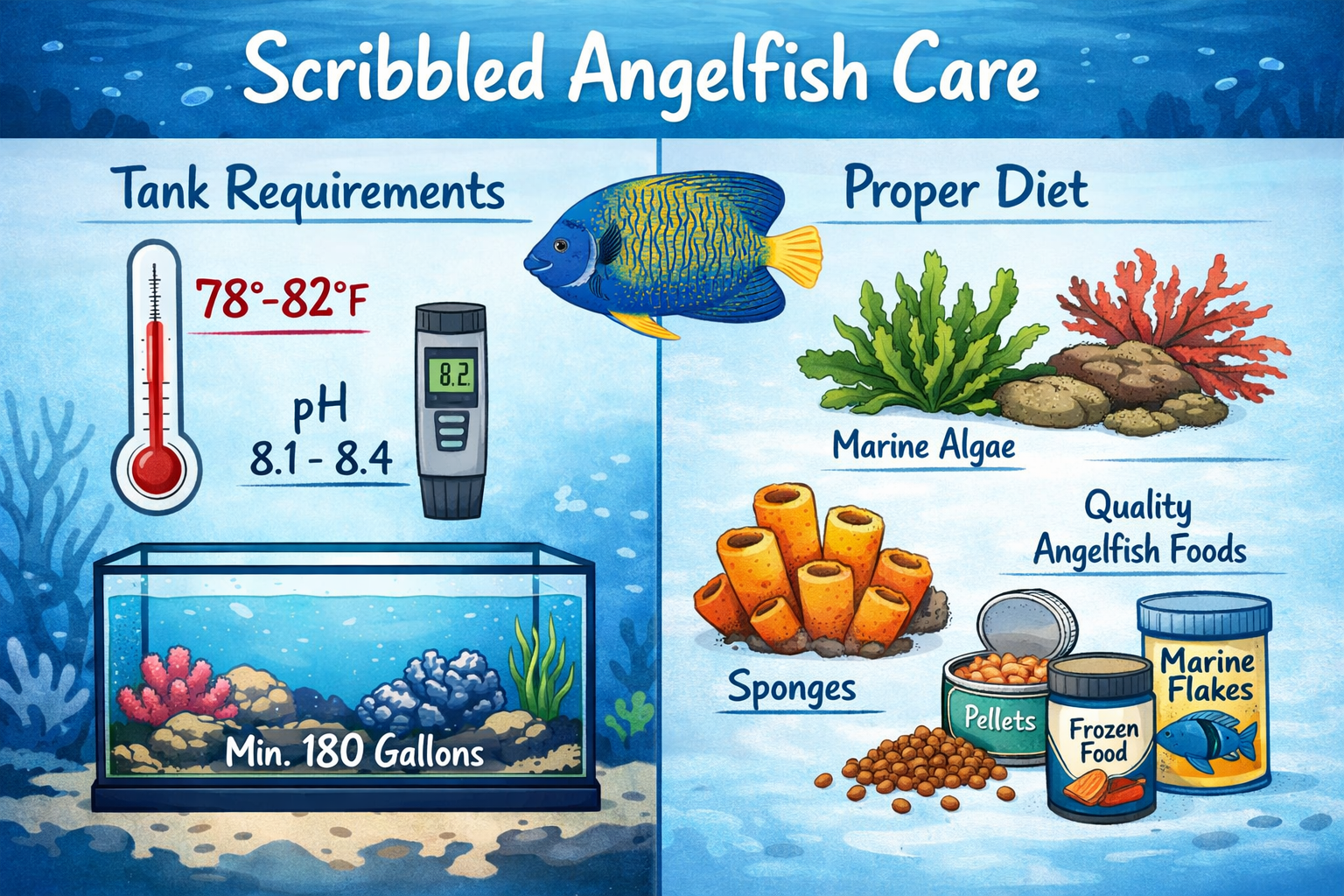
• Proper care requires specific water parameters, including temperatures between 78-82°F and pH levels of 8.1-8.4
• Diet consists primarily of sponges and algae in the wild, requiring specialized feeding in captivity
• Successfully keeping scribbled angelfish demands advanced aquarium experience due to their size, territorial nature, and specific care requirements
Understanding Scribbled Angelfish: Species Overview
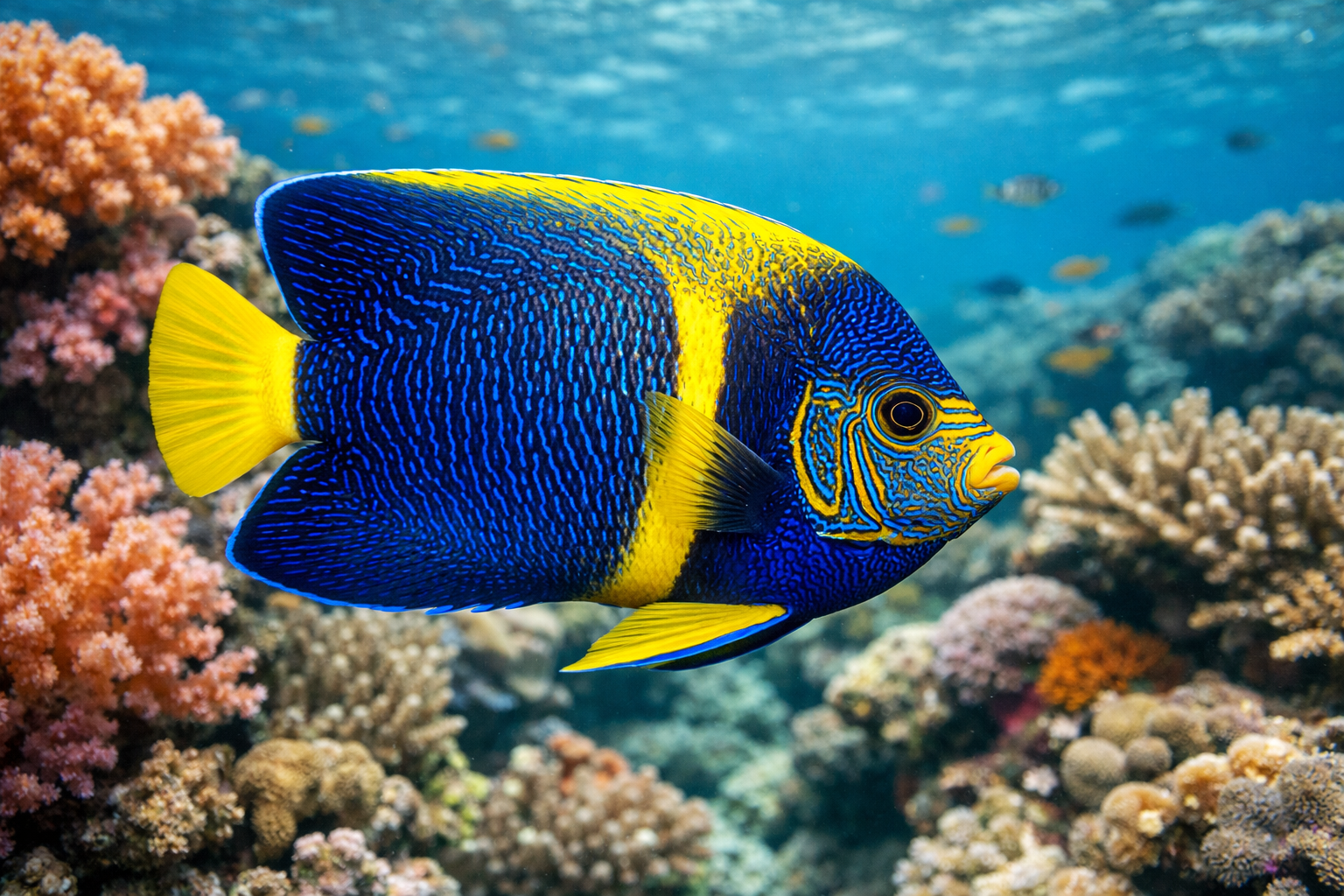
The scribbled angelfish (Chaetodontoplus duboulayi) stands as one of the most impressive members of the angelfish family. These magnificent creatures inhabit the warm waters of the Indo-Pacific region, where they've evolved into true underwater royalty. 🐠
Physical Characteristics and Identification
Scribbled angelfish display remarkable beauty through their distinctive appearance:
- Size: Adults reach 18-24 inches (45-60 cm) in length
- Body shape: Laterally compressed, disc-like form typical of angelfish
- Coloration: Vibrant blue body with yellow accents
- Distinctive markings: Intricate scribbled patterns on the face and fins
- Fins: Large, flowing dorsal and anal fins with stunning coloration
The scribbled angelfish gets its name from the maze-like patterns that adorn its face, resembling abstract artwork created by nature's hand. These markings are unique to each individual, much like human fingerprints.
Natural Habitat and Distribution
In the wild, scribbled angelfish inhabit:
| Habitat Feature | Details |
|---|---|
| Depth Range | 15-130 feet (5-40 meters) |
| Water Temperature | 75-84°F (24-29°C) |
| Geographic Range | Great Barrier Reef, Coral Sea, New Caledonia |
| Preferred Environment | Coral-rich areas with plenty of hiding spots |
| Territory Size | Large home ranges due to their size |
These fish prefer areas with abundant coral growth, where they can find their preferred food sources and establish territories. The scribbled angelfish typically inhabits outer reef slopes and lagoons with strong water movement.
Scribbled Angelfish Care Requirements in Captivity
Keeping scribbled angelfish successfully requires dedication, experience, and substantial resources. These magnificent fish are not suitable for beginners due to their complex needs and impressive size.
Tank Size and Setup Essentials
The scribbled angelfish demands spacious accommodations:
Minimum Tank Requirements:
- Volume: 180 gallons (680 liters) absolute minimum
- Recommended: 250+ gallons for optimal comfort
- Dimensions: Length of at least 6 feet
- Height: Minimum 24 inches for swimming space
Water Parameters for Scribbled Angelfish
Maintaining pristine water quality is crucial for scribbled angelfish health:
- Temperature: 78-82°F (25-28°C) ⭐
- pH: 8.1-8.4
- Salinity: 1.020-1.025 specific gravity
- Ammonia: 0 ppm
- Nitrite: 0 ppm
- Nitrate: <20 ppm
- Alkalinity: 8-12 dKH
"The key to successful scribbled angelfish keeping lies in maintaining rock-solid water parameters and providing ample swimming space. These fish simply cannot thrive in cramped conditions." – Marine Aquarium Expert
Filtration and Equipment Needs
Essential Equipment for Scribbled Angelfish:
- Protein Skimmer: High-capacity unit rated for tank size
- Live Rock: 1-2 pounds per gallon for biological filtration
- Powerheads: Strong water circulation (10-15x tank volume per hour)
- UV Sterilizer: Helps maintain water quality and reduce pathogens
- Heater: Reliable titanium heater with controller
- Lighting: LED system supporting coral growth if reef tank
Tank Mates and Compatibility
Scribbled angelfish can be territorial, especially as they mature. Suitable tank mates include:
Compatible Species:
- Large tangs (Naso, Sohal, Purple)
- Groupers and larger wrasses
- Lionfish (with caution)
- Triggerfish of similar size
- Large butterflyfish species
Species to Avoid:
- Other large angelfish (territorial conflicts)
- Small fish that may be eaten
- Aggressive species that might harass the angelfish
- Delicate invertebrates
Diet and Feeding Guidelines for Scribbled Angelfish
Proper nutrition forms the foundation of successful scribbled angelfish care. In the wild, these fish are primarily spongivores, meaning they feed extensively on marine sponges.
Natural Diet in the Wild
Scribbled angelfish consume:
- Primary food: Various sponge species (60-70% of diet)
- Secondary foods: Algae and marine plants
- Occasional items: Small invertebrates and coral polyps
- Feeding frequency: Continuous grazing throughout the day
Captive Diet Requirements
Replicating the natural diet of scribbled angelfish in captivity requires creativity and dedication:
Essential Food Types:
- Sponge-based foods: Specialized angelfish preparations containing sponge extracts
- Marine algae: Nori, sea lettuce, and other macroalgae
- High-quality pellets: Large marine angelfish pellets
- Frozen foods: Mysis shrimp, brine shrimp, marine cuisine
- Fresh foods: Clams, scallops, and other shellfish
Feeding Schedule and Techniques
Optimal Feeding Routine:
- Frequency: 3-4 times daily
- Portion size: What the fish can consume in 2-3 minutes
- Variety: Rotate different food types daily
- Enrichment: Soak foods in vitamins and supplements
Pro Feeding Tips: 💡
- Use feeding clips for seaweed and algae
- Offer foods in different tank areas to encourage natural foraging
- Monitor body condition and adjust portions accordingly
- Provide constant access to algae for grazing
Health and Disease Prevention
Maintaining the health of scribbled angelfish requires proactive care and attention to detail. These fish can live 15-20 years in captivity with proper care.
Common Health Issues
Scribbled angelfish may encounter several health challenges:
Marine Ich (Cryptocaryon irritans):
- Symptoms: White spots on body and fins, rapid breathing
- Treatment: Copper-based medications or hyposalinity
- Prevention: Quarantine new additions, maintain water quality
Marine Velvet (Amyloodinium):
- Symptoms: Gold/brown dusting on skin, lethargy
- Treatment: Copper treatment in hospital tank
- Prevention: UV sterilization, proper quarantine protocols
Bacterial Infections:
- Symptoms: Fin rot, body lesions, behavioral changes
- Treatment: Antibiotic medications as directed
- Prevention: Excellent water quality, proper nutrition
Quarantine Protocols
Essential Quarantine Steps:
- Duration: Minimum 4-6 weeks for new scribbled angelfish
- Tank setup: Bare-bottom tank with PVC hiding spots
- Monitoring: Daily observation for signs of disease
- Treatment: Prophylactic treatments as recommended
- Water changes: Frequent partial water changes
Stress Reduction Strategies
Minimizing stress is crucial for scribbled angelfish health:
- Stable environment: Consistent water parameters and lighting
- Adequate space: Sufficient territory and swimming room
- Proper nutrition: Regular, varied feeding schedule
- Compatible tank mates: Peaceful coexistence with other fish
- Hiding spots: Caves and overhangs for security
Breeding Scribbled Angelfish: Challenges and Considerations
Breeding scribbled angelfish in captivity remains extremely challenging and is rarely achieved by home aquarists. Understanding their reproductive biology helps appreciate these magnificent creatures even more.
Reproductive Biology
Scribbled angelfish reproduction involves:
- Sexual maturity: Reached at 3-4 years of age
- Spawning behavior: Pelagic spawning in open water
- Egg characteristics: Transparent, planktonic eggs
- Larval stage: Extended planktonic phase (45-60 days)
- Settlement: Juveniles settle on reefs after metamorphosis
Breeding Challenges in Captivity
Several factors make breeding scribbled angelfish extremely difficult:
Major Obstacles:
- Tank size requirements: Massive systems needed for breeding pairs
- Larval rearing: Complex nutritional needs of larvae
- Water quality: Pristine conditions essential for success
- Behavioral triggers: Difficulty replicating natural spawning cues
- Commercial viability: High costs versus market demand
Conservation Implications
Most scribbled angelfish in the aquarium trade are wild-caught, making responsible purchasing decisions important:
- Source verification: Choose reputable dealers with sustainable practices
- Tank-raised preference: Support captive breeding efforts when available
- Long-term commitment: Ensure ability to provide lifelong care
- Education: Share knowledge to promote responsible keeping
Advanced Care Tips for Scribbled Angelfish Success
Achieving long-term success with scribbled angelfish requires attention to advanced care techniques and ongoing commitment to excellence.
Water Quality Optimization
Advanced Water Management:
- Testing frequency: Daily testing of critical parameters
- Water changes: 20-25% weekly with high-quality salt mix
- Trace elements: Regular dosing of calcium, magnesium, and alkalinity
- Carbon filtration: Activated carbon for chemical filtration
- Monitoring equipment: Digital controllers for temperature and pH
Environmental Enrichment
Scribbled angelfish benefit from environmental complexity:
Enrichment Strategies:
- Live rock arrangements: Create caves, overhangs, and swim-throughs
- Water flow patterns: Vary current directions and intensities
- Feeding enrichment: Hide foods to encourage natural foraging
- Visual barriers: Provide areas where fish can escape from view
- Lighting variations: Simulate natural day/night cycles
Seasonal Care Adjustments
Adapting care routines throughout the year helps maintain optimal conditions:
Summer Considerations:
- Temperature control: Enhanced cooling during hot weather
- Increased metabolism: Higher feeding frequencies
- Water evaporation: More frequent top-offs
Winter Adjustments:
- Stable heating: Reliable temperature maintenance
- Reduced activity: Slightly decreased feeding if fish are less active
- Equipment maintenance: Service heaters and other critical equipment
Conclusion: Mastering Scribbled Angelfish Care
The journey of keeping scribbled angelfish represents one of marine aquarium keeping's greatest challenges and rewards. These magnificent creatures demand respect, dedication, and substantial resources, but they offer an unparalleled aquarium experience in return.
Success with scribbled angelfish requires mastering several key areas: providing adequate space in tanks of 180+ gallons, maintaining pristine water quality with specific parameters, offering varied diets rich in sponge-based foods, and creating an environment that supports their natural behaviors. The investment in proper equipment, ongoing maintenance, and quality nutrition pays dividends in the form of a healthy, vibrant fish that can live for decades.
Your Next Steps:
- Assess your readiness: Honestly evaluate your experience level and available resources
- Plan your system: Design an appropriately sized tank with proper equipment
- Research suppliers: Find reputable sources for healthy, well-acclimated fish
- Prepare quarantine facilities: Set up proper isolation systems before purchase
- Connect with experts: Join marine aquarium communities for ongoing support and advice
Remember that keeping scribbled angelfish is a long-term commitment that can span two decades or more. These remarkable fish deserve nothing less than exceptional care, and those who provide it will be rewarded with one of the ocean's most spectacular inhabitants gracing their aquarium for years to come.
SEO Meta Information: