
Picture a fish so vibrant it looks like a living flame dancing through crystal-clear waters. The flame angelfish (Centropyge loricula) captivates marine aquarium enthusiasts worldwide with its brilliant orange-red coloration and peaceful temperament. This remarkable species has become one of the most sought-after additions to saltwater aquariums, combining stunning visual appeal with manageable care requirements that make it accessible to both intermediate and experienced aquarists.
Key Takeaways
• Flame angelfish are hardy marine fish perfect for intermediate aquarists, requiring a minimum 70-gallon tank with stable water parameters
• These vibrant fish display striking orange-red coloration with distinctive black vertical stripes and blue-edged fins
• Proper diet includes marine algae, high-quality angelfish preparations, and occasional live or frozen foods for optimal health
• Compatible tank mates include peaceful fish species, while aggressive or territorial fish should be avoided
• Regular water testing, quality filtration, and consistent maintenance schedules ensure long-term success with flame angelfish care
Understanding Flame Angelfish: Species Overview and Natural Habitat
Physical Characteristics and Identification
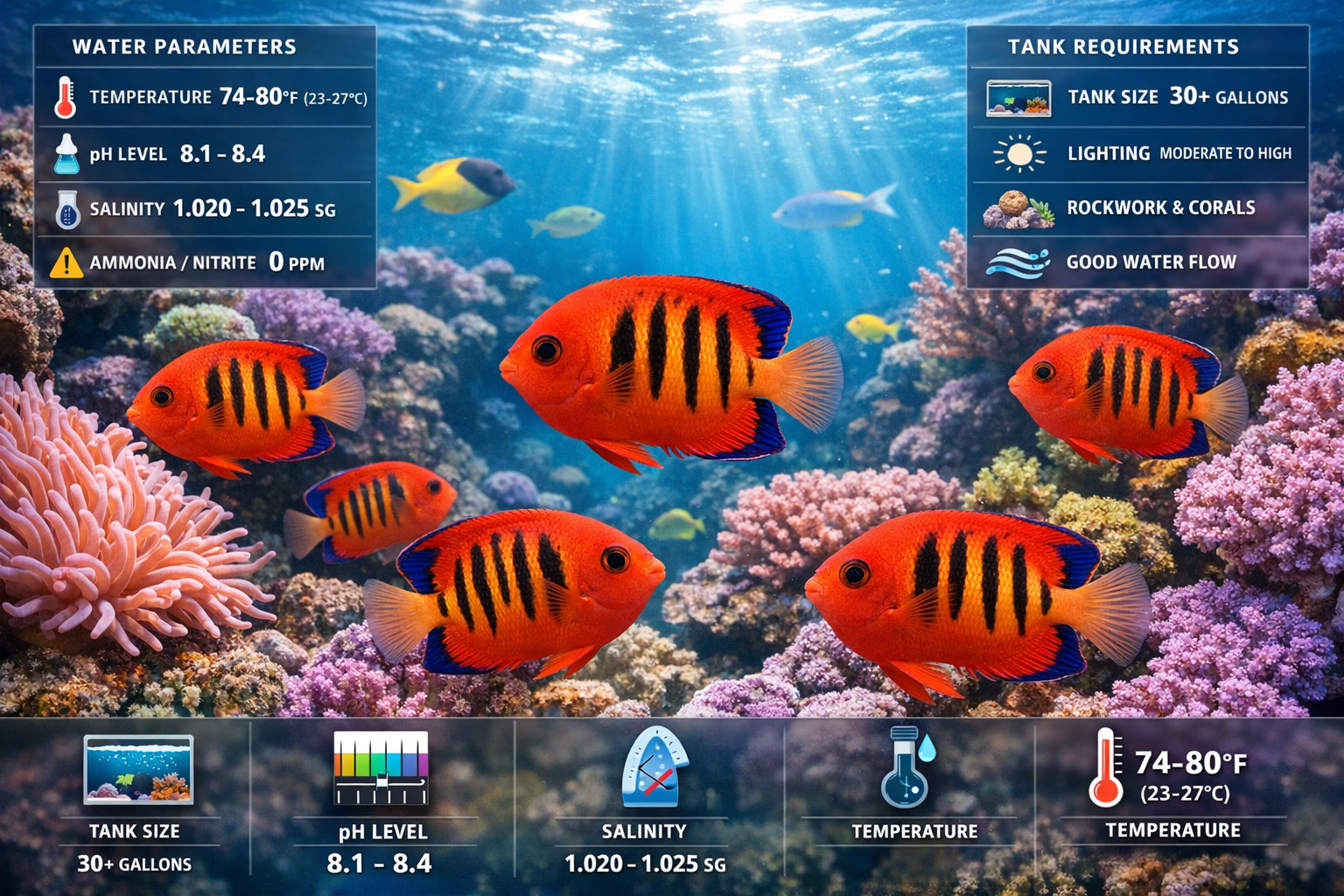
The flame angelfish stands out as one of nature's most brilliantly colored marine species. Adults typically reach 4-6 inches in length, making them an ideal size for home aquariums. Their most striking feature is their intense orange-red base coloration, which gives them their common name. Bold black vertical stripes run along their bodies, creating a dramatic contrast that makes them instantly recognizable.
The fins of flame angelfish display beautiful blue edging, particularly prominent on the dorsal and anal fins. Their body shape is typical of the angelfish family – laterally compressed with a somewhat triangular profile. The mouth is small and designed for grazing, reflecting their natural feeding habits in the wild.
Natural Habitat and Distribution
Flame angelfish originate from the Pacific Ocean, specifically inhabiting coral reefs throughout the Marshall Islands, Cook Islands, and parts of Polynesia. In their natural environment, these fish live at depths ranging from 15 to 200 feet, where they navigate through complex coral formations and rocky outcroppings.
The coral reef ecosystem provides flame angelfish with:
- Abundant algae growth on rock surfaces
- Protective hiding spots within coral crevices
- Stable water conditions with consistent temperature and salinity
- Diverse food sources including marine plants and small invertebrates
Understanding their natural habitat helps aquarists recreate optimal conditions in captivity, leading to healthier and more vibrant fish.
Behavioral Patterns in the Wild
In nature, flame angelfish exhibit semi-aggressive territorial behavior, particularly around preferred feeding areas. They're typically found as solitary individuals or in mated pairs, rarely forming large groups. These fish are active during daylight hours, spending most of their time grazing on algae and searching for food among coral formations.
Their natural behavior includes:
- Territorial defense of prime feeding locations
- Cautious exploration of new areas
- Quick retreat to hiding spots when threatened
- Methodical grazing patterns throughout the day
Flame Angelfish Care Requirements and Tank Setup
Essential Tank Specifications
Creating the perfect environment for flame angelfish requires careful attention to tank size, equipment, and water parameters. These fish need adequate swimming space and territorial boundaries to thrive in captivity.
Minimum tank requirements include:
| Parameter | Requirement |
|---|---|
| Tank Size | 70 gallons minimum |
| Length | 48 inches minimum |
| Water Temperature | 72-78°F (22-26°C) |
| pH Level | 8.1-8.4 |
| Specific Gravity | 1.020-1.025 |
| Ammonia/Nitrite | 0 ppm |
| Nitrate | <20 ppm |
Filtration and Equipment Setup
Flame angelfish require excellent water quality, making proper filtration absolutely essential. A combination of mechanical, biological, and chemical filtration provides the best results for maintaining optimal water conditions.
Recommended equipment includes:
- Protein skimmer rated for tank size
- Live rock (1-2 pounds per gallon)
- High-quality LED lighting for coral growth
- Powerheads for water circulation
- Reliable heater with backup system
- UV sterilizer for disease prevention
The protein skimmer removes organic waste before it breaks down, while live rock provides natural biological filtration and grazing surfaces that flame angelfish love. Proper water circulation prevents dead spots and ensures even distribution of nutrients and oxygen throughout the tank.
Creating the Ideal Aquascape
Flame angelfish appreciate a well-structured environment that mimics their natural coral reef habitat. The aquascape should provide both open swimming areas and plenty of hiding spots for security and territorial establishment.
Key aquascaping elements:
- Live rock formations with caves and overhangs
- Multiple hiding spots at different levels
- Open swimming areas in the front and center
- Coral placements for natural grazing surfaces
- Sand bed 2-3 inches deep for beneficial bacteria
Arrange live rock to create natural-looking formations while ensuring adequate water flow throughout the tank. Leave enough open space for the flame angelfish to swim freely while providing secure retreat areas when they feel stressed or threatened.
Water Quality Management
Maintaining stable water parameters is crucial for flame angelfish health and longevity. These fish are relatively hardy once established, but they're sensitive to rapid changes in water chemistry.
Daily monitoring should include:
- 🌡️ Temperature checks morning and evening
- 📊 Visual inspection for unusual behavior
- 🔍 Equipment function verification
- 💧 Water level maintenance
Weekly testing requirements:
- pH levels using reliable test kits
- Ammonia and nitrite concentrations
- Nitrate levels and reduction strategies
- Specific gravity with refractometer
- Alkalinity and calcium for coral health
Regular water changes of 10-20% weekly help maintain optimal conditions while removing accumulated toxins and replenishing trace elements essential for flame angelfish health.
Feeding and Nutrition for Flame Angelfish
Natural Diet and Feeding Behavior
In the wild, flame angelfish are primarily herbivorous grazers that spend most of their day browsing algae from rock surfaces and coral formations. Understanding their natural feeding patterns helps aquarists provide appropriate nutrition in captivity.
Natural diet components include:
- Marine algae of various species
- Bacterial films on rock surfaces
- Small invertebrates found while grazing
- Coral polyps (occasionally)
- Organic detritus from reef environments
Captive Diet Requirements
Successful flame angelfish nutrition in aquariums requires a varied diet that mimics their natural food sources while providing complete nutritional balance. High-quality commercial foods designed for marine angelfish form the foundation of their captive diet.
Primary food sources:
- Marine angelfish pellets (high-quality brands)
- Frozen marine algae preparations
- Nori sheets attached to feeding clips
- Spirulina-enriched flake foods
- Live or frozen mysis shrimp (occasional treats)
Feeding schedule recommendations:
- 2-3 small meals daily for adults
- Morning and evening primary feedings
- Midday supplemental algae or vegetables
- Fasting one day per week for digestive health
Supplemental Feeding Strategies
Flame angelfish benefit from supplemental feeding methods that encourage natural grazing behaviors while ensuring complete nutrition. These strategies help maintain fish health and enhance their vibrant coloration.
Effective supplementation includes:
🥬 Fresh vegetables: Blanched spinach, lettuce, or peas
🌿 Live algae: Chaetomorpha or other macroalgae
🦐 Protein treats: Enriched brine shrimp or bloodworms
💊 Vitamin supplements: Soaked into dry foods
🪨 Grazing rocks: Live rock with natural algae growth
Rotate different food types throughout the week to provide nutritional variety and prevent dietary deficiencies. Observe feeding behavior closely – healthy flame angelfish should show immediate interest in food and consume it eagerly.
Signs of Proper Nutrition
Well-fed flame angelfish display specific characteristics that indicate optimal nutritional status. Monitoring these signs helps aquarists adjust feeding programs as needed for best results.
Healthy feeding indicators:
- Bright, vibrant coloration
- Active swimming and exploration
- Eager feeding response
- Steady growth in juveniles
- Normal body condition (not thin or bloated)
Compatible Tank Mates and Community Considerations
Ideal Tank Companions
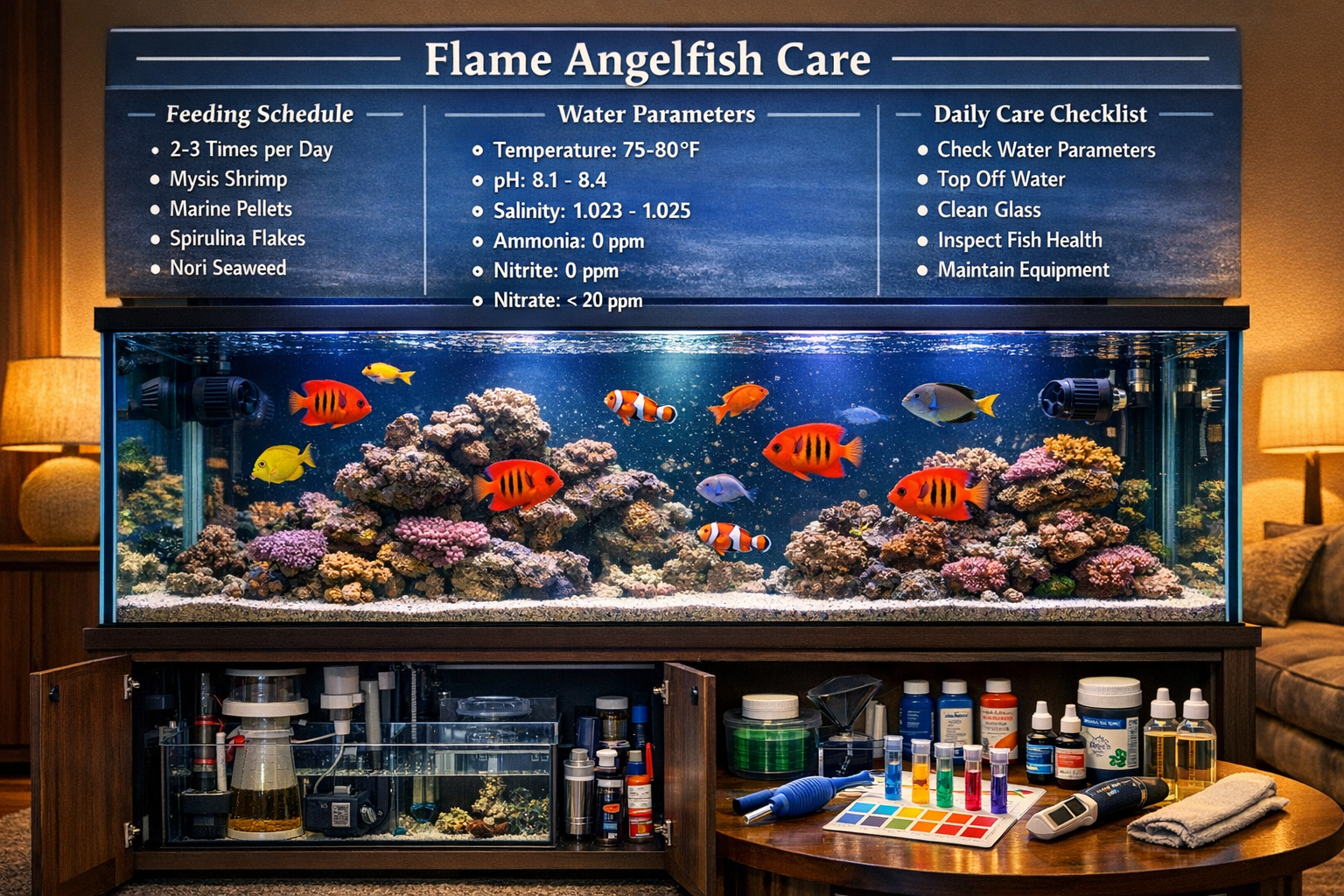
Selecting appropriate tank mates for flame angelfish requires understanding their temperament and territorial tendencies. While generally peaceful, these fish can become aggressive toward similar-looking species or in overcrowded conditions.
Excellent companions include:
- Clownfish species (Ocellaris, Percula)
- Peaceful wrasses (Six-line, Fairy wrasses)
- Cardinalfish varieties
- Peaceful gobies and blennies
- Non-aggressive tangs in larger tanks
- Peaceful basslets and dottybacks
Species to Avoid
Certain fish species should not be housed with flame angelfish due to aggression, competition, or predatory behavior. Avoiding these combinations prevents stress, injury, and potential loss of fish.
Incompatible species:
- Large angelfish (potential aggression)
- Aggressive triggerfish and puffers
- Predatory fish larger than 6 inches
- Highly territorial damselfish
- Other Centropyge angelfish (territory conflicts)
- Aggressive dottybacks and pseudochromis
Invertebrate Compatibility
Flame angelfish can coexist with many marine invertebrates, though caution is needed with certain species that might be viewed as food. Their grazing behavior generally doesn't harm most corals and invertebrates.
Safe invertebrate choices:
- ✅ Hard corals (SPS and LPS varieties)
- ✅ Soft corals (most species)
- ✅ Cleanup crew (snails, hermit crabs)
- ✅ Shrimp species (larger varieties)
- ⚠️ Small ornamental shrimp (monitor closely)
- ❌ Tube worms and feather dusters (may be eaten)
Health Management and Disease Prevention
Common Health Issues
Flame angelfish are generally hardy fish, but they can suffer from typical marine fish diseases when stressed or kept in poor conditions. Early recognition and treatment of health issues ensures the best outcomes.
Frequent health problems:
- Marine Ich (Cryptocaryon irritans)
- Bacterial infections from poor water quality
- Nutritional deficiencies from inadequate diet
- Stress-related immune suppression
- Parasitic infections from new additions
Preventive Care Measures
Prevention remains the most effective approach to maintaining flame angelfish health. Consistent care practices and environmental management prevent most common diseases and health issues.
Essential prevention strategies:
- 🧪 Regular water testing and maintenance
- 🏥 Quarantine protocols for new fish
- 🍽️ Proper nutrition and feeding schedules
- 🌡️ Stable environmental conditions
- 🔍 Daily observation for behavioral changes
- 💧 UV sterilization for pathogen control
Treatment Approaches
When health issues arise, prompt and appropriate treatment maximizes recovery chances for flame angelfish. Understanding treatment options helps aquarists respond effectively to various conditions.
Treatment methods include:
- Hospital tank isolation for sick fish
- Medication protocols for specific diseases
- Water quality improvement measures
- Dietary supplements for immune support
- Stress reduction through environmental optimization
Breeding Flame Angelfish: Challenges and Considerations
Reproductive Behavior
Flame angelfish breeding in captivity remains challenging but not impossible for dedicated aquarists. Understanding their reproductive behavior and requirements provides insight into successful breeding attempts.
Breeding characteristics:
- Hermaphroditic species (can change sex)
- Pair bonding in established relationships
- Territorial during spawning periods
- Evening spawning behavior
- Pelagic larvae requiring specialized care
Breeding Requirements
Successful flame angelfish breeding requires specific environmental conditions and careful preparation. Most breeding attempts occur in dedicated breeding systems rather than community tanks.
Essential breeding conditions:
- Mature pair with established bond
- Pristine water quality and stability
- Appropriate tank size (100+ gallons)
- Specialized diet for conditioning
- Minimal disturbance during spawning
- Larval rearing system preparation
Larval Care Challenges
Flame angelfish larvae present significant challenges for aquaculturists due to their small size and specific nutritional requirements. Successful larval rearing requires extensive preparation and specialized equipment.
Larval care requirements:
- Microscopic food cultures (rotifers, copepods)
- Pristine water conditions
- Specialized lighting for food organisms
- Temperature control systems
- Gentle filtration to prevent larval damage
- Extended care period (60+ days)
Conclusion
The flame angelfish represents one of the most rewarding additions to marine aquariums, combining stunning visual appeal with manageable care requirements for intermediate and advanced aquarists. Success with these magnificent fish depends on providing appropriate tank conditions, maintaining excellent water quality, offering varied nutrition, and selecting compatible tank mates.
Key success factors include:
- Establishing proper tank size (minimum 70 gallons) with adequate filtration
- Maintaining stable water parameters within optimal ranges
- Providing varied diet emphasizing marine algae and high-quality prepared foods
- Creating appropriate aquascape with hiding spots and grazing surfaces
- Implementing preventive health care measures and quarantine protocols
For aquarists ready to take the next step, begin by researching reputable suppliers and preparing your aquarium system well in advance of fish acquisition. Consider joining marine aquarium forums or local aquarium societies to connect with experienced flame angelfish keepers who can provide ongoing guidance and support.
The journey of keeping flame angelfish offers endless rewards through their vibrant beauty, interesting behaviors, and the satisfaction of successfully maintaining these remarkable marine creatures. With proper preparation, dedication, and attention to detail, flame angelfish can thrive for many years, bringing the beauty of coral reefs into your home aquarium.
SEO Meta Title: Flame Angelfish Care Guide: Complete Setup & Care Tips 2026
SEO Meta Description: Complete flame angelfish care guide covering tank setup, feeding, tank mates, and health tips. Learn everything needed for successful flame angelfish keeping in 2026.