
Picture a fish so stunning that it looks like nature's own masterpiece painted with vibrant blues and yellows. The annularis angelfish stands as one of the ocean's most captivating creatures, drawing marine enthusiasts and aquarists worldwide with its distinctive blue ring markings and graceful swimming patterns. This remarkable species has become a prized addition to saltwater aquariums, yet many people don't fully understand the complexities of caring for these magnificent fish.
The annularis angelfish (Pomacanthus annularis) represents more than just another pretty face in the marine aquarium trade. These fish showcase incredible intelligence, complex social behaviors, and specific care requirements that challenge even experienced aquarists. Understanding their needs becomes crucial for anyone considering adding this species to their marine collection.
Key Takeaways
• Annularis angelfish require large aquarium systems (125+ gallons) with excellent water quality and stable marine conditions
• These fish display dramatic color changes from juvenile to adult stages, with distinctive blue ring patterns developing over time
• Proper diet includes marine algae, sponges, and high-quality prepared foods to maintain health and vibrant coloration
• Tank compatibility requires careful selection of peaceful tankmates, as annularis angelfish can become territorial with similar species
• Water parameters must remain stable with specific temperature (72-78°F), salinity, and pH requirements for optimal health
Understanding Annularis Angelfish: Species Overview and Natural Habitat
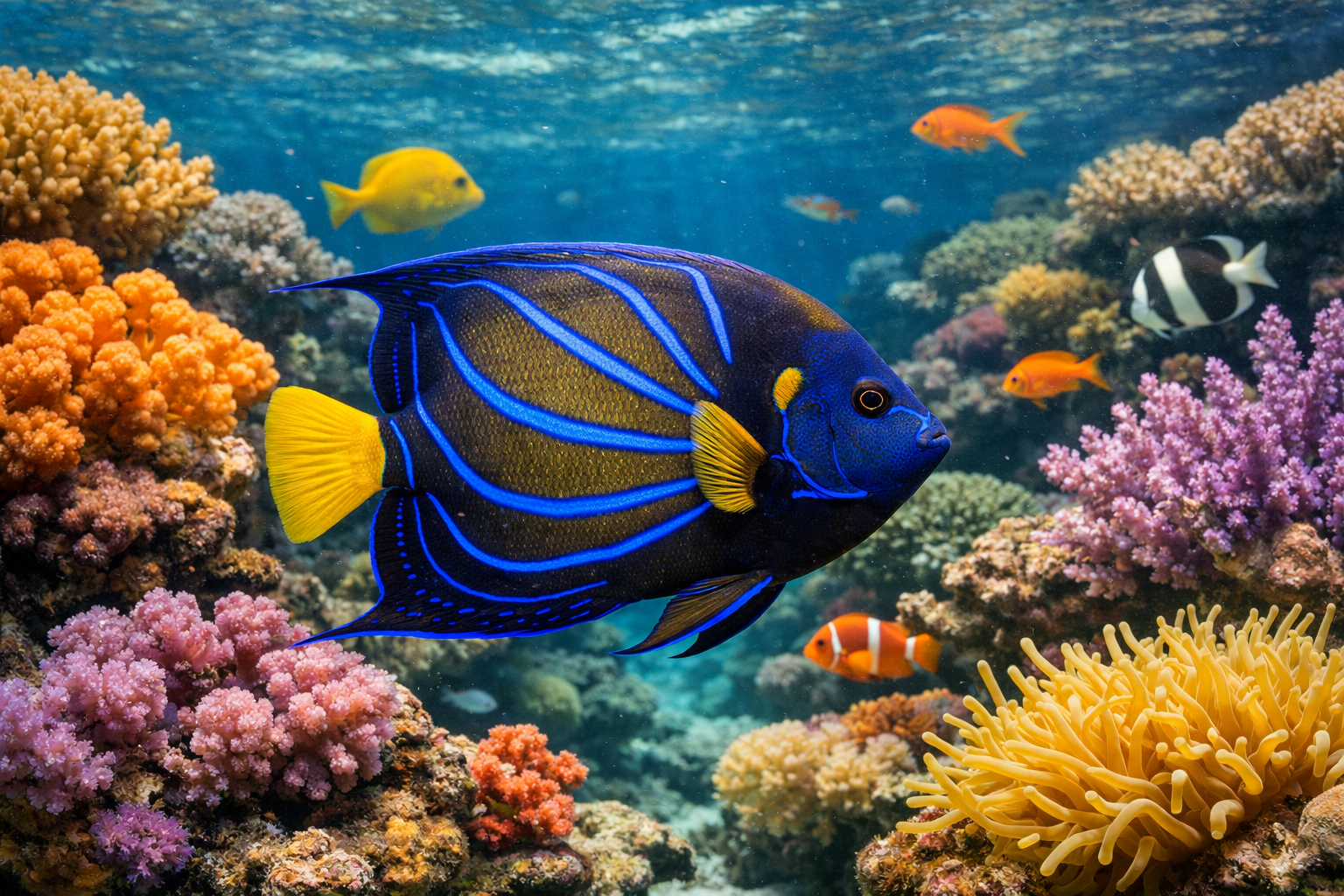
The annularis angelfish belongs to the family Pomacanthidae and ranks among the most recognizable marine angelfish species. These fish originate from the warm waters of the Indo-Pacific region, where they inhabit coral reefs, lagoons, and coastal areas with rich marine biodiversity.
Physical Characteristics and Identification
Adult annularis angelfish display several distinctive features that make identification straightforward:
- Size: Typically reach 10-12 inches in length when fully mature
- Coloration: Deep blue body with bright yellow fins and tail
- Distinctive marking: Prominent blue ring behind the gill cover (hence "annularis" meaning ring-like)
- Body shape: Compressed, disc-like profile typical of angelfish species
- Fins: Elongated dorsal and anal fins with flowing edges
The most striking feature remains the blue ring marking that gives this species its common name. This circular pattern becomes more pronounced as the fish matures, creating a stunning contrast against the deep blue body coloration.
Natural Distribution and Habitat
Annularis angelfish inhabit a vast range across the Indo-Pacific, including:
| Region | Specific Locations | Habitat Type |
|---|---|---|
| Southeast Asia | Thailand, Malaysia, Indonesia | Coral reefs, lagoons |
| Indian Ocean | Sri Lanka, Maldives | Reef slopes, channels |
| Western Pacific | Philippines, Papua New Guinea | Outer reefs, drop-offs |
| Red Sea | Egypt, Saudi Arabia | Coral gardens, caves |
These fish prefer reef environments with plenty of hiding spots, caves, and crevices. They typically inhabit depths ranging from 10 to 100 feet, where water temperatures remain stable and food sources are abundant.
Juvenile vs. Adult Appearance
One of the most fascinating aspects of annularis angelfish involves their dramatic color transformation from juvenile to adult stages:
Juvenile characteristics:
- Dark blue to black body with white and blue curved stripes
- Smaller size (2-4 inches)
- More timid behavior
- Different dietary preferences
Adult characteristics:
- Deep blue body with yellow fins
- Prominent blue ring marking
- Larger, more robust build
- Increased territorial behavior
This transformation occurs gradually over 12-18 months, making it exciting for aquarists to witness the complete metamorphosis.
Annularis Angelfish Care Requirements and Aquarium Setup
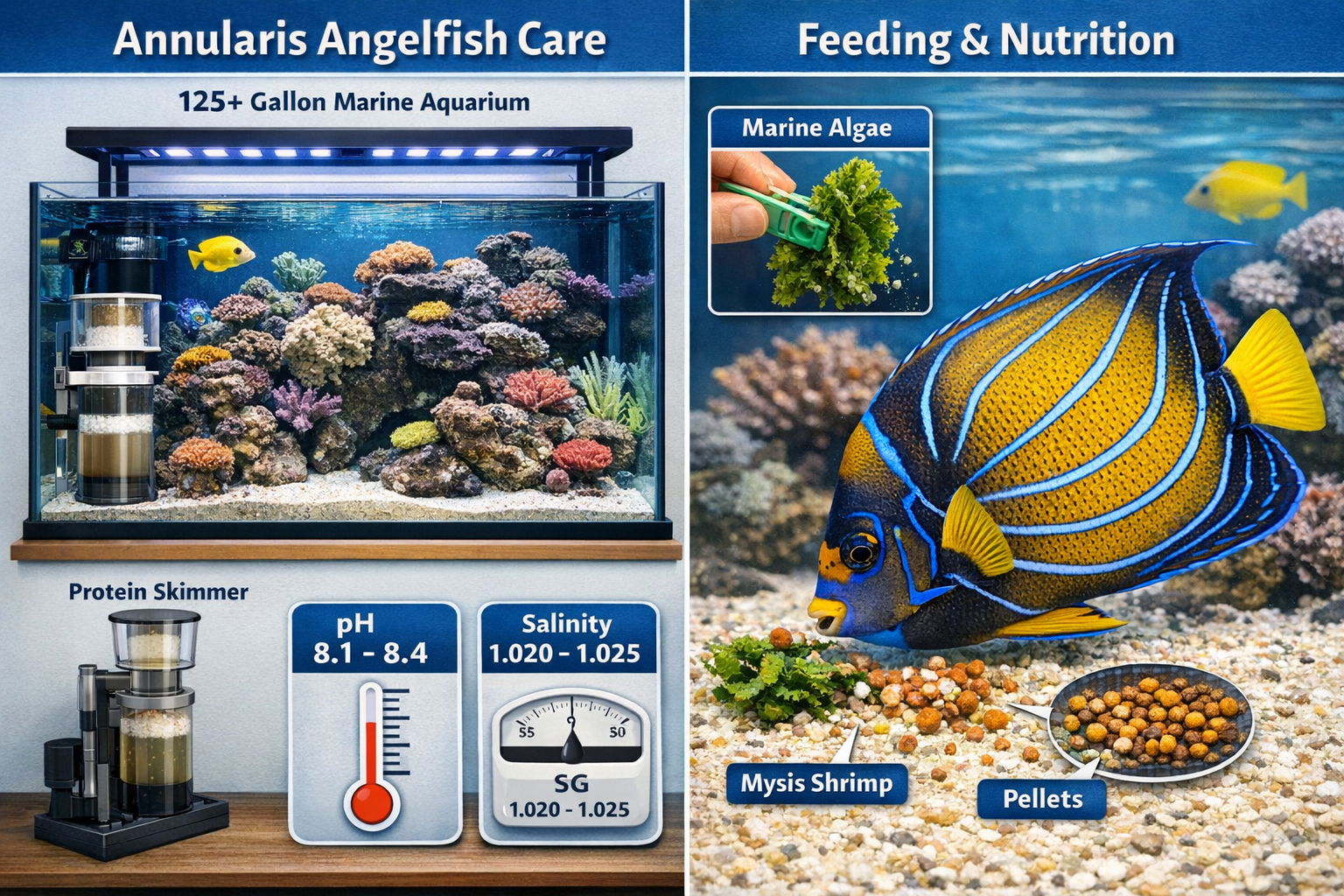
Successfully maintaining annularis angelfish requires dedication, proper equipment, and thorough understanding of their specific needs. These fish demand high-quality marine environments that closely replicate their natural reef habitats.
Tank Size and Setup Specifications
Minimum tank requirements for annularis angelfish include:
- Tank volume: 125 gallons minimum (larger is always better)
- Dimensions: At least 6 feet in length for adequate swimming space
- Shape: Rectangular tanks provide better swimming areas than tall, narrow designs
The spacious environment allows these active swimmers to establish territories and display natural behaviors. Cramped conditions lead to stress, aggression, and health problems.
Essential Equipment and Filtration
A proper annularis angelfish setup requires several critical components:
Filtration system:
- High-capacity protein skimmer rated for tank size
- Biological filtration with live rock (1-2 pounds per gallon)
- Mechanical filtration to remove debris
- Chemical filtration with activated carbon
Additional equipment:
- Lighting: LED systems providing 8-10 hours daily illumination
- Circulation: Multiple powerheads creating gentle water movement
- Heating: Reliable heater maintaining stable temperatures
- Testing: Quality test kits for monitoring water parameters
Water Parameters and Quality Management
Maintaining stable water conditions proves absolutely critical for annularis angelfish health:
| Parameter | Ideal Range | Monitoring Frequency |
|---|---|---|
| Temperature | 72-78°F (22-26°C) | Daily |
| Salinity | 1.020-1.025 specific gravity | Weekly |
| pH | 8.1-8.4 | Weekly |
| Ammonia | 0 ppm | Weekly |
| Nitrite | 0 ppm | Weekly |
| Nitrate | <20 ppm | Bi-weekly |
Water change schedule: Perform 10-15% water changes weekly using properly mixed saltwater. This routine helps maintain stable parameters and removes accumulated toxins.
Diet and Feeding Requirements
Annularis angelfish require varied, high-quality diets that mirror their natural feeding habits:
Natural diet components:
- Marine sponges and tunicates
- Algae and plant matter
- Small crustaceans and worms
- Coral polyps (occasionally)
Aquarium feeding recommendations:
- Frequency: 2-3 small meals daily
- Variety: Rotate different food types throughout the week
- Quality: Use premium marine-specific foods
Recommended foods:
- High-quality marine flakes and pellets
- Frozen mysis shrimp and brine shrimp
- Marine algae sheets (nori)
- Spirulina-enriched foods
- Occasional live or frozen bloodworms
Tank Compatibility and Community Considerations
Selecting appropriate tankmates requires careful consideration of temperament, size, and habitat requirements:
Compatible species:
- Large wrasses (6+ inches)
- Tangs and surgeonfish
- Groupers and basslets
- Other large angelfish (with caution)
- Triggerfish (peaceful species)
Species to avoid:
- Small fish that could become prey
- Aggressive territorial fish
- Invertebrates (may be eaten)
- Other annularis angelfish (territorial conflicts)
🐠 Pro Tip: Introduce annularis angelfish to established tanks last, as they can become territorial once acclimated to their environment.
Health Monitoring and Disease Prevention
Common health issues affecting annularis angelfish include:
- Marine ich (white spot disease)
- Bacterial infections from poor water quality
- Nutritional deficiencies from inadequate diet
- Stress-related illnesses from incompatible tankmates
Prevention strategies:
- Maintain excellent water quality consistently
- Provide varied, nutritious diet
- Quarantine new additions for 2-4 weeks
- Monitor behavior and appearance daily
- Address problems immediately when noticed
Breeding Considerations
Breeding annularis angelfish in captivity remains extremely challenging and rarely successful. These fish require:
- Massive tank systems (500+ gallons)
- Perfectly matched breeding pairs
- Specialized larval rearing equipment
- Expert-level aquaculture knowledge
Most aquarists focus on providing excellent care for individual specimens rather than attempting breeding projects.
Conclusion
The annularis angelfish represents one of the marine aquarium hobby's most rewarding yet challenging species. These magnificent fish offer incredible beauty, fascinating behaviors, and the satisfaction of successfully maintaining a complex marine organism. However, their care requirements demand serious commitment, substantial financial investment, and ongoing dedication to water quality management.
Success with annularis angelfish requires proper planning, adequate resources, and continuous learning. The investment in time, equipment, and expertise pays dividends through years of enjoyment watching these remarkable creatures thrive in captivity.
Next steps for prospective annularis angelfish owners:
- Research thoroughly – Study marine aquarium basics before attempting advanced species
- Plan your system – Design and budget for a proper 125+ gallon setup
- Gain experience – Start with hardier marine fish to develop skills
- Connect with experts – Join marine aquarium clubs and online communities
- Prepare quarantine – Set up isolation tanks before purchasing fish
Remember that keeping annularis angelfish successfully means committing to their long-term welfare. These fish can live 10-15 years in captivity when provided with excellent care, making them true long-term companions for dedicated marine aquarists.
The journey of caring for annularis angelfish challenges aquarists to reach new levels of expertise while providing the reward of maintaining one of the ocean's most beautiful creatures. With proper preparation, dedication, and ongoing commitment to excellence, these remarkable fish can become the centerpiece of an extraordinary marine aquarium system.
SEO Meta Title: Annularis Angelfish Care Guide 2026 | Setup, Diet & Requirements
SEO Meta Description: Complete annularis angelfish care guide covering tank setup, diet, water parameters, and compatibility. Expert tips for keeping these stunning marine angelfish healthy.