
The Ultimate Guide to Clownfish for Sale: Your Complete 2025 Buying Guide
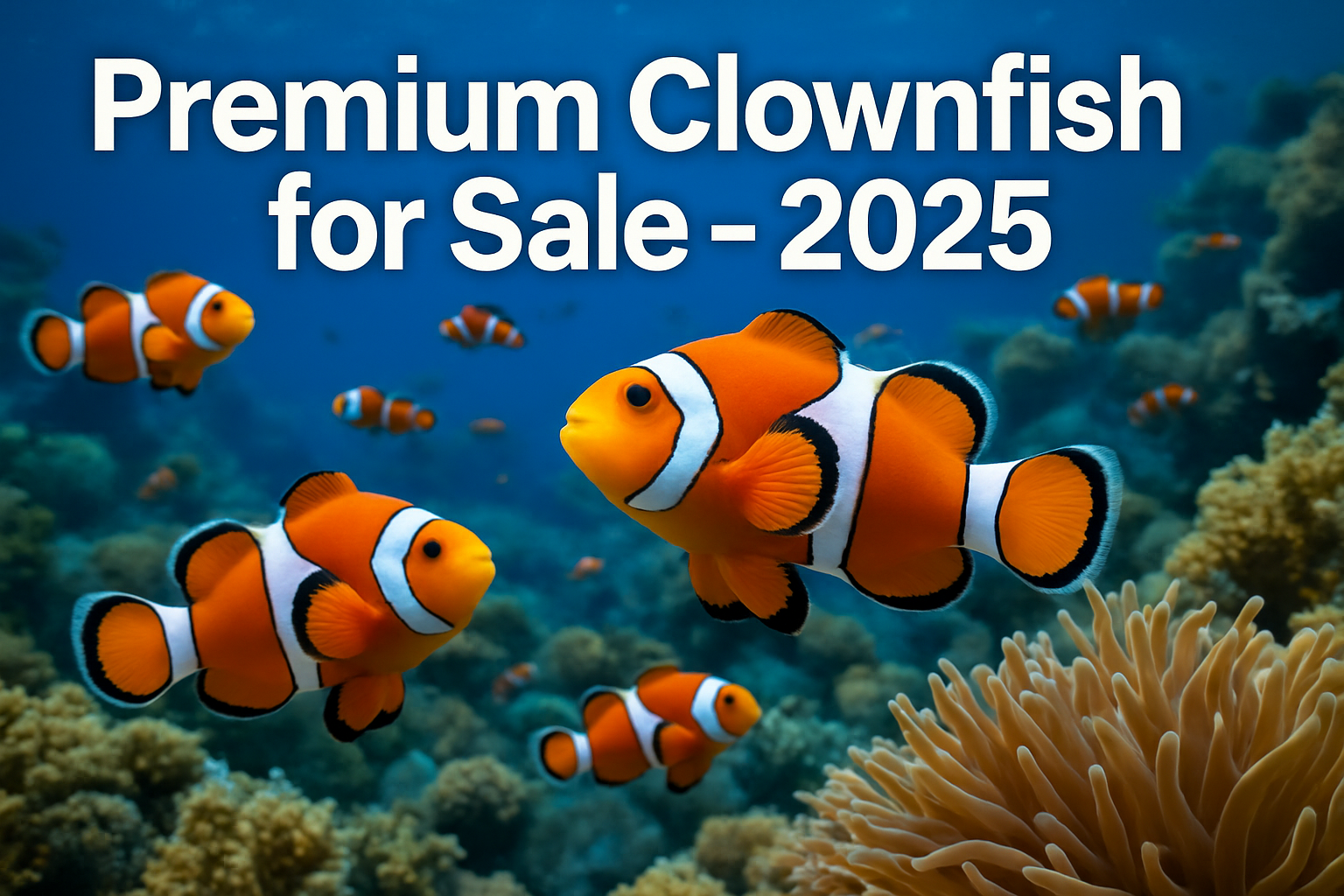
Picture this: you’re gazing into a vibrant saltwater aquarium, mesmerized by the graceful dance of orange and white clownfish weaving through swaying anemones. These iconic marine fish have captured hearts worldwide, and now you’re ready to bring that magic into your own home. Finding quality clownfish for sale has never been more accessible, thanks to reputable online retailers who specialize in healthy, captive-bred marine specimens.
Key Takeaways
• Quality matters most – Choose captive-bred clownfish from established online retailers with proper shipping and health guarantees
• Tank preparation is crucial – Ensure your saltwater aquarium is fully cycled with stable parameters before introducing new clownfish
• Species variety offers options – From classic Ocellaris to exotic designer varieties, there’s a clownfish species perfect for every marine aquarium
• Proper acclimation saves lives – Follow careful acclimation procedures to ensure your new clownfish adapt successfully to their new environment
• Long-term care commitment – Clownfish can live 10+ years with proper care, making them a rewarding long-term addition to your reef tank
Why Choose Clownfish for Your Marine Aquarium? 🐠
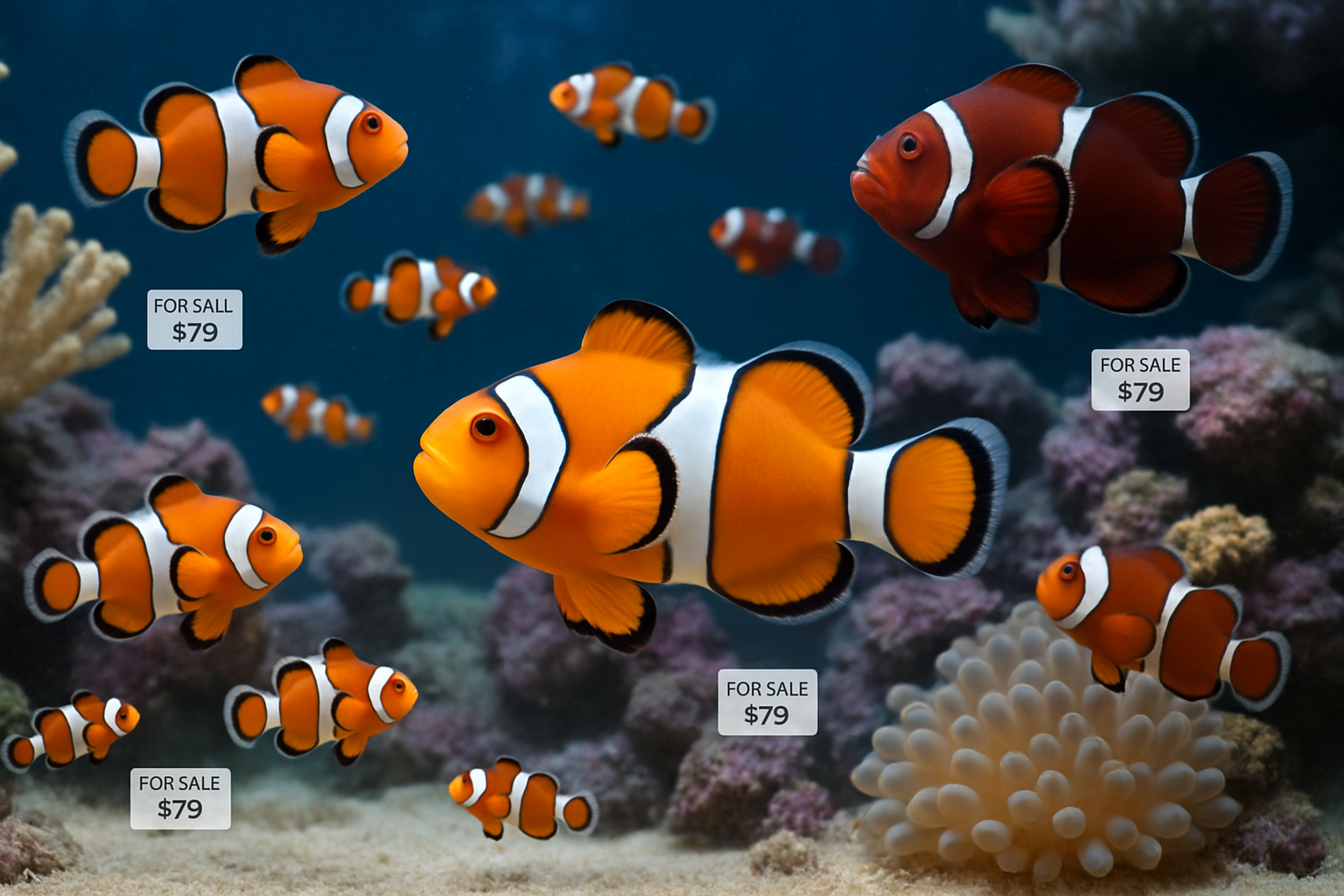
Clownfish represent the perfect entry point into the fascinating world of marine aquarium keeping. These hardy, colorful fish have earned their reputation as ideal saltwater fish for both beginners and experienced aquarists. When you’re searching for clownfish for sale, you’re investing in one of the most resilient and entertaining marine species available.
The popularity of clownfish skyrocketed after the release of “Finding Nemo,” but their appeal extends far beyond their Hollywood fame. These fish exhibit fascinating behaviors, including their famous symbiotic relationship with sea anemones and their unique social hierarchy within groups.
Benefits of Adding Clownfish to Your Tank
Hardiness and Adaptability 💪
Clownfish are remarkably resilient compared to many other marine species. They tolerate slight fluctuations in water parameters better than most saltwater fish, making them forgiving for aquarists still perfecting their water chemistry skills.
Vibrant Colors and Patterns 🌈
From the classic orange and white stripes of the Ocellaris clownfish to the deep maroon coloration of Premnas species, these fish add instant visual appeal to any aquarium setup.
Peaceful Temperament ☮️
Most clownfish species are relatively peaceful, making them excellent community fish. They rarely show aggression toward other species, though they may establish territories around their chosen anemone or coral.
Captive Breeding Success 🏠
Unlike many marine fish that are still wild-caught, clownfish have been successfully bred in captivity for decades. This means the clownfish for sale from reputable dealers are typically hardier and better adapted to aquarium life.
Understanding Different Clownfish Species Available for Sale
When browsing clownfish for sale online, you’ll encounter numerous species and varieties. Understanding the differences helps you make an informed decision based on your tank setup, experience level, and aesthetic preferences.
Popular Clownfish Species
Ocellaris Clownfish (Amphiprion ocellaris) 🧡
The classic “Nemo” fish, Ocellaris clownfish are the most popular choice for marine aquariums. They’re peaceful, hardy, and readily available as captive-bred specimens. These fish typically reach 3-4 inches in length and adapt well to various tank conditions.
Percula Clownfish (Amphiprion percula)
Often confused with Ocellaris, true Percula clownfish have thicker black borders around their white stripes and slightly more vibrant orange coloration. They’re equally hardy and make excellent choices for reef tanks.
Maroon Clownfish (Premnas biaculeatus) ❤️
The largest clownfish species, Maroons can reach 6+ inches and display beautiful deep red to maroon coloration with white or gold stripes. They’re more territorial than other species but incredibly striking in larger aquarium setups.
Tomato Clownfish (Amphiprion frenatus) 🍅
These robust fish display solid orange-red coloration with a single white stripe behind the head. They’re extremely hardy and perfect for beginners, though they can become more territorial as they mature.
Designer and Rare Varieties
The marine aquarium hobby has produced numerous designer clownfish varieties through selective breeding:
Snowflake Clownfish ❄️
These stunning fish feature irregular white patterns that resemble snowflakes scattered across their orange bodies. Each fish has unique markings, making them highly sought after.
Black Ice Clownfish 🖤
A dramatic variety featuring black bodies with white markings, creating a striking contrast that stands out in any reef tank.
Lightning Maroon Clownfish ⚡
One of the most expensive clownfish varieties, featuring intricate white lightning-bolt patterns across a deep maroon body.
When you’re looking at premium saltwater fish for sale, these designer varieties command higher prices but offer unique aesthetics that make them centerpiece fish in any marine aquarium.
Where to Find Quality Clownfish for Sale Online
The internet has revolutionized how we purchase marine fish, providing access to reputable dealers nationwide. However, not all online fish retailers are created equal. Finding the right source for your clownfish for sale requires research and attention to several key factors.
Choosing Reputable Online Retailers
Established Track Record 📈
Look for retailers who have been in business for several years and have built solid reputations in the marine aquarium community. Companies that have operated since 2000 or earlier often have the experience and infrastructure necessary to properly handle live fish shipments.
Health Guarantees and Policies 🛡️
Reputable dealers offer health guarantees, typically covering the first 24-48 hours after arrival. They should also have clear policies regarding dead on arrival (DOA) fish and replacement procedures.
Proper Shipping Methods 📦
Quality retailers use insulated boxes, heat or cool packs as needed, and pure oxygen in shipping bags. They should also offer live fish shipping options that ensure fish arrive healthy and stress-free.
Customer Reviews and Testimonials ⭐
Check multiple review platforms and marine aquarium forums for customer experiences. Pay attention to comments about fish health upon arrival, customer service responsiveness, and overall satisfaction.
What to Look for in Online Fish Listings
When browsing clownfish for sale online, examine each listing carefully:
- Clear, recent photos of the actual fish (not stock photos)
- Detailed size information (current size and adult size)
- Feeding information (what foods the fish currently accepts)
- Quarantine status (whether the fish has been quarantined)
- Tank requirements and compatibility information
Seasonal Considerations for Purchasing
Weather and Shipping 🌡️
Extreme temperatures can affect shipping success. Many retailers suspend live fish shipments during very hot or cold periods. Plan your purchases during mild weather when possible.
Breeding Seasons 🐣
Captive-bred clownfish are typically available year-round, but certain designer varieties may have seasonal availability based on breeding cycles.
The best online saltwater fish store will work with you to time shipments appropriately and ensure the safest possible delivery for your new fish.
Preparing Your Aquarium for New Clownfish
Success with any clownfish for sale purchase begins long before the fish arrive at your door. Proper aquarium preparation is crucial for ensuring your new additions thrive in their new environment.
Essential Tank Requirements
Tank Size Considerations 📏
While clownfish are relatively small, they need adequate swimming space and territory. A 20-gallon tank is the minimum for a pair of smaller species like Ocellaris, while larger species like Maroon clownfish require 30+ gallons.
Water Parameters 🧪
Maintain stable saltwater conditions:
- Salinity: 1.020-1.026 specific gravity
- Temperature: 72-78°F (22-26°C)
- pH: 8.0-8.4
- Ammonia/Nitrite: 0 ppm
- Nitrate: <20 ppm
Filtration and Equipment ⚙️
Invest in quality filtration appropriate for your tank size. Consider protein skimmers for tanks over 30 gallons, and ensure adequate water circulation without creating excessive current that might stress your clownfish.
Cycling Your Saltwater Tank
The Nitrogen Cycle 🔄
Before adding any clownfish for sale to your tank, establish beneficial bacteria colonies that convert toxic ammonia and nitrite into less harmful nitrate. This process typically takes 4-8 weeks in new aquariums.
Testing and Monitoring 🔬
Use reliable test kits to monitor ammonia, nitrite, and nitrate levels throughout the cycling process. Only add fish once ammonia and nitrite consistently read zero.
Live Rock and Biological Media 🪨
Live rock provides natural biological filtration and creates territories for your clownfish. Allow live rock to cure in your tank during the cycling process.
Creating the Ideal Environment
Lighting Requirements 💡
Clownfish don’t have specific lighting needs, but if you plan to keep anemones or corals, invest in appropriate LED or T5 lighting systems.
Substrate Selection 🏖️
Choose marine-grade sand or crushed coral substrate. Avoid freshwater gravels that may affect pH and water chemistry.
Hiding Places and Territories 🏠
Provide caves, overhangs, and coral formations where clownfish can establish territories and feel secure. This is especially important if you’re not keeping anemones.
For comprehensive guidance on tank setup, explore resources about saltwater fish tank conditions that apply to clownfish care as well.
The Acclimation Process: Ensuring Successful Introduction
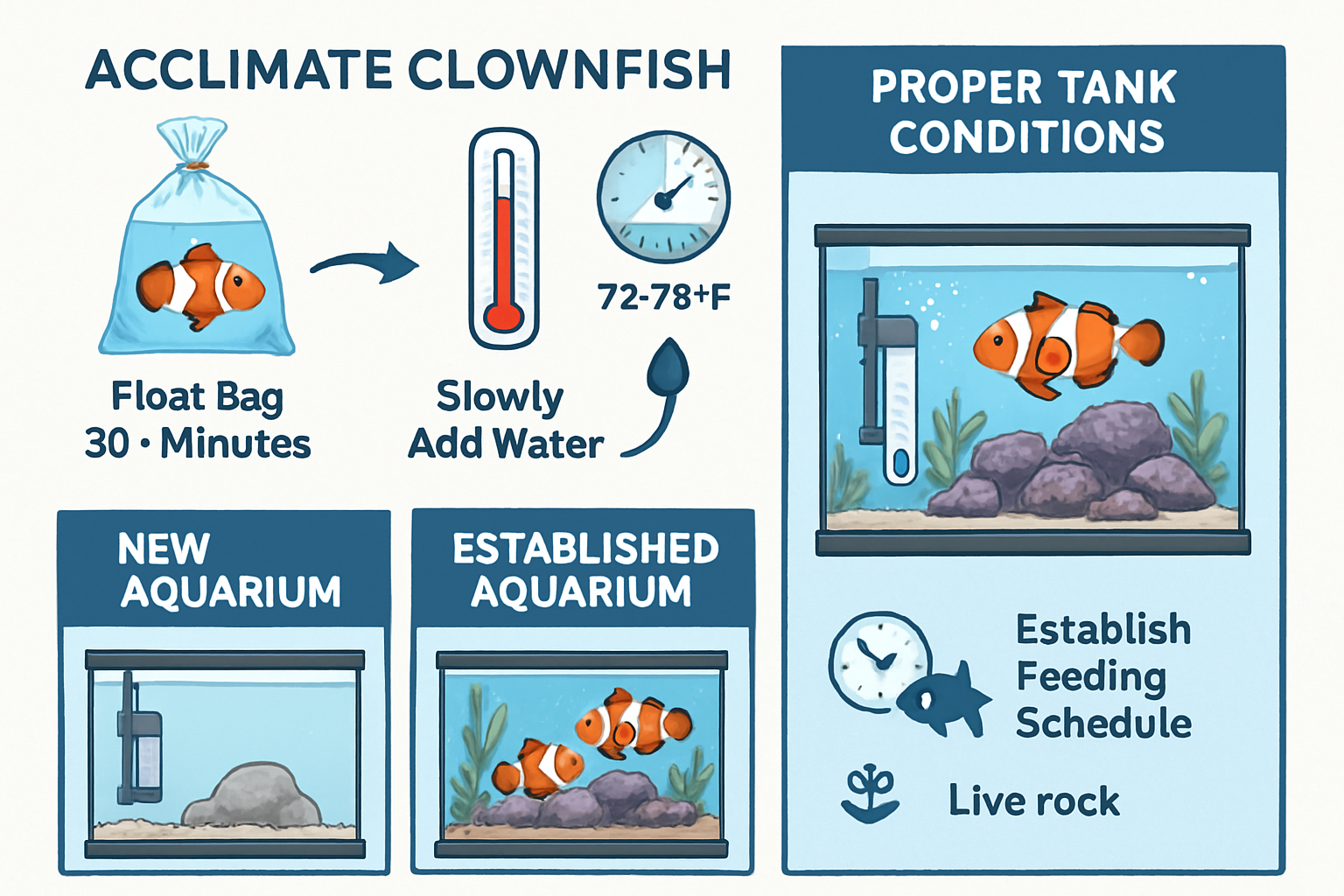
Proper acclimation is perhaps the most critical step in successfully adding new clownfish for sale to your aquarium. This process helps fish adjust gradually to their new water parameters, reducing stress and improving survival rates.
Step-by-Step Acclimation Guide
Initial Preparation 📋
Before your fish arrive, prepare your acclimation area:
- Clean buckets or containers for acclimation
- Airline tubing for drip acclimation
- Net for transferring fish
- Towels for cleanup
Temperature Acclimation 🌡️
Float the sealed shipping bag in your tank for 15-20 minutes to equalize temperature. Don’t open the bag during this time, as the water inside may have different pH levels that could shock the fish if mixed too quickly.
Drip Acclimation Method 💧
- Open the bag carefully and pour contents into an acclimation container
- Start a siphon from your tank using airline tubing
- Adjust flow to 2-4 drops per second
- Continue for 45-60 minutes until the container volume doubles
- Net the fish and transfer to your tank (discard shipping water)
Alternative Cup Method 🥤
For sensitive fish, use a cup to gradually add tank water to the shipping bag over 30-45 minutes, removing some old water as you add new water.
Monitoring During Acclimation
Stress Indicators ⚠️
Watch for signs of stress during acclimation:
- Rapid breathing or gasping
- Erratic swimming patterns
- Loss of color
- Lethargy or unresponsiveness
Water Quality Checks 🔍
If acclimation takes longer than expected, test the acclimation water for ammonia buildup, which can occur in shipping bags during transport.
Post-Acclimation Care
Quarantine Considerations 🏥
Many experienced aquarists recommend quarantining new fish for 2-4 weeks before adding them to display tanks. This practice helps prevent disease introduction and allows monitoring of fish health.
Initial Feeding 🍽️
Wait 24 hours before offering food to newly acclimated clownfish. Start with small amounts of high-quality marine flakes or pellets to avoid overfeeding stressed fish.
Observation Period 👀
Monitor new additions closely for the first week, watching for signs of disease, aggression from tank mates, or difficulty adapting to the new environment.
Feeding and Long-Term Care for Your Clownfish
Once your clownfish for sale have successfully acclimated to their new home, establishing proper feeding routines and care practices ensures they’ll thrive for years to come. Clownfish can live 10-15 years or more with appropriate care, making them long-term companions in your marine aquarium.
Nutritional Requirements and Feeding
Omnivorous Diet 🥗
Clownfish are omnivores, requiring both plant and animal matter in their diet. In the wild, they consume algae, small crustaceans, and food scraps from their anemone hosts.
Commercial Food Options 🥘
- High-quality marine flakes: Daily staple food for most clownfish
- Marine pellets: Slow-sinking pellets provide excellent nutrition
- Frozen foods: Mysis shrimp, brine shrimp, and marine cuisine blends
- Live foods: Brine shrimp and copepods for variety
Feeding Schedule ⏰
Feed adult clownfish 2-3 times daily, offering only what they can consume in 2-3 minutes. Juvenile fish may require more frequent feeding to support their growth.
Supplemental Nutrition 💊
Consider marine vitamin supplements and varied frozen foods to ensure optimal coloration and immune system health.
Health Monitoring and Disease Prevention
Common Clownfish Diseases 🏥
- Marine Ich (Cryptocaryon): White spots on body and fins
- Brooklynella: Rapid-onset disease causing heavy breathing and lethargy
- Marine Velvet: Fine, dust-like coating on fish
- Bacterial infections: Often secondary to stress or injury
Prevention Strategies 🛡️
- Maintain stable water parameters
- Avoid overcrowding
- Quarantine new additions
- Provide varied, nutritious diet
- Minimize stress through proper tank setup
Early Detection 🔍
Daily observation helps catch health issues early when treatment is most effective. Look for changes in behavior, appetite, or physical appearance.
Creating Long-Term Success
Tank Maintenance 🧽
Regular maintenance prevents problems:
- Weekly water changes (10-20%)
- Monthly filter media cleaning
- Regular testing of water parameters
- Algae removal and equipment maintenance
Compatibility Considerations 🤝
Clownfish generally peaceful nature makes them excellent community fish. They pair well with:
- Cardinal fish
- Blennies
- Gobies and other peaceful species
- Most reef-safe invertebrates
Breeding Potential 👨👩👧👦
Established pairs may spawn in home aquariums, providing fascinating breeding behavior to observe. While raising fry requires specialized equipment and knowledge, watching the spawning process is rewarding for many aquarists.
For those interested in expanding their marine fish collection, consider exploring other compatible species like saltwater angelfish or the fascinating eels for sale that can coexist peacefully with clownfish in larger systems.
Advanced Clownfish Keeping: Anemone Partnerships and Breeding
For aquarists ready to take their clownfish keeping to the next level, exploring anemone partnerships and breeding opens up fascinating new dimensions of marine aquarium keeping. These advanced aspects of clownfish for sale ownership provide deeper insights into natural marine behaviors and ecosystems.
Understanding Clownfish-Anemone Relationships
Symbiotic Benefits 🤝
The relationship between clownfish and sea anemones represents one of nature’s most famous symbiotic partnerships:
- Protection for clownfish: Anemone tentacles provide shelter from predators
- Cleaning services: Clownfish remove debris and dead tentacles from anemones
- Nutrient exchange: Clownfish waste provides nutrients for anemone growth
- Enhanced feeding: Clownfish may bring food scraps to their host anemone
Anemone Species for Clownfish 🌺
Not all anemones host clownfish, and different clownfish species prefer specific anemone types:
- Bubble Tip Anemone (Entacmaea quadricolor): Most popular choice, hosts multiple clownfish species
- Magnificent Sea Anemone (Heteractis magnifica): Large species requiring excellent water quality
- Carpet Anemones (Stichodactyla spp.): Beautiful but potentially aggressive toward other tank inhabitants
- Long Tentacle Anemone (Macrodactyla doreensis): Elegant choice for larger aquariums
Establishing the Partnership 💕
Captive-bred clownfish may not immediately recognize anemones as hosts, but patience often rewards aquarists with successful partnerships. The process can take days to months, and some clownfish never fully adopt anemone hosts.
Breeding Clownfish in Captivity
Pair Formation 👫
Clownfish are sequential hermaphrodites, meaning they can change sex based on social hierarchy:
- Dominant female: Largest fish in the group
- Breeding male: Second-largest, pairs with female
- Juveniles: Remain sexually immature until hierarchy changes
Spawning Behavior 🥚
Established pairs spawn regularly, typically every 14-21 days:
- Nest preparation: Male cleans flat surface near anemone or shelter
- Egg laying: Female deposits 200-1000 eggs
- Fertilization: Male fertilizes eggs immediately
- Parental care: Male guards and tends eggs for 6-10 days
Larval Rearing Challenges 👶
Raising clownfish fry requires specialized equipment and expertise:
- Larval tank setup: Separate system with gentle filtration
- Live food cultures: Rotifers and copepods for initial feeding
- Water quality management: Pristine conditions essential for survival
- Metamorphosis support: Proper lighting and settlement substrates
Advanced Tank Setups for Clownfish
Reef Tank Integration 🪸
Clownfish thrive in reef environments with live corals:
- Coral selection: Choose peaceful species that won’t compete aggressively
- Lighting requirements: LED systems supporting both fish and coral health
- Water flow patterns: Moderate flow mimicking natural reef conditions
- Calcium and alkalinity management: Essential for coral growth
Species-Specific Tanks 🎯
Some aquarists create biotope tanks focused on specific clownfish species:
- Natural substrate: Sand and rubble matching native habitats
- Regional coral species: Corals from the same geographic areas
- Compatible fish communities: Species that coexist in wild environments
- Seasonal lighting cycles: Mimicking natural photoperiods
For aquarists interested in expanding their knowledge of marine fish care, exploring captive-bred saltwater fish options provides insights into sustainable aquarium practices and often results in hardier, more adaptable fish.
Cost Considerations and Budgeting for Clownfish
Understanding the financial investment involved in purchasing and maintaining clownfish for sale helps you plan appropriately for both initial costs and ongoing expenses. While clownfish are among the more affordable marine fish options, quality specimens and proper care require thoughtful budgeting.
Initial Purchase Costs
Common Species Pricing 💰
- Ocellaris Clownfish: $15-30 for captive-bred specimens
- Percula Clownfish: $20-40 depending on size and source
- Maroon Clownfish: $25-50 for standard varieties
- Tomato Clownfish: $20-35 for healthy juveniles
Designer Variety Premiums 💎
Specialty bred clownfish command significantly higher prices:
- Snowflake varieties: $75-150 depending on pattern quality
- Black Ice clownfish: $100-200 for premium specimens
- Lightning Maroon: $500-2000+ for rare patterns
- Platinum varieties: $150-400 based on coloration intensity
Size and Age Factors 📏
- Juvenile fish (1-2 inches): Lower cost but require more careful care
- Sub-adult fish (2-3 inches): Balanced price and hardiness
- Adult pairs: Premium pricing but often ready to breed
Ongoing Care Expenses
Food and Nutrition 🍽️
Monthly feeding costs for clownfish are relatively modest:
- Quality marine flakes: $10-15 per month for multiple fish
- Frozen foods: $20-30 monthly for varied diet
- Supplements: $5-10 monthly for vitamins and additives
Electrical Costs ⚡
Consider ongoing electrical expenses:
- Lighting: LED systems reduce long-term costs
- Filtration: Continuous pump operation
- Heating/cooling: Maintaining stable temperatures
- Protein skimmers: Additional equipment for larger tanks
Replacement and Maintenance 🔧
Budget for periodic equipment replacement:
- Filter media: Monthly replacements
- Light bulb/LED replacements: Annual to biennial
- Test kit refills: Regular water parameter monitoring
- Salt mix: For water changes and top-off
Money-Saving Strategies
Captive-Bred Advantages 🏠
While sometimes more expensive initially, captive-bred clownfish often provide better long-term value:
- Higher survival rates: Reduced replacement costs
- Better disease resistance: Lower medication expenses
- Easier feeding: Accept prepared foods readily
- Stable temperament: Less stress-related health issues
Group Purchasing 👥
Some retailers offer discounts for multiple fish purchases, and splitting orders with fellow aquarists can reduce shipping costs.
Seasonal Sales 📅
Watch for holiday sales and seasonal promotions from reputable online retailers. Many offer free shipping promotions during certain periods.
Value Considerations
Longevity Investment ⏳
Quality clownfish can live 10-15 years with proper care, making the cost per year quite reasonable when compared to other pets.
Educational Value 📚
Clownfish provide ongoing learning opportunities about marine biology, water chemistry, and ecosystem management.
Breeding Potential 🐣
Successful breeding pairs can eventually offset their initial cost through offspring sales to local aquarium stores or fellow hobbyists.
When shopping for clownfish for sale, remember that the cheapest option isn’t always the best value. Investing in healthy, well-cared-for specimens from reputable sources like established saltwater fish shops often provides better long-term satisfaction and success.
Troubleshooting Common Clownfish Issues
Even with the best preparation and care, aquarists may encounter challenges when keeping clownfish. Understanding how to identify and address common problems ensures your clownfish for sale investment thrives long-term and helps you become a more confident marine aquarium keeper.
Behavioral Issues and Solutions
Aggression and Territorial Disputes ⚔️
While generally peaceful, clownfish can exhibit territorial behavior:
- Symptoms: Chasing other fish, defending specific areas, nipping at tank mates
- Causes: Overcrowding, inadequate hiding spaces, breeding behavior
- Solutions: Increase tank size, add more caves and territories, rearrange decorations to reset territorial boundaries
Refusal to Eat 🚫🍽️
New clownfish sometimes refuse food initially:
- Stress-related: Allow 24-48 hours for acclimation before worrying
- Food preferences: Try different food types (flakes, pellets, frozen foods)
- Tank mate competition: Ensure shy fish get feeding opportunities
- Water quality: Check parameters as poor conditions affect appetite
Unusual Swimming Patterns 🌀
Erratic swimming can indicate various issues:
- Glass surfing: Often stress-related, usually resolves as fish settle
- Lethargy: May indicate disease or poor water quality
- Gasping at surface: Oxygen deficiency or gill problems requiring immediate attention
Health Problems and Treatment
Parasitic Infections 🦠
Marine ich and other parasites are common clownfish ailments:
- Early detection: White spots, scratching against objects, rapid breathing
- Quarantine treatment: Copper-based medications in hospital tank
- Prevention: Quarantine new fish, maintain excellent water quality
- UV sterilization: Helpful for preventing reinfection
Bacterial Infections 🧫
Secondary infections often follow stress or injury:
- Symptoms: Cloudy eyes, fin rot, open wounds, lethargy
- Treatment: Antibiotic medications in quarantine tank
- Water quality: Address underlying causes through improved maintenance
- Nutrition: Enhanced diet supports immune system recovery
Stress-Related Issues 😰
Chronic stress weakens clownfish immune systems:
- Environmental stressors: Unstable parameters, poor water quality, inadequate hiding spaces
- Social stress: Incompatible tank mates, overcrowding, constant disturbance
- Solutions: Identify and eliminate stress sources, provide stable environment
Water Quality Troubleshooting
Parameter Fluctuations 📊
Unstable water conditions stress clownfish:
- Temperature swings: Install reliable heaters with backup systems
- Salinity changes: Monitor evaporation and top-off with fresh water only
- pH drift: Regular water changes and proper buffering maintain stability
Filtration Problems 🔄
Inadequate filtration affects clownfish health:
- Biological filtration: Ensure adequate beneficial bacteria colonies
- Mechanical filtration: Clean filter media regularly without over-cleaning
- Chemical filtration: Use activated carbon to remove dissolved organics
Algae Overgrowth 🌱
Excessive algae indicates nutrient imbalances:
- Lighting duration: Reduce photoperiod if necessary
- Feeding practices: Avoid overfeeding which contributes to nutrient buildup
- Water changes: Increase frequency to export excess nutrients
Emergency Procedures
Power Outages ⚡
Prepare for equipment failures:
- Battery backup: Air pumps maintain oxygen during outages
- Insulation: Blankets help maintain temperature temporarily
- Generator options: For extended outages in extreme climates
Equipment Failures 🔧
Have backup plans for critical equipment:
- Spare heaters: Temperature stability is crucial
- Backup pumps: Maintain water circulation
- Emergency contact: Locate 24-hour aquarium stores for urgent supplies
Disease Outbreaks 🚨
Quick action saves fish during disease emergencies:
- Quarantine setup: Maintain hospital tank ready for use
- Medication stock: Keep common treatments on hand
- Veterinary contacts: Locate fish-experienced veterinarians in advance
For additional guidance on marine fish care and troubleshooting, exploring resources about saltwater fish tank filtration can provide valuable insights applicable to clownfish systems as well.
Building a Community: Compatible Tank Mates for Clownfish
Creating a thriving marine community aquarium with your clownfish for sale as the centerpiece requires careful consideration of species compatibility, tank size, and behavioral dynamics. The peaceful nature of most clownfish species makes them excellent community fish, but success depends on choosing appropriate tank mates and understanding social hierarchies.
Ideal Tank Mate Categories
Peaceful Community Fish 🕊️
Several marine fish species share clownfish’ peaceful temperament:
- Cardinalfish: Nocturnal schooling fish that occupy different tank areas
- Wrasses: Active swimmers that help control pest populations
- Basslets: Colorful fish that establish territories without excessive aggression
- Peaceful tangs: Larger herbivorous fish that complement clownfish diets
Bottom-Dwelling Species 🏖️
Fish that occupy different tank zones reduce competition:
- Gobies: Sand-sifting species that help maintain substrate cleanliness
- Blennies: Algae-eating fish with entertaining personalities
- Jawfish: Burrowing species that create interesting behavioral displays
- Peaceful rays: For very large aquarium systems only
Invertebrate Companions 🦐
Many invertebrates coexist peacefully with clownfish:
- Cleaner shrimp: Provide beneficial cleaning services
- Hermit crabs: Help control algae and detritus
- Snails: Natural algae control and substrate maintenance
- Sea anemones: Natural hosts for clownfish partnerships
Species to Avoid
Aggressive Predators 🦈
Large, aggressive fish pose threats to clownfish:
- Groupers: Will consume any fish that fits in their mouth
- Large angelfish: Can become territorial and aggressive
- Triggerfish: Unpredictable aggression toward smaller fish
- Aggressive eels: May prey on clownfish, especially at night
Competitive Feeders 🍽️
Fast, aggressive feeders can outcompete clownfish:
- Aggressive tangs: May dominate feeding areas
- Large wrasses: Can be too boisterous for peaceful community tanks
- Pufferfish: May nip at clownfish and invertebrates
Territorial Species 🏰
Highly territorial fish create stress for clownfish:
- Damselfish: Despite being related, many are too aggressive
- Dottybacks: Can be territorial in smaller aquariums
- Aggressive gobies: Some species become territorial as they mature
Tank Size Considerations for Communities
Minimum Requirements 📏
Community tanks require more space than species-only setups:
- 40+ gallons: Minimum for small clownfish community
- 75+ gallons: Better for mixed species with medium fish
- 100+ gallons: Ideal for diverse communities with larger species
Territory Distribution 🗺️
Design tank layout to provide multiple territories:
- Vertical zones: Different fish prefer different water column levels
- Hiding spaces: Adequate caves and overhangs for all species
- Open swimming areas: Space for active swimmers to exercise
- Feeding zones: Multiple areas to reduce competition during feeding
Introducing New Tank Mates
Quarantine Protocol 🏥
Always quarantine new additions before introducing them to established communities:
- Observation period: 2-4 weeks minimum for health monitoring
- Disease prevention: Prevents introduction of pathogens
- Behavioral assessment: Observe temperament and feeding behavior
Introduction Strategies 🤝
Minimize stress during new additions:
- Rearrange decorations: Reset territorial boundaries
- Monitor closely: Watch for aggression or stress signs
- Feeding supervision: Ensure all fish receive adequate nutrition
- Backup plans: Have quarantine tank ready for problem fish
Size Matching 📐
Introduce fish of appropriate sizes:
- Similar sizes: Reduces predation risk
- Growth consideration: Account for adult sizes of all species
- Juvenile advantages: Younger fish often integrate more easily
For those interested in exploring specific compatible species, consider researching butterfly fish for sale or anthias for sale as potential community tank additions that often coexist well with clownfish.
Seasonal Care and Maintenance for Clownfish
Maintaining optimal conditions for your clownfish for sale requires understanding how seasonal changes affect marine aquariums and adjusting care routines accordingly. While indoor aquariums provide controlled environments, external factors like temperature fluctuations, humidity changes, and seasonal lighting variations can impact your fish’s health and behavior throughout the year.
Spring Maintenance and Preparation
Deep Cleaning and Equipment Check 🌱
Spring represents an ideal time for comprehensive aquarium maintenance:
- Filter system overhaul: Replace filter media, clean equipment thoroughly
- Lighting assessment: Check LED functionality, replace aging bulbs
- Plumbing inspection: Examine all connections for leaks or wear
- Water testing: Comprehensive parameter check after winter months
Breeding Season Considerations 🥚
Many clownfish become more active breeders during spring months:
- Increased spawning activity: Monitor for nest preparation behavior
- Enhanced nutrition: Provide varied, high-quality foods to support breeding
- Water quality vigilance: Maintain pristine conditions for potential fry
- Equipment preparation: Ready breeding or nursery tanks if desired
Temperature Stabilization 🌡️
Spring temperature fluctuations require attention:
- Heater adjustments: Modify settings as ambient temperatures change
- Backup systems: Ensure redundant heating for temperature stability
- Gradual transitions: Allow fish to adjust slowly to seasonal changes
Summer Challenges and Solutions
Heat Management ☀️
Summer heat poses significant challenges for marine aquariums:
- Cooling systems: Consider chillers for tanks in warm climates
- Fan installation: Evaporative cooling through increased surface agitation
- Room temperature control: Air conditioning helps maintain stable tank temperatures
- Lighting schedules: Reduce photoperiods to minimize heat generation
Increased Metabolism 🔥
Warmer temperatures increase fish metabolism:
- Feeding adjustments: May need to increase feeding frequency slightly
- Oxygen levels: Warm water holds less oxygen, ensure adequate aeration
- Water changes: More frequent changes help maintain water quality
- Activity monitoring: Watch for signs of heat stress or lethargy
Vacation Planning ✈️
Summer travel requires preparation:
- Automatic feeders: Reliable feeding systems for extended absences
- Monitoring systems: Temperature and parameter alerts via smartphone apps
- Caretaker instructions: Detailed care sheets for fish-sitters
- Emergency contacts: Local aquarium stores and experienced hobbyists
Fall Preparation and Transition
Equipment Winterization 🍂
Prepare systems for cooler months:
- Heater testing: Ensure heating systems function properly before needed
- Insulation checks: Examine tank insulation and room heating efficiency
- Backup power: Prepare for potential winter power outages
- Maintenance supplies: Stock up on essential supplies before winter weather
Immune System Support 🛡️
Support fish health during seasonal transitions:
- Vitamin supplementation: Enhanced nutrition supports immune function
- Stress reduction: Minimize disturbances during temperature transitions
- Quarantine readiness: Prepare hospital tanks for potential health issues
- Water quality excellence: Maintain optimal parameters during stress periods
Winter Care and Considerations
Temperature Stability ❄️
Winter requires careful temperature management:
- Heater redundancy: Multiple heaters prevent catastrophic temperature drops
- Power outage preparation: Battery backup systems and emergency plans
- Room heating coordination: Work with home heating systems efficiently
- Thermal mass: Larger water volumes provide more temperature stability
Reduced Activity Periods 😴
Some clownfish show reduced activity in winter:
- Feeding adjustments: Monitor appetite and adjust portions accordingly
- Lighting cycles: Consider seasonal photoperiod adjustments
- Maintenance scheduling: Plan major maintenance during stable weather
- Health monitoring: Increased vigilance for winter-related health issues
Holiday Considerations 🎄
Winter holidays often mean travel and schedule changes:
- Automated systems: Reliable automation for feeding and lighting
- Emergency planning: Backup care arrangements for extended absences
- Gift planning: Holiday season often brings new aquarium additions
- Budget planning: Prepare for increased heating costs
Year-Round Best Practices
Record Keeping 📊
Maintain detailed logs throughout the year:
- Parameter tracking: Regular documentation of water conditions
- Behavior notes: Record seasonal behavior changes and patterns
- Maintenance schedules: Track equipment service and replacement needs
- Health monitoring: Document any health issues and treatments
Seasonal Observations 👁️
Pay attention to natural cycles:
- Breeding patterns: Note seasonal spawning behaviors
- Growth rates: Monitor fish development throughout the year
- Appetite changes: Track feeding patterns and seasonal variations
- Social dynamics: Observe how community interactions change seasonally
For comprehensive guidance on maintaining optimal water conditions year-round, explore resources about saltwater fish water conditions that provide detailed insights into parameter management for marine aquariums.
Conclusion
Finding quality clownfish for sale represents just the beginning of an incredibly rewarding journey into marine aquarium keeping. These charismatic fish offer the perfect combination of beauty, hardiness, and fascinating behavior that makes them ideal for both beginners and experienced aquarists. From the classic orange and white Ocellaris to exotic designer varieties, clownfish provide endless opportunities for learning and enjoyment.
Success with clownfish requires commitment to proper preparation, ongoing care, and continuous learning. The investment in quality specimens from reputable sources, combined with appropriate tank setup and maintenance, ensures these remarkable fish will thrive for many years. Whether you’re creating your first saltwater aquarium or adding to an established reef system, clownfish bring magic and wonder to any marine environment.
Your Next Steps
Immediate Actions ✅
- Research reputable online retailers and read customer reviews
- Plan your tank setup and ensure proper cycling before fish arrival
- Budget for both initial costs and ongoing maintenance expenses
- Prepare acclimation supplies and quarantine facilities
Long-term Planning 🎯
- Consider community tank options and compatible species
- Explore advanced keeping aspects like anemone partnerships
- Connect with local marine aquarium clubs and online communities
- Plan for potential breeding opportunities with established pairs
Continued Learning 📚
- Stay updated on marine aquarium keeping best practices
- Monitor your fish daily and maintain detailed care records
- Experiment with different foods and enrichment activities
- Share your experiences with fellow aquarists and newcomers
The world of marine aquarium keeping continues to evolve, with new techniques, equipment, and understanding constantly improving our ability to provide excellent care for these amazing creatures. Your clownfish for sale purchase marks the beginning of an adventure that combines science, art, and the natural beauty of coral reef ecosystems.
Remember that every successful marine aquarist started with their first fish, and clownfish represent one of the best choices for that important first step. With proper preparation, quality specimens, and dedication to ongoing care, your clownfish will provide years of enjoyment and serve as ambassadors for the incredible diversity and beauty of our ocean’s coral reefs.
Take your time, do your research, and choose quality over convenience when selecting your clownfish. The extra effort invested in finding healthy, well-cared-for specimens from reputable sources will pay dividends in the form of thriving, long-lived fish that bring daily joy to your home aquarium.