
Picture a fish so stunning that it looks like a living piece of art swimming through crystal-clear tropical waters. The majestic angelfish (Pomacanthus navarchus) truly lives up to its name, captivating marine enthusiasts worldwide with its brilliant blue and yellow coloration and graceful movements. These remarkable creatures represent one of the most sought-after species in the marine aquarium hobby, combining beauty with fascinating behavior patterns that make them irresistible to both novice and experienced aquarists.
Key Takeaways
• Majestic angelfish are large marine fish requiring spacious tanks of at least 180 gallons for proper care
• These fish display dramatic color changes from juvenile to adult stages, making them fascinating to observe
• They require specific water parameters and a varied diet including sponges, algae, and high-quality marine foods
• Majestic angelfish can live 15-20 years in captivity with proper care and attention
• They are semi-aggressive and need careful tank mate selection for peaceful coexistence
Understanding the Majestic Angelfish
Scientific Classification and Natural Habitat
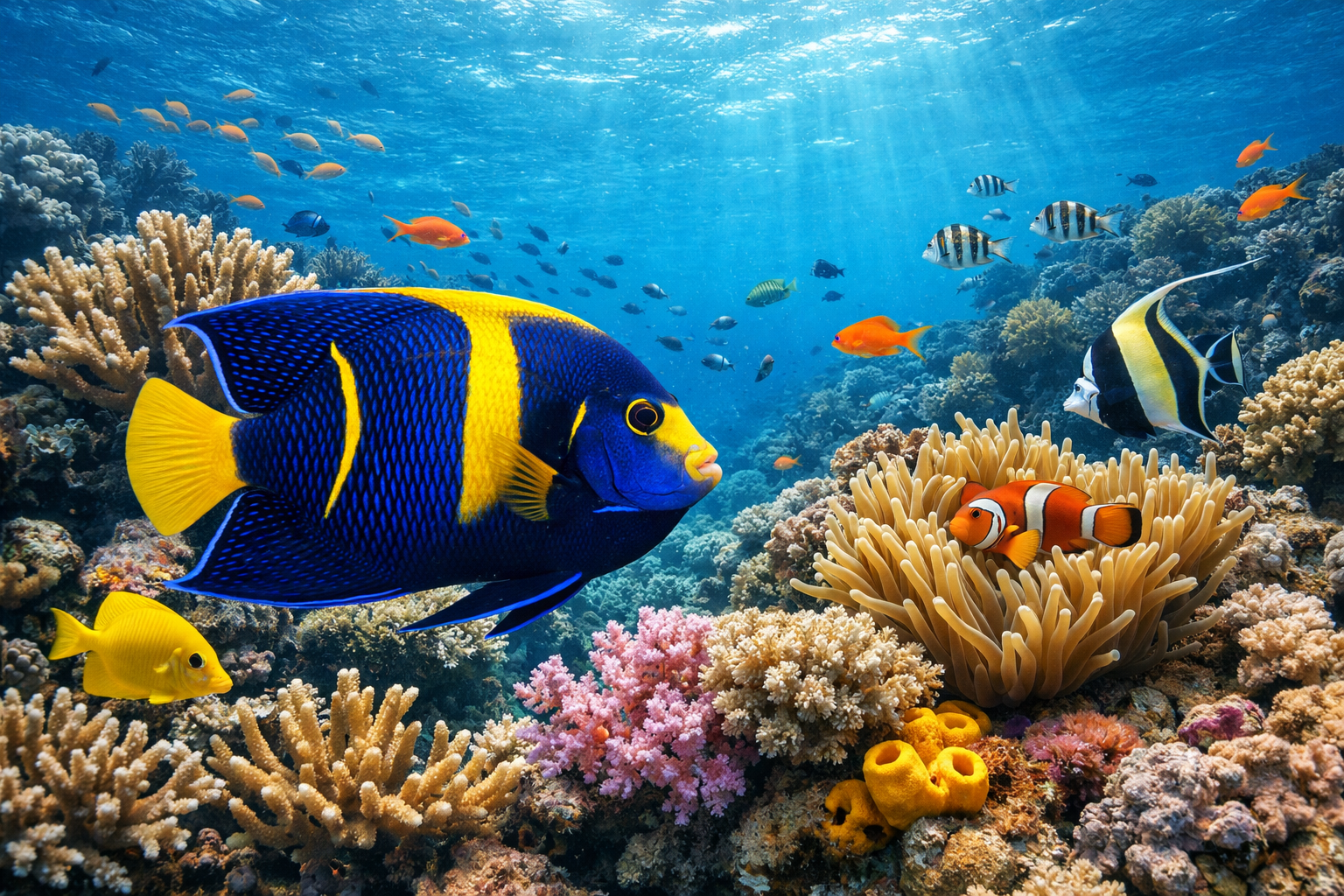
The majestic angelfish belongs to the family Pomacanthidae and is scientifically known as Pomacanthus navarchus. These magnificent creatures inhabit the warm waters of the Indo-Pacific region, ranging from the Red Sea and East Africa to the central Pacific islands. They typically live in coral-rich areas at depths between 10 and 70 meters, where they navigate through complex reef structures with remarkable grace.
In their natural environment, majestic angelfish play crucial roles as both grazers and cleaners. They feed on various organisms including:
- Sponges (primary food source)
- Algae and marine vegetation
- Small invertebrates
- Coral polyps (occasionally)
- Detritus and organic matter
Physical Characteristics and Color Variations
Adult majestic angelfish showcase a stunning color palette that makes them instantly recognizable. Their bodies feature:
| Feature | Description |
|---|---|
| Base Color | Deep royal blue |
| Accent Colors | Bright yellow markings |
| Size | 10-12 inches (25-30 cm) |
| Body Shape | Laterally compressed, disc-like |
| Fins | Elongated dorsal and anal fins |
The most striking aspect of majestic angelfish is their dramatic transformation from juvenile to adult coloration. Juveniles display completely different patterns, featuring:
- Dark blue to black base color
- Curved white and blue stripes
- Smaller, more compact body shape
- Different behavioral patterns
"The transformation of a majestic angelfish from juvenile to adult is one of nature's most remarkable metamorphoses, taking 2-3 years to complete." – Marine Biology Research Institute
Majestic Angelfish Care Requirements
Tank Setup and Environment
Creating the perfect environment for majestic angelfish requires careful planning and attention to detail. These large, active fish need substantial space to thrive and display their natural behaviors.
Essential Tank Specifications
Minimum Tank Size: 180 gallons (680 liters)
- Length: At least 6 feet
- Width: Minimum 24 inches
- Height: 24-30 inches preferred
Water Parameters:
- Temperature: 72-78°F (22-26°C)
- pH: 8.1-8.4
- Salinity: 1.020-1.025 specific gravity
- Ammonia: 0 ppm
- Nitrite: 0 ppm
- Nitrate: <20 ppm
Filtration and Equipment
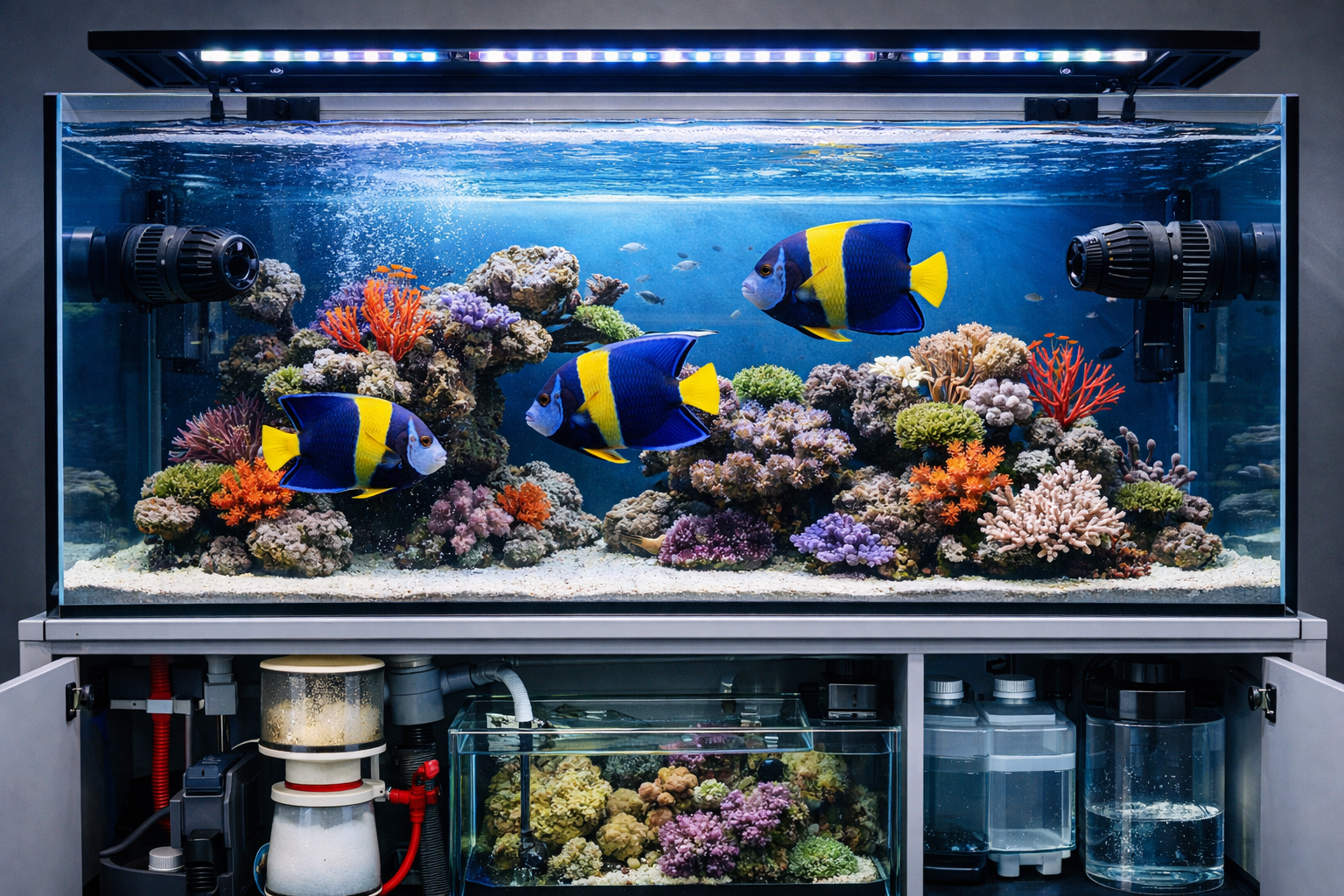
Majestic angelfish produce significant bioload, requiring robust filtration systems:
- Protein Skimmer – Essential for removing organic waste
- Biological Filtration – Live rock (1-2 pounds per gallon)
- Mechanical Filtration – Canister or sump system
- UV Sterilizer – Helps control parasites and bacteria
- Powerheads – Create proper water circulation
Aquascaping for Majestic Angelfish
The tank layout should mimic natural reef environments while providing adequate swimming space:
Live Rock Arrangement:
- Create caves and overhangs for hiding
- Leave open swimming areas in the center
- Ensure stable rock structures
- Provide grazing surfaces with natural algae
Substrate Options:
- Fine aragonite sand (2-3 inches deep)
- Crushed coral for pH buffering
- Avoid sharp or rough materials
Lighting Requirements:
- LED systems with blue and white spectrum
- 8-10 hours daily photoperiod
- Moderate intensity for coral growth (if keeping corals)
Diet and Feeding Guidelines
Natural Feeding Behavior
In the wild, majestic angelfish are constant grazers, spending most of their day searching for food among coral formations. They use their small, brush-like teeth to scrape sponges, algae, and small organisms from surfaces.
Captive Diet Requirements
Providing proper nutrition is crucial for maintaining the health and vibrant coloration of majestic angelfish:
Primary Food Sources
Commercial Foods (60% of diet):
- High-quality marine angelfish pellets
- Frozen marine angelfish preparations
- Spirulina-enriched foods
- Vitamin-fortified flakes
Fresh Foods (30% of diet):
- Nori seaweed sheets
- Fresh marine algae
- Blanched vegetables (zucchini, broccoli)
- Mysis shrimp
- Brine shrimp
Supplemental Foods (10% of diet):
- Sponge-based preparations
- Marine sponge supplements
- Coral food preparations
- Vitamin supplements
Feeding Schedule and Techniques
Frequency: 3-4 small meals daily
Amount: What fish can consume in 2-3 minutes
Timing: Spread feedings throughout the day
Feeding Tips:
- Use feeding clips for seaweed sheets
- Vary food types to prevent nutritional deficiencies
- Monitor eating habits for health indicators
- Remove uneaten food after 5 minutes
Health and Disease Prevention
Common Health Issues
Majestic angelfish are generally hardy but can be susceptible to certain marine diseases:
Marine Ich (Cryptocaryon irritans)
- Symptoms: White spots on body and fins
- Treatment: Copper-based medications or UV sterilization
- Prevention: Quarantine new fish, maintain water quality
Marine Velvet (Amyloodinium ocellatum)
- Symptoms: Dusty, gold-colored coating on skin
- Treatment: Copper treatment in hospital tank
- Prevention: Stable water parameters, stress reduction
Head and Lateral Line Erosion (HLLE)
- Symptoms: Pitting around head and lateral line
- Causes: Poor water quality, nutritional deficiencies
- Treatment: Improve diet and water conditions
Preventive Care Measures
Water Quality Management:
- Weekly 20% water changes
- Regular testing of all parameters
- Proper filtration maintenance
- Avoid sudden parameter changes
Stress Reduction:
- Maintain consistent feeding schedule
- Provide adequate hiding places
- Choose compatible tank mates
- Minimize tank disturbances
Quarantine Protocol:
- Quarantine all new additions for 4-6 weeks
- Observe for signs of disease
- Treat preventively if necessary
- Gradually acclimate to main tank
Tank Mates and Compatibility
Compatible Species
Majestic angelfish can coexist peacefully with many marine species when proper tank size and setup are provided:
Large Fish Companions:
- Tangs and Surgeonfish (Yellow tang, Purple tang)
- Triggerfish (Picasso, Niger)
- Large Wrasses (Harlequin tusk, Bird wrasse)
- Groupers (smaller species)
- Butterflyfish (larger species)
Medium-Sized Options:
- Dottybacks (Orchid, Sunrise)
- Cardinalfish (Banggai, Pajama)
- Hawkfish (Flame, Longnose)
- Gobies (Diamond, Yellow watchman)
Species to Avoid
Certain fish should not be housed with majestic angelfish:
❌ Small fish that can be eaten (Chromis, small gobies)
❌ Aggressive predators (Large eels, lionfish)
❌ Other large angelfish (territorial conflicts)
❌ Delicate invertebrates (Small shrimp, soft corals)
Invertebrate Compatibility
Safe Invertebrates:
- Large hermit crabs
- Urchins (long-spined)
- Large starfish
- Cleanup crew snails
Avoid These Invertebrates:
- Small shrimp species
- Soft corals and polyps
- Clams and scallops
- Tube worms
Breeding and Reproduction
Natural Breeding Behavior
In the wild, majestic angelfish form monogamous pairs during breeding season. They engage in elaborate courtship rituals involving:
- Synchronized swimming patterns
- Color intensification
- Territorial establishment
- Nest preparation activities
Captive Breeding Challenges
Breeding majestic angelfish in captivity remains extremely challenging for several reasons:
Space Requirements:
- Need massive tanks (500+ gallons)
- Require pristine water conditions
- Must establish natural pair bonds
Environmental Factors:
- Specific temperature and lighting cycles
- Proper current and water flow
- Adequate spawning surfaces
Larval Care Complexity:
- Microscopic larvae requiring specialized foods
- Extended larval development period
- High mortality rates in early stages
Commercial Breeding
Most majestic angelfish in the aquarium trade are still wild-caught, though some commercial breeding programs exist:
- Captive breeding facilities in Southeast Asia
- Research institutions studying reproduction
- Advanced hobbyists attempting breeding projects
Conservation and Environmental Impact
Wild Population Status
Majestic angelfish populations face various pressures in their natural habitats:
Threats to Wild Populations:
- Coral reef destruction
- Climate change effects
- Collection for aquarium trade
- Pollution and habitat degradation
Conservation Efforts:
- Marine protected areas
- Sustainable collection practices
- Captive breeding research
- Habitat restoration projects
Responsible Aquarium Keeping
Aquarists can contribute to conservation by:
✅ Purchasing from reputable dealers with sustainable practices
✅ Supporting captive breeding programs when available
✅ Maintaining fish long-term rather than frequent replacements
✅ Educating others about proper care requirements
✅ Never releasing aquarium fish into local waters
Advanced Care Tips and Techniques
Long-term Success Strategies
Keeping majestic angelfish successfully for their full lifespan requires dedication and expertise:
Year 1-2: Establishment Phase
- Focus on stable water parameters
- Establish feeding routines
- Monitor for stress and disease
- Allow fish to acclimate fully
Year 3-10: Maturity Phase
- Maintain consistent care routines
- Watch for age-related health changes
- Consider tank upgrades if needed
- Document behavioral patterns
Year 10+: Senior Care
- Adjust diet for aging metabolism
- Monitor for age-related diseases
- Provide extra care and attention
- Enjoy the bond developed over years
Professional Care Techniques
Water Parameter Stability:
- Use automated monitoring systems
- Implement gradual change protocols
- Maintain backup equipment
- Keep detailed maintenance logs
Advanced Feeding Methods:
- Rotate food types seasonally
- Use target feeding techniques
- Supplement with live foods occasionally
- Monitor body condition regularly
Behavioral Enrichment:
- Rearrange tank decorations periodically
- Provide foraging opportunities
- Introduce safe new tank mates gradually
- Create feeding challenges
Conclusion
The majestic angelfish represents one of the ocean's most spectacular creatures, offering aquarists the opportunity to care for a truly remarkable marine species. Success with these magnificent fish requires commitment, proper equipment, and ongoing dedication to maintaining optimal conditions. Their impressive size, stunning coloration, and engaging personalities make them rewarding long-term companions for experienced marine aquarists.
Next Steps for Prospective Keepers:
- Research thoroughly – Continue learning about marine aquarium systems and majestic angelfish care
- Plan your setup – Design and budget for an appropriate tank system (minimum 180 gallons)
- Establish your system – Set up and cycle your aquarium completely before adding fish
- Source responsibly – Find reputable dealers who practice sustainable collection methods
- Commit long-term – Prepare for 15-20 years of dedicated care and maintenance
Remember that keeping majestic angelfish is both a privilege and responsibility. These incredible creatures deserve nothing less than expert care and a commitment to their long-term wellbeing. With proper preparation and dedication, you'll be rewarded with years of enjoyment watching these living jewels grace your aquarium.
SEO Meta Information: