
Imagine a fish so stunning that it seems to wear a crown beneath the waves. The Queen Angelfish (Holacanthus ciliaris) stands as one of the ocean's most magnificent creatures, captivating marine enthusiasts with its regal beauty and vibrant colors that rival any tropical sunset.
Key Takeaways
• Queen Angelfish are large marine fish requiring spacious tanks (180+ gallons) and expert-level care
• These Caribbean natives display stunning blue and yellow coloration with distinctive crown-like markings
• Adult Queen Angelfish can reach up to 18 inches in length and live over 15 years in proper conditions
• They require specific water parameters, high-quality nutrition, and careful tank mate selection
• Queen Angelfish are not reef-safe and will consume corals, sponges, and small invertebrates
Understanding the Queen Angelfish: Nature's Underwater Royalty
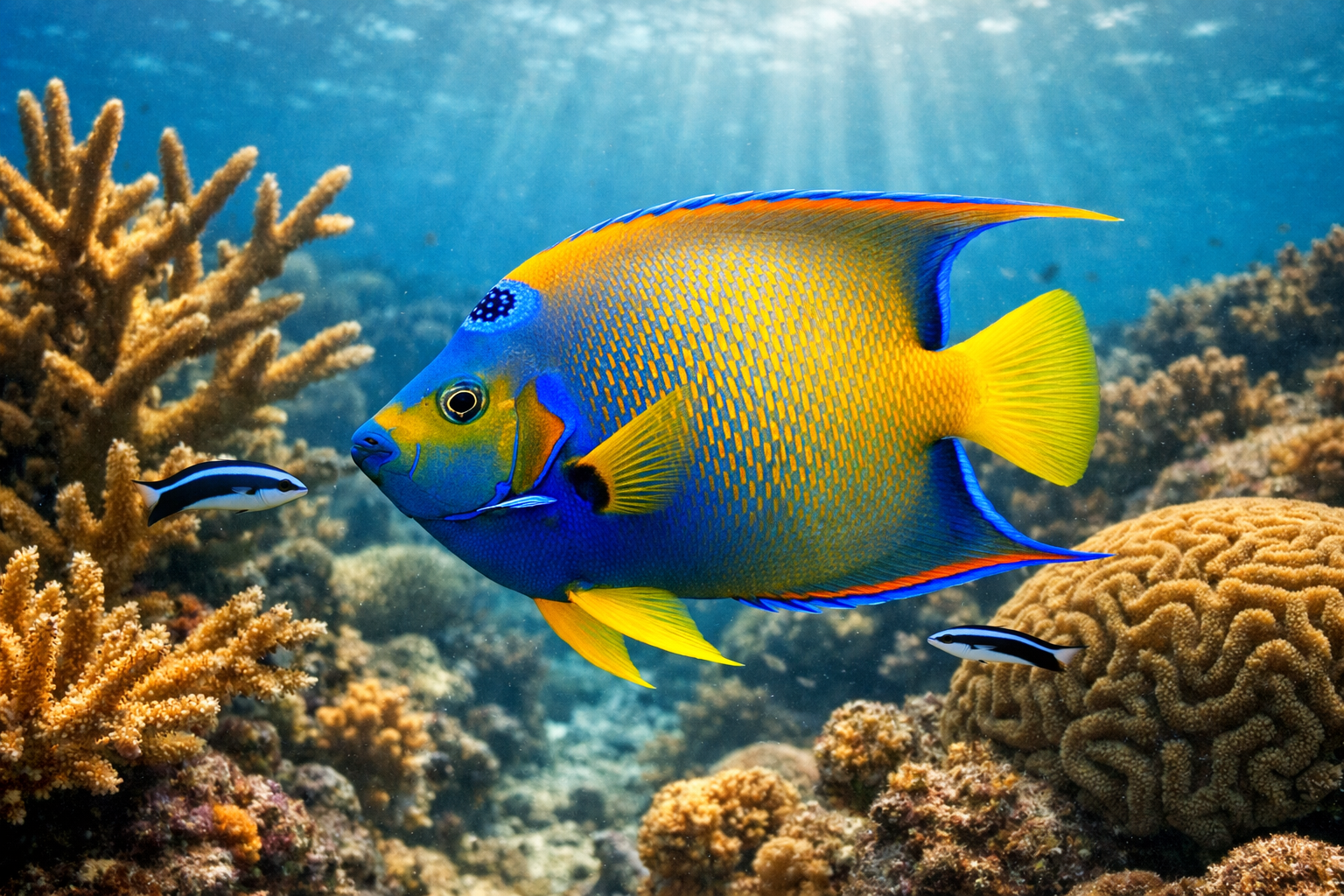
The Queen Angelfish truly lives up to its majestic name. Found throughout the warm waters of the Caribbean Sea and western Atlantic Ocean, this species represents one of the most sought-after additions to large marine aquariums. Their scientific classification places them in the family Pomacanthidae, alongside other angelfish species that have captured the hearts of aquarists worldwide.
Physical Characteristics and Identification
Queen Angelfish possess several distinctive features that make them unmistakable:
- Size: Adults reach 12-18 inches in length
- Coloration: Brilliant blue body with bright yellow fins and tail
- Crown marking: Dark blue "crown" on the forehead with electric blue edges
- Body shape: Compressed, disc-like profile typical of angelfish
- Fins: Elongated dorsal and anal fins with striking patterns
The juvenile Queen Angelfish appears dramatically different from adults, sporting dark blue bodies with bright yellow and white vertical stripes. This transformation occurs gradually as they mature, making them fascinating to observe throughout their development.
Natural Habitat and Distribution
In the wild, Queen Angelfish inhabit coral reefs and rocky areas from depths of 6 to 230 feet. They're commonly found in:
| Region | Specific Locations |
|---|---|
| Caribbean Sea | Bahamas, Jamaica, Puerto Rico |
| Gulf of Mexico | Florida Keys, Yucatan Peninsula |
| Western Atlantic | Bermuda, Brazil (northern coast) |
| Central America | Belize, Honduras, Costa Rica |
These areas provide the warm, nutrient-rich waters that Queen Angelfish require to thrive, along with abundant coral formations that serve as both shelter and feeding grounds.
Queen Angelfish Care Requirements for Aquarium Success
Keeping Queen Angelfish in captivity demands dedication, experience, and significant resources. These magnificent creatures are not suitable for beginner aquarists due to their complex needs and sensitive nature.
Tank Size and Setup Specifications
Minimum tank requirements for Queen Angelfish include:
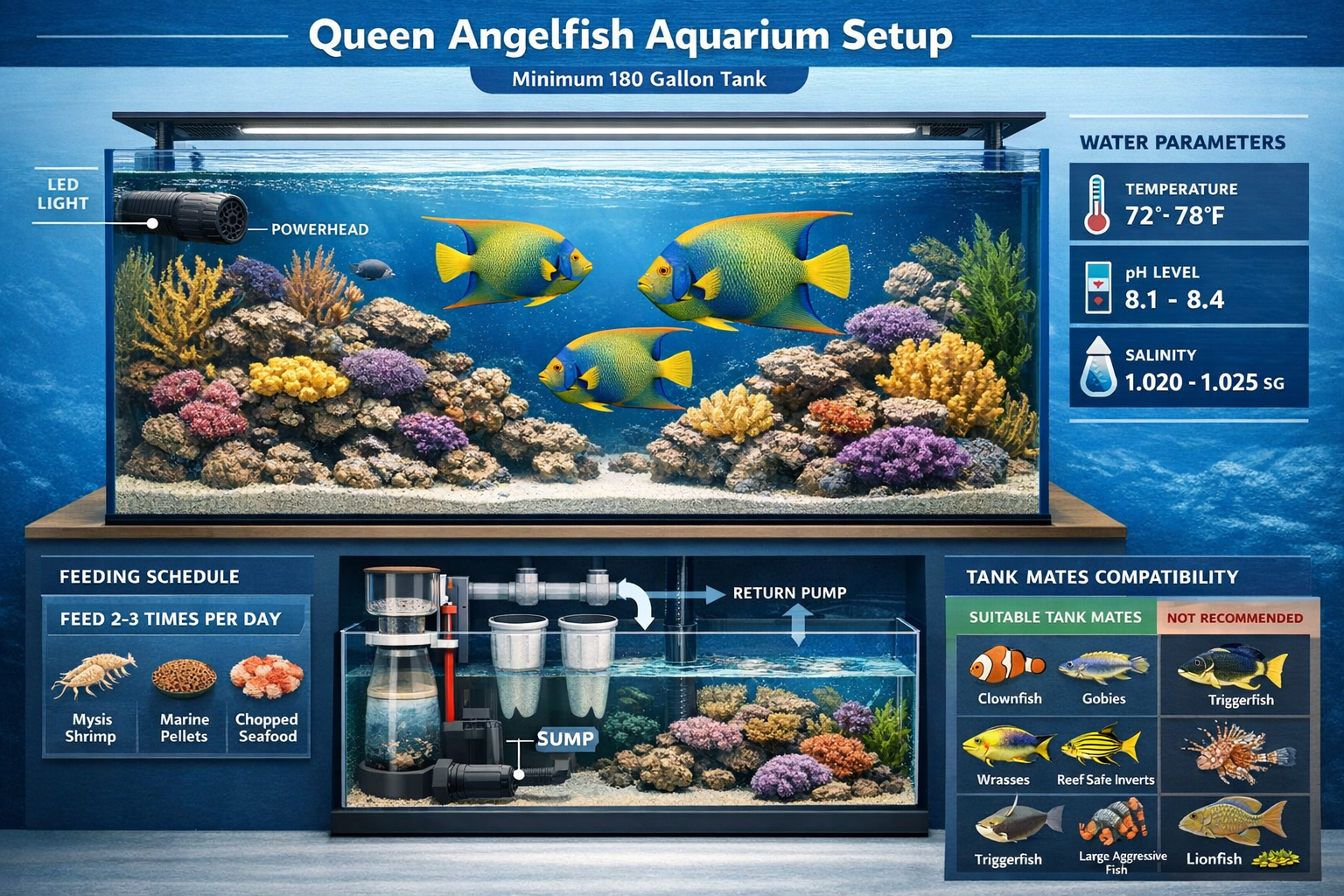
- Tank volume: 180 gallons absolute minimum (250+ gallons recommended)
- Dimensions: At least 6 feet in length for swimming space
- Height: Minimum 24 inches to accommodate their tall body profile
- Filtration: Robust biological and mechanical filtration systems
- Protein skimming: High-quality protein skimmer rated for tank size
"A Queen Angelfish needs room to establish territory and display natural behaviors. Cramped conditions lead to stress, aggression, and health problems." – Marine Biology Research Institute
Water Parameters and Environmental Conditions
Maintaining pristine water quality is crucial for Queen Angelfish health:
Critical Water Parameters:
- Temperature: 72-78°F (22-26°C)
- pH: 8.1-8.4
- Salinity: 1.020-1.025 specific gravity
- Ammonia: 0 ppm
- Nitrite: 0 ppm
- Nitrate: <20 ppm
- Alkalinity: 8-12 dKH
Feeding and Nutrition Requirements
Queen Angelfish are omnivores with specific dietary needs that must be met for optimal health:
Primary food sources include:
- High-quality marine pellets and flakes
- Frozen mysis shrimp and brine shrimp
- Marine algae and seaweed (nori sheets)
- Sponge-based foods (essential for wild-type nutrition)
- Vitamin-enriched preparations
Feeding schedule:
- Juveniles: 3-4 times daily in small portions
- Adults: 2-3 times daily with varied diet
- Supplementation: Weekly vitamin C and marine vitamin complex
Queen Angelfish Compatibility and Tank Mates
Selecting appropriate tank mates for Queen Angelfish requires careful consideration of temperament, size, and territorial behavior patterns.
Compatible Species
Excellent tank mates for Queen Angelfish include:
🐟 Large Tangs and Surgeonfish
- Yellow Tang (Zebrasoma flavescens)
- Purple Tang (Zebrasoma xanthurum)
- Powder Blue Tang (Paracanthurus hepatus)
🐟 Peaceful Large Fish
- Foxface Rabbitfish (Siganus vulpinus)
- Large Wrasse species (Fairy and Flasher wrasses)
- Groupers (appropriate size)
🐟 Other Angelfish (in very large systems only)
- French Angelfish (Pomacanthus paru)
- Gray Angelfish (Pomacanthus arcuatus)
Species to Avoid
Never house Queen Angelfish with:
- Small fish that can be eaten (under 3 inches)
- Aggressive species like triggers or large puffers
- Other Queen Angelfish (except in systems over 500 gallons)
- Invertebrates, corals, or anemones
Reef Compatibility Considerations
Queen Angelfish are NOT reef-safe. They will consume:
- Soft and hard corals
- Sponges and tunicates
- Small crustaceans and mollusks
- Tube worms and other invertebrates
For reef enthusiasts, consider a Fish Only With Live Rock (FOWLR) system instead.
Health, Breeding, and Long-term Queen Angelfish Care
Maintaining the long-term health of Queen Angelfish requires understanding common health issues, preventive care, and proper husbandry practices.
Common Health Issues and Prevention
Queen Angelfish are susceptible to several marine diseases:
Marine Ich (Cryptocaryon irritans)
- Symptoms: White spots, scratching, rapid breathing
- Treatment: Copper-based medications in quarantine tank
- Prevention: Proper quarantine protocols for new additions
Marine Velvet (Amyloodinium ocellatum)
- Symptoms: Gold/bronze dusting, lethargy, loss of appetite
- Treatment: Copper sulfate treatment with careful monitoring
- Prevention: Stable water parameters and stress reduction
Bacterial Infections
- Symptoms: Fin rot, cloudy eyes, open sores
- Treatment: Antibiotic therapy (consult marine veterinarian)
- Prevention: Excellent water quality and nutrition
Quarantine Protocols
Essential quarantine procedures:
- Minimum 4-week quarantine period
- Separate filtration system
- Daily observation for symptoms
- Gradual acclimation to main tank parameters
- Prophylactic treatment if recommended by veterinarian
Breeding Queen Angelfish in Captivity
Breeding Queen Angelfish in home aquariums remains extremely challenging and rarely successful. Key factors include:
- Massive tank requirements (1000+ gallons)
- Specialized larval rearing facilities
- Expert knowledge of marine fish reproduction
- Significant time and financial investment
Most aquarium specimens are wild-caught or produced in specialized commercial breeding facilities.
Lifespan and Long-term Commitment
Queen Angelfish represent a significant long-term commitment:
- Lifespan: 15-20+ years in proper conditions
- Growth rate: Reach adult size in 3-4 years
- Ongoing costs: Food, equipment maintenance, veterinary care
- Space requirements: May need larger tanks as they mature
Advanced Queen Angelfish Husbandry Tips
Creating the Ideal Environment
Aquascaping considerations:
- Provide caves and overhangs for security
- Use live rock to encourage natural grazing behaviors
- Ensure adequate swimming space in open areas
- Create territorial boundaries with strategic rock placement
Water Quality Management
Advanced filtration strategies:
- Refugium systems for natural nutrient export
- Ozone reactors for enhanced water clarity
- UV sterilization for pathogen control
- Regular water testing with professional-grade equipment
Behavioral Enrichment
Keep Queen Angelfish mentally stimulated through:
- Varied feeding locations to encourage foraging
- Live rock rotation to provide new grazing surfaces
- Compatible tank mates for social interaction
- Proper lighting cycles mimicking natural conditions
Conclusion
The Queen Angelfish stands as one of the marine aquarium hobby's most rewarding yet challenging species. Their stunning beauty, intelligent behavior, and regal presence make them worthy centerpieces for experienced aquarists willing to meet their demanding requirements.
Success with Queen Angelfish requires significant preparation, ongoing dedication, and substantial financial investment. However, those who provide proper care are rewarded with a magnificent marine companion that can thrive for decades.
Next Steps for Prospective Queen Angelfish Keepers:
- Evaluate your experience level – Ensure you have successfully maintained large marine systems
- Plan your setup – Design a system meeting minimum space and filtration requirements
- Research local suppliers – Find reputable dealers offering healthy, quarantined specimens
- Prepare quarantine facilities – Set up proper isolation systems before acquisition
- Connect with experts – Join marine aquarium societies and online communities for ongoing support
Remember, keeping a Queen Angelfish is not just about having a beautiful fish—it's about providing a lifetime home for one of the ocean's most magnificent creatures. With proper preparation and commitment, these underwater royalty can bring years of wonder and satisfaction to dedicated marine aquarists.
SEO Meta Information: