
The Ultimate Guide to Salt Water Fish for Sale: Your Complete 2025 Buying Resource

Picture this: you’re standing in front of your empty saltwater aquarium, dreaming of the vibrant underwater ecosystem you’re about to create. The crystal-clear water awaits its first inhabitants, and you’re ready to transform your tank into a thriving marine paradise. But where do you find healthy, high-quality salt water fish for sale that will not only survive but flourish in your carefully prepared environment? 🐠
Since 2000, marine aquarium enthusiasts have discovered that buying saltwater fish online offers unparalleled selection, competitive pricing, and access to rare species that local stores simply can’t match. Whether you’re a beginner setting up your first reef tank or an experienced aquarist expanding your collection, finding the right source for marine fish can make or break your aquarium’s success.
Key Takeaways
• Online retailers offer superior selection – Access to hundreds of marine species, including rare and captive-bred varieties not available in local stores
• Quality and health guarantees – Reputable online stores provide live arrival guarantees and detailed acclimation instructions for successful fish transitions
• Proper research is essential – Understanding compatibility, tank requirements, and care needs before purchasing prevents costly mistakes
• Shipping and timing matter – Live fish shipping requires careful coordination and proper preparation for arrival
• Long-term costs vary significantly – Initial purchase price is just one factor; consider feeding, healthcare, and tank maintenance expenses
Why Buy Salt Water Fish for Sale Online in 2025?
The marine aquarium hobby has evolved dramatically over the past two decades, and nowhere is this more evident than in the online marketplace for saltwater fish. Buying marine fish online has become the preferred method for serious aquarists, and for good reason.
Unmatched Selection and Availability
When I first started keeping saltwater fish in the early 2000s, finding specific species meant calling multiple local stores and often waiting weeks for special orders. Today’s online retailers maintain extensive inventories that would be impossible for brick-and-mortar stores to match. You’ll find everything from common beginner fish to rare deep-water species collected from remote locations around the world.
Popular categories include:
- Clownfish and anemone fish 🐠
- Angelfish and butterflyfish
- Tangs and surgeonfish
- Gobies and blennies
- Wrasses and parrotfish
- Eels and bottom dwellers
- Rare and exotic species
Quality Control and Health Standards
Reputable online retailers have invested heavily in state-of-the-art holding facilities, quarantine systems, and veterinary care. Many employ marine biologists and experienced aquarists who understand the specific needs of different species. This level of expertise often exceeds what you’ll find at general pet stores.
Quality indicators to look for:
- Quarantine protocols – Fish held for observation before sale
- Health guarantees – Live arrival and short-term health coverage
- Detailed descriptions – Size, origin, care requirements, and compatibility notes
- Professional photography – Clear images showing actual fish condition
- Customer reviews – Feedback from verified purchasers
Competitive Pricing and Value
Online competition has driven prices down while improving service quality. You can easily compare prices across multiple retailers, take advantage of sales and promotions, and often find better deals than local stores. Many online retailers also offer free shipping on orders over certain amounts, making bulk purchases more economical.
For those interested in exploring various shipping options, you can find different shipping classes that suit your budget and timeline needs.
Understanding Different Types of Salt Water Fish for Sale
The diversity of marine fish available today is staggering, with new species regularly entering the aquarium trade. Understanding the different categories helps you make informed decisions about which fish will thrive in your specific setup.
Beginner-Friendly Marine Fish
If you’re new to saltwater aquariums, starting with hardy, adaptable species increases your chances of success. These fish tolerate minor water parameter fluctuations and are generally easy to feed.
Top beginner choices:
| Fish Type | Difficulty | Tank Size | Special Notes |
|---|---|---|---|
| Clownfish | Easy | 20+ gallons | Hardy, captive-bred available |
| Cardinalfish | Easy | 30+ gallons | Peaceful, good for communities |
| Gobies | Easy | 20+ gallons | Bottom dwellers, interesting behavior |
| Blennies | Easy | 30+ gallons | Algae eaters, personality-plus |
| Wrasses | Moderate | 40+ gallons | Active swimmers, need secure lid |
Intermediate Species
Once you’ve gained experience maintaining stable water conditions and understanding fish behavior, you can explore more challenging species that offer stunning colors and unique characteristics.
Intermediate options include:
- Angelfish – Gorgeous but can be territorial
- Butterflyfish – Beautiful but may require specialized diets
- Tangs – Active algae eaters needing larger tanks
- Triggerfish – Intelligent but potentially aggressive
- Pufferfish – Charismatic but require species-specific care
For detailed information about angelfish care and selection, check out this comprehensive angelfish for sale guide that covers everything from tank requirements to feeding schedules.
Advanced and Rare Species
Experienced aquarists often seek out unusual species that showcase the incredible diversity of marine life. These fish may require specialized equipment, specific water parameters, or unique feeding requirements.
Advanced species categories:
- Deep-water fish – Require cooler temperatures and specific lighting
- Predatory species – Need large tanks and live/frozen foods
- Delicate reef fish – Require pristine water quality and stable conditions
- Schooling species – Need to be kept in groups for proper behavior
- Venomous species – Require extreme caution and experience
Captive-Bred vs. Wild-Caught Fish
The aquarium industry has made tremendous strides in captive breeding programs, offering several advantages over wild-caught specimens:
Captive-bred benefits:
- ✅ Better adapted to aquarium conditions
- ✅ Reduced disease risk
- ✅ More sustainable and environmentally friendly
- ✅ Often hardier and easier to feed
- ✅ Support conservation efforts
Wild-caught considerations:
- May offer greater color variation
- Sometimes the only option for rare species
- Require longer acclimation periods
- Higher stress levels during shipping
- Greater environmental impact
Many retailers now clearly label their captive-bred saltwater fish for sale, making it easier to make environmentally conscious choices.
Top Marine Fish Categories and Species
Let’s dive deeper into the most popular categories of saltwater fish and what makes each group special. Understanding these distinctions helps you create a balanced, thriving aquarium community.
Clownfish: The Stars of Marine Aquariums
Clownfish remain the most popular saltwater fish for good reason. Their vibrant colors, interesting behavior, and relatively easy care make them perfect for beginners and experienced aquarists alike.
Popular clownfish varieties:
- Ocellaris Clownfish – Classic orange with white stripes
- Percula Clownfish – Similar to Ocellaris but with thicker black borders
- Maroon Clownfish – Larger, more aggressive, deep red coloration
- Designer varieties – Snowflake, Lightning, Picasso patterns
- Black varieties – Dramatic coloration for unique displays
Clownfish care essentials:
- Tank size: Minimum 20 gallons for a pair
- Water temperature: 72-78°F
- Diet: Omnivorous – flakes, pellets, frozen foods
- Compatibility: Generally peaceful, may defend anemone territory
- Lifespan: 6-10 years with proper care
The relationship between clownfish and anemones adds another fascinating dimension to your aquarium. While not required, hosting anemones create natural behavior displays that captivate viewers.
For the most current selection and pricing, browse available clownfish for sale from reputable breeders specializing in healthy, acclimated specimens.
Angelfish: Majestic Marine Beauties
Marine angelfish represent some of the most stunning fish in the ocean, with species ranging from small, reef-safe varieties to large, show-stopping centerpiece fish.
Angelfish size categories:
Dwarf Angelfish (2-4 inches):
- Coral Beauty Angelfish
- Flame Angelfish
- Bicolor Angelfish
- Fisher’s Angelfish
Medium Angelfish (4-8 inches):
- Regal Angelfish
- Majestic Angelfish
- Watanabei Angelfish
Large Angelfish (8+ inches):
- Emperor Angelfish
- French Angelfish
- Queen Angelfish
- Gray Angelfish
Important angelfish considerations:
- Many species nip at coral polyps
- Territorial behavior increases with size
- Require varied diet including marine algae
- Need plenty of swimming space and hiding spots
- Water quality must remain stable
“Angelfish are like the royalty of the marine aquarium world. Their beauty is unmatched, but they demand respect and proper care to truly thrive.” – Marine Aquarium Expert
Tangs and Surgeonfish: Nature’s Algae Control
Tangs serve dual purposes in marine aquariums – they’re beautiful to watch and provide excellent algae control. Their constant grazing helps maintain clean glass and rock surfaces.
Popular tang species:
- Yellow Tang – Bright yellow, peaceful temperament
- Blue Tang – Powder blue coloration, moderate care level
- Purple Tang – Deep purple with yellow tail
- Sailfin Tang – Large size, dramatic finnage
- Chevron Tang – Striking pattern, grows quite large
Tang care requirements:
- Large swimming space (75+ gallons minimum)
- High-quality water with strong filtration
- Vegetable-based diet supplemented with marine algae
- Regular feeding schedule (2-3 times daily)
- Careful introduction to prevent territorial disputes
Gobies and Blennies: Personality-Packed Bottom Dwellers
These smaller fish add character and functionality to marine aquariums. Many species exhibit fascinating behaviors like sand-sifting, algae eating, or symbiotic relationships with other creatures.
Goby highlights:
- Mandarin Gobies – Stunning colors but require established tanks
- Watchman Gobies – Partner with pistol shrimp
- Sand-sifting Gobies – Keep sand beds clean
- Neon Gobies – Provide cleaning services to larger fish
Blenny favorites:
- Lawnmower Blennies – Excellent algae eaters
- Bicolor Blennies – Hardy and colorful
- Midas Blennies – Golden coloration, peaceful nature
- Tailspot Blennies – Small size, big personality
For a comprehensive selection of these fascinating bottom dwellers, explore blennies for sale from specialist marine retailers.
Wrasses: Active and Intelligent Swimmers
Wrasses bring energy and intelligence to marine aquariums. Many species exhibit complex behaviors, change colors as they mature, and provide beneficial services like pest control.
Notable wrasse characteristics:
- Active swimmers requiring secure tank lids
- Many species bury in sand at night
- Excellent hunters of small pests
- Color changes throughout life stages
- Generally peaceful but may chase similar species
Popular wrasse varieties:
- Six Line Wrasse – Colorful, small, pest controller
- Yellow Coris Wrasse – Hardy, good for beginners
- Fairy Wrasses – Peaceful, colorful, reef-safe
- Cleaner Wrasses – Provide cleaning services (challenging to keep)
How to Choose the Best Salt Water Fish for Sale Online
Selecting the right marine fish involves more than just picking the prettiest specimens. Successful aquarists consider multiple factors before making purchases, ensuring their new additions will thrive in their specific environment.
Assessing Your Tank’s Capacity and Compatibility
Before browsing any salt water fish for sale, honestly evaluate your aquarium’s current status and capacity. This assessment prevents overcrowding and reduces territorial conflicts.
Key evaluation points:
- Current bioload – How many fish do you already have?
- Available swimming space – Different fish need different activity levels
- Territorial boundaries – Existing fish may defend specific areas
- Feeding competition – Aggressive eaters may outcompete shy species
- Water parameter stability – New additions stress existing systems
Compatibility matrix considerations:
| Aggression Level | Compatible With | Avoid Mixing With |
|---|---|---|
| Peaceful | Most community fish | Aggressive predators |
| Semi-aggressive | Similar-sized fish | Much smaller fish |
| Aggressive | Large, robust species | Peaceful community fish |
| Predatory | Similar-sized predators | Anything bite-sized |
Understanding Fish Size and Growth Patterns
Many marine fish sold as juveniles grow significantly larger than their purchase size. Planning for adult size prevents future overcrowding and ensures proper long-term care.
Size planning guidelines:
- Research adult sizes for all species
- Consider growth rates (some fish grow quickly)
- Plan tank upgrades if necessary
- Account for territorial space requirements
- Factor in compatibility changes as fish mature
Common size misconceptions:
- Tangs – Often sold at 2-3 inches, many reach 8+ inches
- Angelfish – Dwarf species stay small, but others grow large
- Triggerfish – Rapid growth and increasing aggression
- Groupers – Can outgrow most home aquariums
- Eels – Length requirements often underestimated
Evaluating Seller Reputation and Guarantees
Not all online fish retailers operate at the same quality level. Researching sellers before purchasing protects your investment and increases success rates.
Reputation indicators:
- Years in business – Established retailers have proven track records
- Customer reviews – Recent, detailed feedback from actual buyers
- Industry recognition – Awards or certifications from aquarium organizations
- Professional associations – Membership in trade groups
- Transparent policies – Clear return, guarantee, and shipping terms
Essential guarantee components:
- Live arrival guarantee – Fish must arrive alive and healthy
- Acclimation support – Detailed instructions and customer service
- Health warranty – Coverage period after arrival (typically 14 days)
- Replacement policy – What happens if fish don’t survive
- Shipping insurance – Protection against delivery problems
For reliable service and comprehensive guarantees, consider established retailers like the saltwater fish shop that have built reputations on customer satisfaction and fish health.
Timing Your Purchases Strategically
When you buy marine fish matters almost as much as what you buy. Strategic timing improves acclimation success and reduces stress on both new and existing fish.
Optimal purchase timing:
- Tank stability – Wait 2-4 weeks after major changes
- Your schedule – Ensure you’re available for acclimation
- Weather conditions – Avoid extreme temperature periods
- Quarantine capacity – Have quarantine tanks ready
- Feeding preparation – Stock appropriate foods in advance
Seasonal considerations:
- Summer shipping – Heat stress risks increase
- Winter shipping – Cold damage potential
- Holiday periods – Delayed shipping and limited support
- Weekend arrivals – Reduced veterinary support availability
The Complete Buying Process for Salt Water Fish for Sale
Successfully purchasing marine fish online involves several steps, each critical to ensuring your new additions arrive healthy and acclimate successfully to their new environment.
Pre-Purchase Research and Planning
Species-specific research checklist:
- Adult size and tank requirements
- Diet and feeding frequency
- Compatibility with existing fish
- Special equipment needs (lighting, flow, etc.)
- Common health issues and treatments
- Breeding behavior and territorial needs
Tank preparation steps:
- Water parameter testing – Ensure stability before arrival
- Quarantine setup – Prepare separate acclimation tank
- Food procurement – Stock species-appropriate foods
- Equipment check – Verify all systems functioning properly
- Emergency supplies – Have medications and test kits ready
Placing Your Order
Order timing considerations:
- Monday-Tuesday shipping – Avoids weekend delays
- Weather monitoring – Check forecasts for extreme conditions
- Personal availability – Ensure someone receives the shipment
- Quarantine readiness – Have isolation tank prepared
Special shipping requirements:
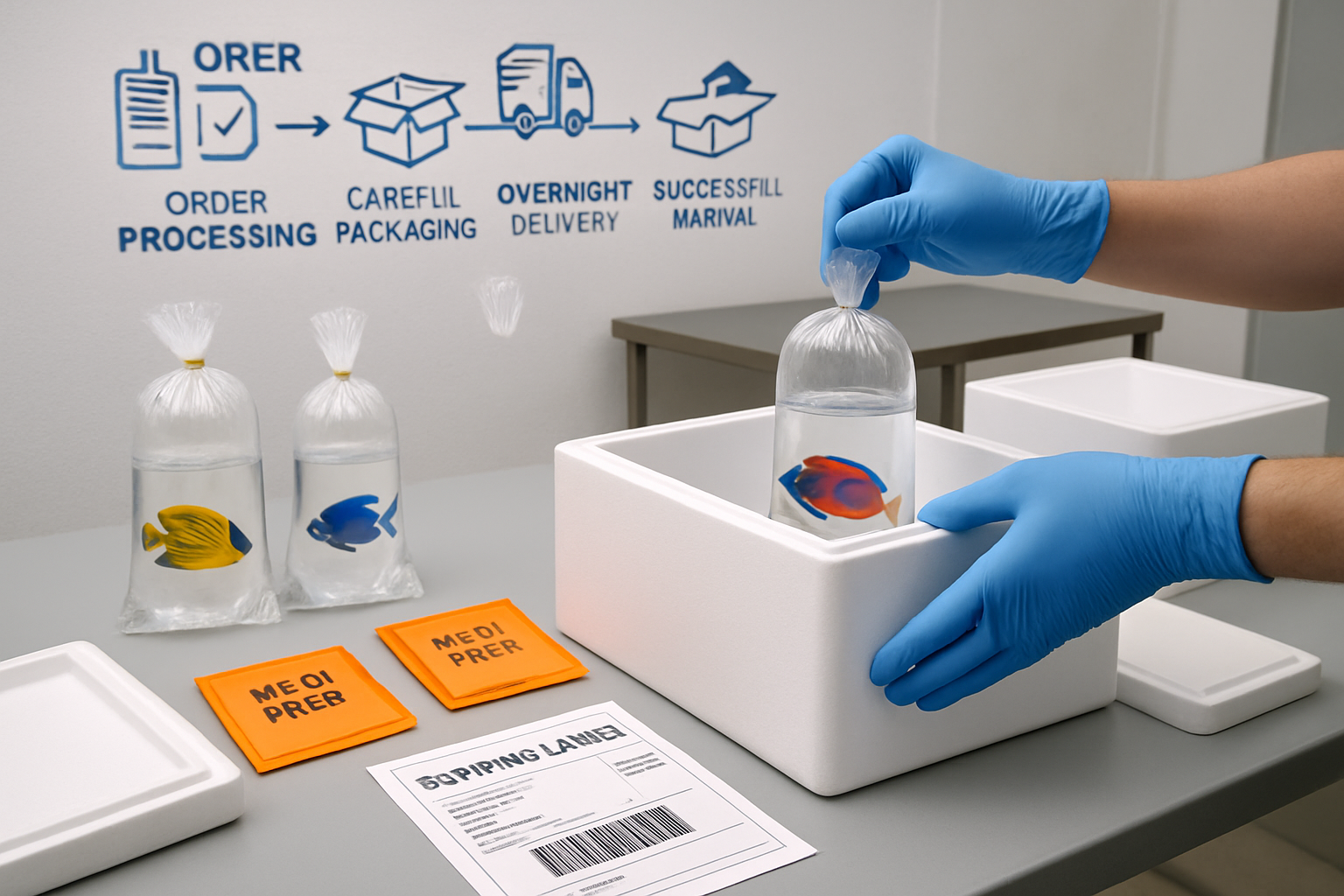
Most live fish require overnight shipping with specific handling protocols. Understanding these requirements helps you prepare for successful arrivals.
Shipping method options:
- Standard overnight – Most common, arrives next business day
- Priority overnight – Earlier delivery, higher cost
- Saturday delivery – Weekend option, limited availability
- Hold at facility – Pick up at shipping center
For detailed information about shipping options and costs, review available live fish shipping services and their specific requirements.
Receiving and Acclimating New Fish
The first few hours after your fish arrive are critical for long-term success. Proper acclimation reduces stress and improves survival rates.
Immediate arrival steps:
- Inspect packaging – Check for damage or temperature issues
- Photograph contents – Document condition for any warranty claims
- Test bag water – Check temperature and basic parameters
- Assess fish condition – Look for signs of stress or illness
- Begin acclimation – Start temperature and water adjustment process
Acclimation methods:
Drip acclimation (recommended):
- Float sealed bag for 15-20 minutes
- Open bag and secure to tank edge
- Start slow drip from tank into bag
- Continue for 1-2 hours, doubling bag water volume
- Net fish into quarantine tank (discard bag water)
Float and pour method:
- Float bag for temperature adjustment
- Gradually add small amounts of tank water
- Repeat every 10-15 minutes for 1 hour
- Net fish to new environment
Quarantine and Monitoring Protocols
Even healthy-appearing fish should undergo quarantine periods to prevent disease transmission and allow stress recovery.
Quarantine tank setup:
- Size – Appropriate for fish species and number
- Filtration – Biological and mechanical filtration
- Heating – Stable temperature control
- Lighting – Appropriate for species needs
- Hiding places – Reduce stress with cover options
Monitoring schedule:
- Daily observation – Behavior, appetite, physical condition
- Water testing – Parameters every 2-3 days initially
- Feeding trials – Introduce foods gradually
- Health assessment – Watch for disease symptoms
- Stress evaluation – Monitor for acclimation progress
Common quarantine duration:
- Minimum – 2 weeks for apparently healthy fish
- Standard – 3-4 weeks for thorough observation
- Extended – 6+ weeks if health issues arise
- Treatment period – Additional time if medications needed
Specialized Categories: Eels, Aggressive Fish, and Rare Species
Beyond the common community fish, many aquarists seek out specialized species that offer unique characteristics and behaviors. These fish often require specific care and experience levels.
Marine Eels: Fascinating but Challenging
Marine eels represent some of the most captivating fish available, but they require specialized care and understanding of their unique needs.
Popular eel varieties:
- Moray Eels – Various sizes from small to massive
- Snake Eels – Burrowing species, escape artists
- Ribbon Eels – Stunning colors, challenging care requirements
- Garden Eels – Colony fish, very specialized needs
Eel care essentials:
- Secure tanks – Eels are notorious escape artists
- Appropriate tank mates – Nothing small enough to eat
- Feeding considerations – Most prefer live or frozen foods
- Hiding places – Caves and crevices essential
- Water quality – Sensitive to poor conditions
For those interested in these remarkable creatures, explore eels for sale from specialists who understand their complex requirements.
Aggressive and Predatory Species
Some aquarists prefer the excitement of keeping aggressive fish that showcase natural predatory behaviors. These species require careful planning and appropriate tank mates.
Aggressive species categories:
- Large Angelfish – Territorial and may eat smaller fish
- Triggerfish – Intelligent but aggressive, rearrange decorations
- Groupers – Massive appetites, eat anything that fits
- Lionfish – Venomous spines, stunning appearance
- Sharks – Various species suitable for home aquariums
Aggressive fish considerations:
- Tank size – Larger territories reduce conflicts
- Feeding requirements – Often need live or large frozen foods
- Tank mate selection – Only compatible with similar-sized, robust fish
- Safety precautions – Some species can injure handlers
- Equipment durability – Strong fish may damage equipment
Learn more about suitable options by exploring aggressive saltwater fish for sale from experienced retailers.
Rare and Exotic Marine Fish
Advanced aquarists often seek out unusual species that showcase the incredible diversity of marine life. These fish may command premium prices and require specialized care.
Rare fish categories:
- Deep-water species – Collected from greater depths
- Endemic species – Limited geographic distribution
- Color morphs – Unusual color variations
- Hybrid species – Natural or aquaculture-produced crosses
- Newly described species – Recently discovered or classified
Rare fish challenges:
- Limited availability – May need to wait for collection trips
- Higher prices – Rarity commands premium costs
- Specialized care – May require unique conditions
- Limited information – Less known about care requirements
- Breeding difficulty – Captive breeding often not established
Cost Considerations and Budgeting for Salt Water Fish for Sale
Understanding the true cost of marine fish ownership extends far beyond initial purchase prices. Successful aquarists budget for ongoing expenses and potential unexpected costs.
Initial Purchase Prices by Category
Marine fish prices vary dramatically based on species rarity, size, source, and market demand. Understanding typical price ranges helps with budget planning.
Beginner fish price ranges:
- Common Clownfish – $15-40
- Cardinalfish – $20-35
- Basic Gobies – $15-30
- Hardy Wrasses – $25-45
- Simple Blennies – $20-35
Intermediate species pricing:
- Dwarf Angelfish – $40-80
- Small Tangs – $50-100
- Butterflyfish – $45-85
- Fairy Wrasses – $60-120
- Anthias – $35-75
Advanced and rare species:
- Large Angelfish – $100-500+
- Rare Tangs – $200-1000+
- Exotic Wrasses – $150-800+
- Unusual Gobies – $100-400+
- Collector Species – $500-2000+
Ongoing Care Costs
Monthly feeding expenses:
- Basic flakes/pellets – $10-20
- Frozen foods – $15-30
- Live foods – $20-50
- Specialized diets – $30-75
- Supplements – $10-25
Healthcare and maintenance:
- Water testing kits – $5-15/month
- Medications – $0-50 (when needed)
- Equipment replacement – $10-30/month average
- Professional services – $50-150 (occasional)
Hidden Costs and Emergency Expenses
Potential unexpected expenses:
- Equipment failures – $50-500
- Disease outbreaks – $100-300
- Tank upgrades – $200-2000+
- Veterinary care – $100-400
- Emergency replacements – $50-200
Cost-saving strategies:
- Buy healthy fish initially – Prevents expensive treatments
- Maintain stable conditions – Reduces stress and disease
- Quarantine new additions – Prevents tank-wide infections
- Regular maintenance – Prevents major system failures
- Group orders – Share shipping costs with other aquarists
Shipping, Handling, and Arrival Best Practices
The journey from retailer to your aquarium is critical for fish health and survival. Understanding shipping processes helps you prepare for successful arrivals.
Understanding Live Fish Shipping
Shipping container components:
- Insulated boxes – Maintain temperature stability
- Oxygen-filled bags – Provide breathing gas for transit
- Heat/cool packs – Temperature regulation as needed
- Cushioning materials – Prevent physical damage
- Handling instructions – Guide shipping personnel
Shipping timeline considerations:
- Order processing – 1-3 business days typically
- Transit time – Usually overnight for live fish
- Delivery windows – Morning delivery preferred
- Weather delays – Extreme conditions may postpone shipping
- Weekend handling – Limited options, higher costs
Preparing for Fish Arrivals
Pre-arrival preparation checklist:
- ✅ Quarantine tank ready – Cycled and stable
- ✅ Appropriate foods stocked – Species-specific options
- ✅ Water parameters tested – Ensure optimal conditions
- ✅ Equipment functioning – Heaters, filters, lights working
- ✅ Emergency supplies available – Medications, test kits
- ✅ Schedule cleared – Time available for acclimation
Delivery day protocol:
- Track shipments – Monitor progress and delivery estimates
- Stay available – Be present for delivery acceptance
- Inspect immediately – Check package condition and contents
- Document issues – Photograph any problems for warranty claims
- Begin acclimation – Start process promptly after inspection
Handling Shipping Problems
Common shipping issues:
- Delayed delivery – Weather or logistics problems
- Temperature extremes – Heat or cold stress
- Package damage – Rough handling during transit
- Fish mortality – Stress or pre-existing health issues
- Wrong species – Shipping or inventory errors
Resolution steps:
- Document everything – Photos of packaging, fish, and conditions
- Contact seller immediately – Report issues within specified timeframes
- Follow warranty procedures – Each retailer has specific protocols
- Preserve evidence – Keep packaging and water samples if requested
- Seek immediate care – Treat surviving fish for stress or injury
Warranty claim requirements:
- Timely notification – Usually within 2-24 hours of delivery
- Photographic evidence – Clear images of deceased fish and packaging
- Water parameter data – Test results from bag water and tank
- Acclimation documentation – Proof of proper procedures followed
- Veterinary assessment – Sometimes required for valuable fish
Setting Up for Success: Tank Requirements and Compatibility
Creating the right environment before purchasing fish dramatically improves success rates and reduces stress for both fish and aquarists.
Tank Size and Setup Requirements
Minimum tank sizes by fish type:
| Fish Category | Minimum Tank Size | Ideal Tank Size | Special Requirements |
|---|---|---|---|
| Small Clownfish | 20 gallons | 30+ gallons | Anemone hosting space |
| Dwarf Angelfish | 30 gallons | 50+ gallons | Multiple hiding spots |
| Small Tangs | 75 gallons | 100+ gallons | Long swimming areas |
| Large Angelfish | 125 gallons | 180+ gallons | Vertical swimming space |
| Aggressive Fish | 100+ gallons | 150+ gallons | Territory establishment |
Essential equipment considerations:
- Filtration capacity – Oversized for bioload handling
- Water circulation – Appropriate flow patterns for species
- Heating/cooling – Stable temperature maintenance
- Lighting systems – Species-appropriate spectrum and intensity
- Protein skimming – Waste removal for heavy bioloads
Water Parameter Management
Critical parameters for marine fish:
- Salinity – 1.020-1.025 specific gravity
- Temperature – 72-78°F for most species
- pH – 8.1-8.4 stable range
- Ammonia – 0 ppm (toxic to fish)
- Nitrite – 0 ppm (toxic to fish)
- Nitrate – <20 ppm for fish-only systems
Advanced parameter monitoring:
- Alkalinity – 8-12 dKH for stability
- Calcium – 400-450 ppm if keeping corals
- Magnesium – 1250-1350 ppm for ionic balance
- Phosphate – <0.1 ppm to prevent algae issues
Creating Compatible Communities
Compatibility factors to consider:
- Size relationships – Prevent predation
- Territorial requirements – Avoid overcrowding
- Activity levels – Match energy and swimming patterns
- Feeding behaviors – Ensure all fish can compete for food
- Environmental needs – Similar water parameter preferences
Successful community combinations:
Peaceful Community Tank:
- Pair of clownfish
- Small cardinalfish school
- Peaceful wrasse
- Algae-eating blenny
- Bottom-dwelling goby
Semi-Aggressive Setup:
- Dwarf angelfish
- Medium tang
- Aggressive wrasse
- Larger blenny
- Territorial damselfish
Predator Tank:
- Large angelfish
- Triggerfish
- Grouper or large wrasse
- Moray eel
- Lionfish (with caution)
Conclusion: Your Journey to Marine Fish Success
Purchasing salt water fish for sale online opens up a world of possibilities that simply wasn’t available to aquarists just a generation ago. From common clownfish to rare deep-water species, today’s online retailers provide access to healthy, well-cared-for marine fish that can transform your aquarium into a thriving underwater ecosystem.
The key to success lies in thorough preparation, careful research, and choosing reputable sellers who prioritize fish health and customer satisfaction. Whether you’re adding your first fish to a new tank or expanding an established collection, the principles remain the same: understand your fish’s needs, prepare proper environments, and provide consistent, quality care.
Remember that building a successful marine aquarium is a journey, not a destination. Each fish you add brings new learning opportunities and the chance to observe fascinating behaviors that connect you to the incredible diversity of ocean life. Start with hardy, well-researched species, master their care requirements, and gradually expand your expertise as you gain confidence and experience.
Your next steps:
- Assess your current setup – Ensure your tank is ready for new inhabitants
- Research specific species – Understand care requirements and compatibility
- Choose reputable retailers – Look for guarantees and positive reviews
- Plan your purchases – Consider timing, quarantine, and acclimation needs
- Prepare for arrivals – Have everything ready before fish ship
- Monitor and adjust – Watch new additions carefully and respond to their needs
The marine aquarium hobby continues to evolve, with new species, better husbandry techniques, and improved breeding programs constantly expanding our options. By starting with quality fish from trusted sources and providing excellent care, you’re not just creating a beautiful display – you’re participating in conservation efforts and supporting sustainable practices that help protect our ocean’s incredible biodiversity.
Take your time, do your research, and enjoy the incredible journey of marine fishkeeping. The rewards of successfully maintaining healthy, vibrant saltwater fish far exceed the initial investment and effort required. Welcome to one of the most rewarding hobbies in the world! 🌊